
IELTS Online Test 2026: Everything You Need to Know About IELTS on Computer


As we navigate the academic and professional landscape of the mid-2020s, the way we demonstrate English proficiency has undergone a massive digital transformation. If you are planning to study or work abroad, choosing the IELTS online test computer based 2026 format is no longer just an alternative; for many, it has become the preferred method of examination. This shift reflects a global move toward more efficient, faster, and more accessible testing environments that cater to a generation of digital natives.
Choosing the right format can be the difference between achieving your target band score and falling short. Whether you are comfortable with a keyboard or prefer the traditional feel of a pen, understanding the nuances of the IELTS online test computer based 2026 is essential. In this comprehensive guide, we will break down everything from the technical interface to the specific strategies you need to master each module in this modern era of testing.
At SimplyIELTS, we have observed that students who embrace the digital format often benefit from faster results and a more personalized testing experience. However, it requires a different set of skills than the paper-based version. Before you book your slot, it is vital to explore our Complete Guide to the IELTS Test to ensure you have a solid foundation of the exam’s core requirements.
Key Benefits of the IELTS Online Test Computer Based 2026
The popularity of the IELTS online test computer based 2026 is driven by several practical advantages that align with modern lifestyles. Perhaps the most significant benefit is the speed of results. While paper-based test-takers often wait nearly two weeks, those opting for the computer-delivered format typically receive their scores within 3 to 5 calendar days. This rapid turnaround is crucial for candidates facing tight university application deadlines or visa windows.
Beyond speed, the computer-based format offers a level of convenience that the traditional method lacks. Most test centers now provide high-quality noise-canceling headphones for the Listening module, allowing for better concentration without the distractions of a large exam hall. Furthermore, the Writing module includes an automatic word count feature, saving you the stress of manually counting lines and allowing you to focus entirely on your task response and coherence.
When considering your options, you might also be weighing other exams. It is worth reading our comparison on IELTS vs TOEFL: Which English Test Should You Take in 2026? to see how the IELTS computer interface stacks up against its competitors. For many, the user-friendly layout of the IELTS platform makes it the superior choice for high-stakes testing.
IELTS Computer-Based vs Paper-Based: Key Differences 2026
Understanding the structural differences between the two formats is the first step in your preparation journey. While the content, difficulty level, and scoring criteria remain identical, the delivery mechanism changes how you interact with the material. In the IELTS online test computer based 2026, you will use a mouse and keyboard for the Listening, Reading, and Writing sections, whereas the paper-based test requires manual writing on answer sheets.
One major difference lies in the Listening section. On paper, you are given 10 minutes at the end to transfer your answers to the answer sheet. On a computer, you enter your answers directly into the system as you listen, with only a brief two-minute window at the end to check your work. For a deeper dive into these logistical variations, check out our detailed analysis of IELTS Computer-Based Test vs Paper-Based Test: Key Differences 2026.
Comparison Table: Computer vs. Paper
| Feature | Computer-Based (2026) | Paper-Based (Traditional) |
|---|---|---|
| Results Delivery | 3–5 Days | 13 Days |
| Listening Transfer Time | 2 Minutes (Review only) | 10 Minutes (Transfer to sheet) |
| Writing Experience | Typing with auto-word count | Handwriting (No word count) |
| Reading Layout | Split screen (Text & Questions) | Flipping pages back and forth |
| Speaking Module | Face-to-face (usually) | Face-to-face |
| Editing | Easy copy/paste/delete | Eraser and pencil required |
Mastering the Typing Test: Writing Module Strategies
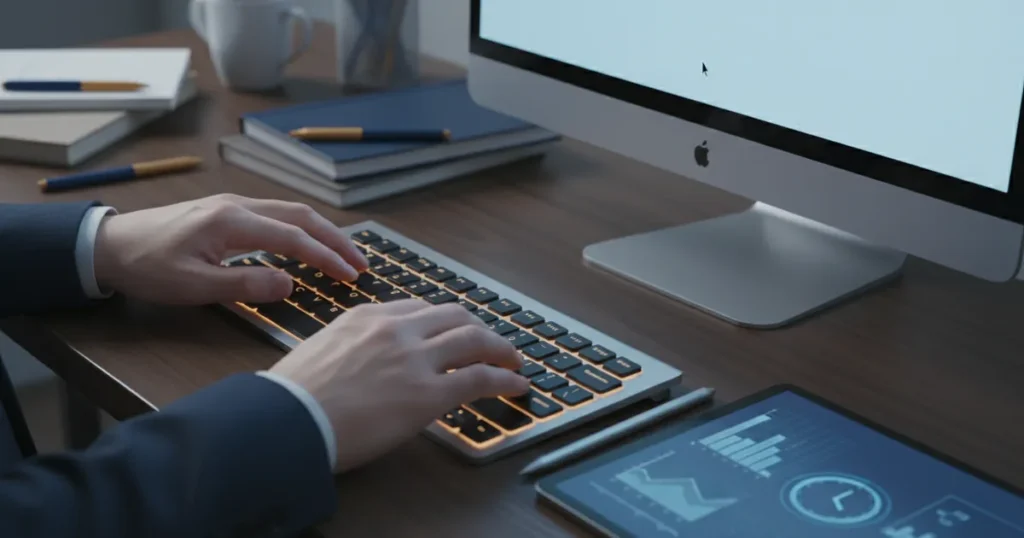
For many candidates, the Writing module is the most daunting. However, the IELTS online test computer based 2026 offers several tools that can actually improve your score if used correctly. The ability to “copy and paste” allows you to reorganize your paragraphs effortlessly, ensuring a more logical flow without making a mess of your paper. This is particularly helpful for achieving a high band in Coherence and Cohesion.
However, typing speed and accuracy are paramount. If you find yourself hunting for keys, you may struggle to finish Task 2 within the recommended 40 minutes. We recommend practicing your typing skills daily. While you practice, don’t forget to work on your lexical resource by following these 3 ACTIONABLE TIPS TO IMPROVE VOCABULARY FOR YOUR UPCOMING IELTS TEST. A wide range of vocabulary is only effective if you can type it accurately under pressure.
Quick Tips for Computer Writing:
- Use the Word Count: Keep an eye on the bottom of the screen to ensure you meet the 150/250 word requirements.
- Avoid “Screen Staring”: Spend the first 5 minutes planning your essay on the provided scrap paper before you start typing.
- Proofread Digitally: Leave 2-3 minutes at the end to check for “typos” which can negatively impact your Lexical Resource score.
- Master Shortcuts: While standard shortcuts like Ctrl+C and Ctrl+V often work, always check the specific test center software instructions.
Reading on Screen: Efficiency and Accuracy Tips
The Reading module in the IELTS online test computer based 2026 environment features a split-screen view. The text appears on the left, and the questions appear on the right. This eliminates the need to flip pages, which can be a significant time-saver. You can also use the “Highlight” and “Notes” functions by right-clicking on specific words or sentences.
To succeed here, you must adapt your scanning and skimming techniques for a digital interface. Reading from a screen for 60 minutes can lead to eye fatigue, so it is important to practice with digital mock tests. If you are curious about the overall duration and how to manage your energy, read our lesson on How Long Does the IELTS Test Last? to better prepare your stamina.
Listening with Headphones: A Game Changer
One of the most praised features of the IELTS online test computer based 2026 is the use of individual headphones. In traditional paper tests, audio is often played through speakers in a large room, which can lead to issues with echo or background noise. With headphones, you can adjust the volume to your preference, ensuring you don’t miss those subtle plurals or prepositions that are often tested.
Speaking of prepositions, they are a common stumbling block for many. We suggest reviewing IELTS Grammar: Prepositions That Confuse Test Takers to ensure you are ready for the fill-in-the-blank questions in the Listening section. Remember, in the computer-delivered version, you must type your answers exactly as you hear them, as there is no extra time to fix spelling errors later.
The Speaking Module: Why It Remains Face-to-Face
Despite the “computer-based” label, the Speaking module in 2026 generally remains a face-to-face interaction with a human examiner. This is a core philosophy of the IELTS partners—IELTS Official Website—who believe that real-world communication is best assessed through human interaction rather than AI. In some cases, this might be conducted via a high-definition video call at the test center, but the essence remains a live conversation.
Because the Speaking test is separate from the computer modules, you might feel a shift in “vibe.” It is essential to stay focused. For a complete breakdown of what to expect during this interaction, visit our General Overview of IELTS Speaking. Preparation for this part involves building confidence and fluency, which no computer interface can replace.
“The move to computer-based testing in 2026 isn’t just about technology; it’s about providing a testing environment that mirrors how we work and study in the real world. Success comes to those who bridge the gap between English proficiency and digital literacy.”
Senior IELTS Instructor, SimplyIELTS
Preparing for the IELTS Online Test Computer Based 2026
Preparation is more than just learning English; it is about familiarizing yourself with the platform. You do not want your first time seeing the IELTS software to be on your actual test day. Most official providers offer practice platforms that mimic the real exam environment exactly.
Steps to Success
- Take a Diagnostic Test: Start by assessing your current level. You can try our Elementary Grammar Test 2 or Elementary Grammar Test 3 to see where your foundation stands.
- Practice Typing: Aim for at least 35-40 words per minute with high accuracy.
- Simulate the Environment: Use a desktop or laptop with a mouse and headphones to do your practice tests. Avoid using a tablet or phone.
- Learn the Interface: Familiarize yourself with the “Next” and “Back” buttons, the “Review” flag, and the highlighting tool.
- Review Official Resources: Always keep an eye on the IDP IELTS or British Council websites for any software updates or new feature announcements.
Technical Requirements and Registration
Registering for the IELTS online test computer based 2026 is a straightforward process. You can book your test online through official portals. During registration, you will choose your preferred date and time slot. Unlike the paper-based test, which usually happens on specific Saturdays, computer-based tests are often available multiple times a day, seven days a week.
If you are taking “IELTS Online” (the at-home version), you will need to ensure your computer meets specific technical requirements, including a stable internet connection, a functioning webcam, and the installation of secure proctoring software. However, most candidates still prefer the “Computer-Delivered IELTS” taken at a secure center to avoid any home-based technical glitches.
Final Thoughts on the 2026 Testing Landscape
The IELTS online test computer based 2026 represents the pinnacle of modern English assessment. It combines the rigorous standards of the world’s most popular English test with the efficiency of modern technology. By choosing this format, you are opting for a faster, more flexible, and often more comfortable testing experience.
However, the format is only as good as your preparation. Whether you are struggling with the Writing tasks or need to sharpen your Listening skills, our team is here to help. Explore more of our IELTS Tips to stay ahead of the curve and ensure you are fully prepared for your 2026 test date.
Ready to Start Your Journey?
Don’t leave your future to chance. The transition to the IELTS online test computer based 2026 format is an opportunity to leverage your digital skills for a better score. Start practicing today with our specialized courses and mock exams. If you’re still undecided on which format is right for you, read our final breakdown on Computer-Delivered IELTS vs Paper-Based: Which Should You Choose? to make an informed decision.
Success in IELTS is a combination of English proficiency, strategic thinking, and technical familiarity. With the right tools and guidance from SimplyIELTS, you can walk into that test center with the confidence to achieve the band score you need for your dreams to take flight in 2026.



Responses