
IELTS vs PTE Academic 2026: Which Is Easier and Which to Choose

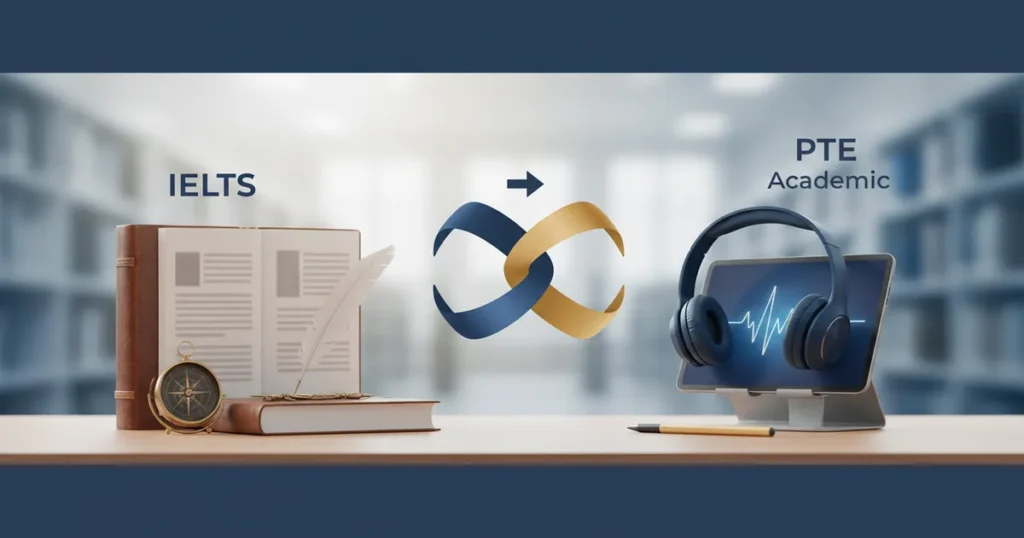

Choosing between the world’s most popular English proficiency tests can feel like a high-stakes game of chess. As we move into a new era of global migration and international education, the debate over ielts vs pte academic 2026: which is easier and which to choose has become more nuanced than ever. Whether you are aiming for a student visa in Canada, permanent residency in Australia, or a healthcare license in the UK, your choice of exam can significantly impact your preparation time and final score.
In 2026, both the International English Language Testing System (IELTS) and the Pearson Test of English (PTE) have integrated advanced technologies to streamline the testing process. While IELTS remains the traditional heavyweight, favored for its human-centric approach, PTE Academic has gained massive ground with its fully automated, AI-driven scoring system. This guide is designed to dissect every detail of these two giants, helping you navigate the complexities of ielts vs pte academic 2026: which is easier and which to choose based on your personal strengths and goals.
As an expert instructor at Simply IELTs, I have seen thousands of students struggle with this decision. Some find the conversational nature of IELTS comforting, while others prefer the predictable, algorithmic nature of PTE. By the end of this comprehensive analysis, you will have a clear roadmap for your 2026 testing journey, supported by data, expert insights, and practical comparison tools.
Overview: What This Guide Covers
This guide isn’t just a surface-level comparison; it is a deep dive into the 2026 testing landscape. We will explore the structural differences, the scoring nuances, and the specific psychological factors that make one test “easier” for certain individuals. Here is what we will cover:
- A side-by-side comparison of the IELTS and PTE formats.
- The 2026 updates to the IELTS One Skill Retake and PTE’s AI scoring refinements.
- A detailed breakdown of the Speaking, Writing, Reading, and Listening modules.
- Psychological profiling: Which test suits your personality type?
- Score conversion tables to help you understand equivalencies.
- Expert tips on how to maximize your score in either exam.
Key Differences and Key Facts in 2026
The fundamental difference between IELTS and PTE lies in the delivery and the “human element.” In 2026, IELTS continues to offer both Paper-Based and Computer-Delivered versions, maintaining a face-to-face Speaking component (though some centers now offer this via video call). PTE Academic, conversely, is entirely computer-based, including a Speaking section where you talk to a microphone and are graded by an algorithm.
Another critical distinction is the “integrated scoring” model used by PTE. In PTE, a single task can contribute to scores in two different modules. For example, the “Repeat Sentence” task contributes to both your Listening and Speaking scores. In contrast, IELTS modules are strictly compartmentalized. If you are preparing for the latter, understanding the IELTS reading test format is essential because your performance there will not affect your Writing or Speaking bands.
Test Duration and Results
PTE Academic is generally shorter, lasting about 2 hours. Results are typically available within 48 hours, making it the preferred choice for candidates on a tight deadline. IELTS takes approximately 2 hours and 45 minutes for the main components, with the Speaking test often scheduled on a different day or time. Results for Computer-Delivered IELTS take 3-5 days, while Paper-Based results take 13 days. For official registration and the most up-to-date test dates, you should always consult the British Council website.
IELTS vs PTE Academic 2026: Which Is Easier and Which to Choose?
The question of which test is “easier” is subjective. However, we can break it down by skill set. If you have clear, standard pronunciation and enjoy working with technology, PTE might feel easier. The AI doesn’t get tired or biased; it looks for specific acoustic markers and keywords. However, if you have a strong accent or tend to stutter when nervous, the PTE algorithm might penalize you more harshly than a human IELTS examiner would.
For those who excel at traditional academic writing and can structure an argument with nuance, IELTS is often the better fit. When tackling IELTS writing task 2 topics, a human examiner appreciates cohesion, critical thinking, and a sophisticated range of vocabulary. An AI, while advanced, may prioritize template-based structures and keyword density over the “soul” of an essay.
The 2026 Score Conversion Table
To help you decide, let’s look at how the scores align. This is crucial for meeting university or immigration requirements.
| IELTS Band Score | PTE Academic Score | English Level Proficiency |
|---|---|---|
| 9.0 | 86 – 90 | Expert / C2 |
| 8.5 | 83 – 85 | Very Good / C2 |
| 8.0 | 79 – 82 | Very Good / C1 |
| 7.5 | 73 – 78 | Good / C1 |
| 7.0 | 65 – 72 | Good / B2 |
| 6.5 | 58 – 64 | Competent / B2 |
| 6.0 | 50 – 57 | Competent / B2 |
Why This Matters for Your IELTS Journey
In 2026, the stakes for English proficiency are higher than ever. Many countries have tightened their immigration points systems. Choosing the wrong test can lead to months of frustration. For instance, if you need a “Superior” English score for Australian PR (equivalent to an IELTS 8 or PTE 79), the way you prepare will differ drastically between the two tests.
If you choose IELTS, you need to master the art of the interview. You should use tools like an IELTS speaking simulator to get comfortable with the three-part structure of the test. You also need to build a robust bank of IELTS speaking vocabulary that allows you to discuss abstract topics fluently. In PTE, your preparation would instead focus on “oral fluency” and “pronunciation” metrics, which are measured by the computer’s ability to process your speech patterns without hesitation.
Step-by-Step Practical Guide to Choosing Your Test
If you are still undecided on ielts vs pte academic 2026: which is easier and which to choose, follow these five steps to make an informed decision:
- Check Your Target Institution: While most universities accept both, some specific professional bodies (like certain nursing boards in the USA) may still prefer IELTS. Always check the official requirements first.
- Assess Your Typing Speed: PTE is 100% typed. If you are slow at typing or make many typos, you will struggle with the PTE Writing and Listening sections. IELTS offers a paper-based option for those who prefer handwriting.
- Evaluate Your Speaking Comfort: Do you feel more comfortable talking to a person who can nod and encourage you, or do you prefer the privacy of a microphone? Nervousness in front of humans favors PTE; nervousness in front of technology favors IELTS.
- Take a Diagnostic Test: Before spending money on the real exam, take a free IELTS mock test online. Compare your comfort level there with a PTE practice sample.
- Analyze Your “Integrated” Skills: Are you good at multi-tasking? PTE requires you to listen and write at the same time, or read and speak at the same time. IELTS keeps these skills separate.
Common Questions Answered: The 2026 Perspective
Is PTE scoring really more “fair” than IELTS?
The term “fair” is tricky. PTE scoring is objective; the computer doesn’t have “bad days.” However, the computer can also be “dumb.” It might not understand a very creative use of language that a human examiner would reward. In 2026, IELTS has countered this by implementing more rigorous training for examiners to ensure global consistency, making the “subjectivity” argument less valid than it was a decade ago.
What is the “One Skill Retake” in IELTS?
This is a game-changer for 2026. If you achieve your desired scores in three modules but miss out on one (e.g., you got 8.0 in everything but 6.5 in Writing), IELTS now allows you to retake just that one module. PTE does not currently offer a single-module retake; if you fail one section, you must retake the entire exam. This makes IELTS a much more “forgiving” choice for many candidates.
Pros and Cons Comparison
IELTS (International English Language Testing System)
Pros:
- Widely recognized by 12,000+ organizations globally.
- Human interaction in Speaking can feel more natural.
- One Skill Retake option saves time and money.
- Paper-based option available for those who dislike computers.
Cons:
- Writing can be marked more strictly by human examiners.
- Results take longer to arrive (especially paper-based).
- Test can be physically exhausting due to the length and separate Speaking date.
PTE Academic (Pearson Test of English)
Pros:
- Fastest results in the industry (often under 24 hours).
- Fully automated scoring removes human bias.
- Integrated tasks can actually help boost your score if you are strong in one area (e.g., Listening helping Speaking).
- The test is shorter and completed in a single session.
Cons:
- AI can be sensitive to background noise or microphone positioning.
- Requires a high level of computer literacy and typing speed.
- No option to retake a single skill.
Expert Recommendations for 2026
“In 2026, the choice between IELTS and PTE isn’t about which test is objectively easier, but which test aligns with your cognitive strengths. If you are a logical thinker who thrives on templates and repetition, PTE is your playground. If you are a communicator who values context and nuances, IELTS remains the gold standard.”
Senior Instructor, SimplyIELTS.com
For most students, I recommend starting with a foundation in general English. Our IELTS online course is designed to build the core competencies—grammar, vocabulary, and structure—that are applicable to both exams. However, if you find that your “Speaking” is your weakest link due to anxiety, PTE might be the “easier” path. Conversely, if your “Writing” is inconsistent, the IELTS One Skill Retake makes IELTS the safer bet for 2026.
The Impact of AI on IELTS vs PTE Academic 2026
As we navigate 2026, AI is the elephant in the room. PTE has been using AI for years, but their algorithms have become significantly more sophisticated, now capable of detecting “memorized” answers more effectively. This means that old PTE “templates” that worked in 2022 might not work as well now.
IELTS has also integrated AI, but primarily in the background—to assist examiners in flagging inconsistencies and ensuring that the grading remains fair. However, the core of the IELTS score still rests on human judgment. This is why practicing with a variety of IELTS writing task 2 topics is so important; you need to prove to a human that you can think critically, not just fill in a formula.
Frequently Asked Questions
Which test is better for Canadian PR in 2026?
For Canadian Express Entry, both IELTS General Training and PTE Core are accepted. Note that PTE Core is a slightly different version than PTE Academic. Most candidates find PTE Core slightly easier for hitting the CLB 9 or 10 requirements due to the faster-paced nature of the test, but IELTS remains the most popular choice due to the abundance of study materials available.
Does PTE have a “pass” or “fail” mark?
Neither test has a pass or fail. You receive a score on a scale (0-9 for IELTS, 10-90 for PTE). Whether you “pass” depends entirely on the requirement of the institution you are applying to. For example, a university might require an IELTS 6.5 or a PTE 58.
Can I use American English in IELTS?
Yes, both IELTS and PTE accept all standard variations of English, including British, American, Australian, and Canadian. The key is consistency. If you start writing with American spelling (e.g., “color”), try to stick with it throughout your essay rather than switching back and forth.
Next Steps After Reading This Guide
Now that you have a clearer picture of ielts vs pte academic 2026: which is easier and which to choose, it’s time to take action. Don’t let “analysis paralysis” stall your progress. Here is your immediate action plan:
- Take a Diagnostic Mock: Visit our free IELTS mock test online to see where you stand today.
- Review the Modules: Spend an hour looking at the IELTS reading test format and compare it to PTE reading samples online.
- Practice Speaking: Use our IELTS speaking simulator to see if you can handle the pressure of the three-part interview.
- Enroll in a Course: If you feel you need structured guidance, our IELTS online course provides the strategies needed to jump a full band score in weeks.
- Book Your Date: Once you’ve decided, head over to the British Council or Pearson website and lock in your date. Having a deadline is the best motivator!
Final Thoughts on Choosing Your Path
In the final analysis of ielts vs pte academic 2026: which is easier and which to choose, remember that the “easier” test is the one you prepare for most thoroughly. Both exams are highly valid measures of your English ability. PTE rewards technical precision and speed, while IELTS rewards communication and depth.
If you are a student who enjoys reading, writing, and engaging in deep conversations, the IELTS journey will likely be more rewarding and less stressful. If you are a tech-savvy professional who wants a fast result and is comfortable with standardized, computer-led assessments, PTE Academic is your best bet. Whichever path you choose, Simply IELTs is here to provide the resources, mock tests, and expert feedback you need to succeed in 2026 and beyond. Your future is waiting—pick your test and start practicing today!
Related Resources
- IELTS Academic vs General Training: Which Test Should You Choose? (2026 Guide)
- IELTS Academic vs General Writing Task 1: Key Differences 2026
- IELTS Academic vs IELTS General Training 2026: Which Is Right for You
- IELTS Academic Reading Band 9: Complete 60-Minute Strategy 2026
- IELTS General Training Reading: How It Differs from Academic 2026
- Academic Stress Among Students: Causes and Solutions IELTS Essay Band 9
- IELTS Tips
- IELTS Band Score Calculator




Responses