
IELTS Computer-Based Test vs Paper-Based Test: Key Differences 2026

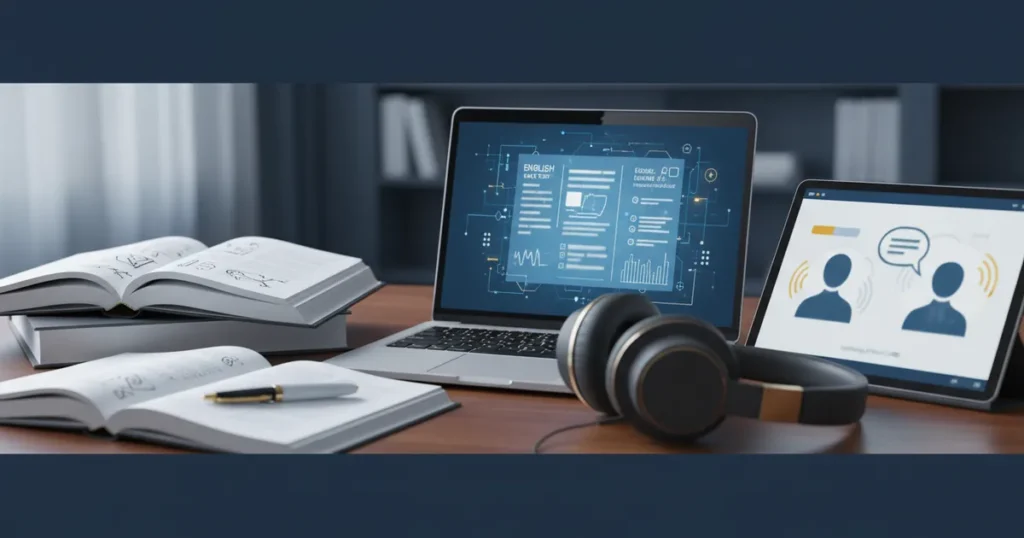
Deciding between the traditional paper format and the modern IELTS computer based test is often the first major hurdle for candidates in 2026. As the world moves increasingly toward digital solutions, the International English Language Testing System has evolved to meet the needs of a tech-savvy generation. Whether you are aiming for a master’s degree in London or looking to meet the IELTS band score requirements for Canadian universities 2026, choosing the right delivery format can significantly impact your comfort level and, ultimately, your final band score.
In this comprehensive guide, we will break down every nuance of the IELTS computer based test versus its paper-based counterpart. As an experienced tutor, I have seen students flourish in both formats, but the “best” choice is entirely subjective. It depends on your typing speed, your reading habits, and even how you manage your time under pressure. By the end of this article, you will have a clear roadmap to decide which path leads to your target score.
The stakes are high, and the preparation required for each version differs slightly in terms of strategy. While the content, difficulty level, and marking criteria remain identical across both versions, the “user experience” is worlds apart. Let’s dive deep into the technical and practical differences that will define your testing experience in 2026.
What is the IELTS Computer Based Test?
The IELTS computer based test (often referred to as CD-IELTS) is exactly what it sounds like: a version of the exam where you sit in a secure testing center and input your answers via a keyboard and mouse. It was introduced to provide more frequent test dates and faster results. In 2026, it has become the preferred choice for many because of its streamlined nature. You still go to an official test center; you do not take this test from your home laptop. This ensures the integrity and security that the IELTS official website mandates for all its high-stakes examinations.
Many students worry that the computer version might be harder. Let me clear that up immediately: the questions are exactly the same level of difficulty as the paper version. The Listening, Reading, and Writing tasks are delivered via a computer interface, while the Speaking test remains a face-to-face interaction with a human examiner. If you are just starting your journey, I highly recommend checking out our Complete Guide to the IELTS Test to understand the foundational structure of the exam.
Key Differences in the Reading Section
The Reading section is where most candidates feel the biggest difference between the two formats. In the paper-based test, you have a physical booklet. You can underline words, circle keywords, and flip back and forth between the text and the questions. In the IELTS computer based test, the screen is split. The text appears on the left side, and the questions appear on the right. This eliminates the need to flip pages, which many students find saves them valuable seconds.
Highlighting and Note-Taking
On a computer, you can still “highlight” text by selecting it with your mouse and right-clicking. You can also add “notes” to specific sections. However, this is not as tactile as using a pencil. If you are someone who needs to physically scribble in the margins to think, you might find the digital interface slightly restrictive at first. It is essential to practice specific strategies, such as the IELTS Reading Matching Headings strategy, on a screen to get used to the vertical scrolling and split-screen layout.
Navigation and Question Types
Navigating through forty questions is arguably easier on a computer. There is a navigation bar at the bottom of the screen that shows you which questions you have answered and which ones you have “flagged” for review. This is particularly helpful for complex tasks like IELTS Reading True False Not Given questions, where you might want to return to a tricky statement after finishing the rest of the passage. You don’t have to worry about missing a page or failing to see a question on the back of a sheet.
Listening: Headphones vs. Speakers
In the paper-based test, the Listening audio is usually played through room speakers. While test centers try to ensure high-quality sound, factors like room acoustics or a noisy neighbor can be distracting. The IELTS computer based test provides every candidate with their own set of high-quality headphones. You can adjust the volume to your specific preference, which is a massive advantage for focus.
The Transfer Time Difference
This is a critical technical difference. In the paper-based test, you get 10 minutes at the end of the Listening section to transfer your answers from the question paper to the answer sheet. In the computer-based version, you enter your answers directly into the computer as you listen. Consequently, you only get 2 minutes at the end to check your work. You must be comfortable multi-tasking—typing while listening—to succeed here. For practice, try our listening exercise on Copying Photos to Digital Format to see how you handle digital data entry while the audio plays.
Writing: The Ultimate Game Changer
For many, the Writing section is the deciding factor for choosing the IELTS computer based test. If your handwriting is messy or if you find that your hand cramps after ten minutes of writing, the computer is your best friend. In 2026, most professionals and students type faster than they write by hand. This speed allows for more time to plan and edit your essays.
Automatic Word Count
One of the most stressful parts of the paper test is counting your words to ensure you’ve met the 150-word (Task 1) and 250-word (Task 2) requirements. On the computer, the word count is displayed live on the screen. This allows you to focus entirely on your vocabulary and grammar rather than doing manual arithmetic. For instance, when following our IELTS Writing Task 1 bar chart guide, you can see exactly when you hit that 150-word sweet spot and then spend the remaining time refining your comparisons.
Editing and Organization
The ability to “copy, cut, and paste” is a superpower in the Writing section. If you realize your second paragraph would work better as your introduction, you can move it in seconds. In the paper test, moving a whole paragraph involves a messy series of arrows or erasing large sections of text, which wastes time and looks unprofessional. Whether you are writing an academic essay or an IELTS General Training formal letter, the flexibility of a word processor is a significant advantage.
The Speaking Test: Human Connection Remains
Despite the technological shift in other sections, the IELTS Speaking test remains a human-to-human interaction. Whether you choose the IELTS computer based test or the paper-based version, you will sit with a certified examiner. Some centers now offer “Video-Call Speaking” where the examiner is on a screen in front of you, but the format and the interaction are the same. This is designed to test your real-world communication skills, which a computer algorithm cannot yet accurately assess. You can find more about what to expect in our General Overview of IELTS Speaking lesson.
Comparing the Formats: At a Glance
To help you visualize the differences, I have compiled this comparison table based on the 2026 testing standards. This should help you identify which features align with your personal strengths.
| Feature | Paper-Based Test (PBT) | Computer-Based Test (CBT) |
|---|---|---|
| Results Delivery | 13 Calendar Days | 3 to 5 Days |
| Listening Audio | Speakers (usually) | Individual Headphones |
| Reading Layout | Physical Booklet (Page flipping) | Split Screen (Scrolling) |
| Writing Method | Pencil and Paper | Keyboard and Mouse |
| Word Count | Manual counting | Automatic on-screen count |
| Speaking Test | Face-to-face with examiner | Face-to-face (or Video Call) |
| Test Availability | Fixed dates (usually 4x a month) | Almost every day, multiple slots |
Why Choose the IELTS Computer Based Test?
The IELTS computer based test has surged in popularity for several logistical reasons. First and foremost is the speed of results. If you are facing a tight deadline for a visa application or university admission, waiting 13 days for paper results can be agonizing. Getting your scores in as little as 72 hours is a massive relief.
Secondly, the availability of test dates is much higher. Because computer labs can accommodate multiple sessions a day, you can often find a slot that fits your schedule perfectly, rather than being forced to take a Saturday morning off. This flexibility is a hallmark of the British Council IELTS and IDP offerings globally.
The transition to computer-delivered testing isn’t just about technology; it’s about candidate agency. When a student can see their word count in real-time and edit their thoughts fluidly, the barrier between their English proficiency and their test performance begins to disappear.
Senior IELTS Instructor, SimplyIELTS
Who Should Stick to the Paper-Based Test?
While the computer version is excellent, it isn’t for everyone. You should consider the paper-based test if:
- You have a very slow typing speed (less than 30 words per minute).
- You get significant “eye strain” from looking at computer screens for three hours.
- You have a deep-rooted habit of underlining and circling text while reading.
- You feel anxious using a mouse and keyboard under timed conditions.
If you fall into these categories, don’t feel pressured to go digital. The most important thing is your comfort. A high score on paper is much better than a low score on a computer because you were fumbling with a mouse. Remember to browse our IELTS Tips section for general advice that applies to both formats.
Expert Tips for Success on the Computer
If you have decided that the IELTS computer based test is the right choice for you, here are some actionable tips to ensure you maximize your performance on test day:
- Practice Typing: Don’t let your first time typing an academic essay be on the day of the exam. Use a standard QWERTY keyboard to practice.
- Learn the Shortcuts: While the mouse is essential, knowing Ctrl+C (Copy) and Ctrl+V (Paste) can save you precious seconds in the Writing section.
- Get Used to the Scroll: In the Reading section, some texts are long. Practice reading long-form articles online to get used to tracking information as you scroll.
- Check Your Spelling: Unlike Word or Google Docs, the IELTS software does NOT have a spell-checker or auto-correct. You must be diligent in checking your own typos.
- Use the “Review” Button: If a question is taking too long, flag it and move on. The navigation bar at the bottom will remind you to come back to it.
- Familiarize Yourself with the UI: Use the official practice materials to see what the buttons look like. Knowing where the “volume” slider is or how to change the background color/text size can reduce anxiety.
- Manage Your Time: The clock is always visible at the top of the screen. It turns red when you have 10 and 5 minutes remaining. Use this to pace yourself.
Final Verdict: Which Format is Better in 2026?
As we look at the landscape of English proficiency testing in 2026, the IELTS computer based test is clearly the future. Its efficiency, faster results, and superior writing tools make it the logical choice for the majority of candidates. However, the “better” format is the one that makes you feel most confident. If you are still unsure, I recommend taking a full-length mock test in both formats. Observe your stress levels and your final scores in each.
Regardless of the format you choose, success in IELTS comes down to preparation and strategy. Whether you are mastering Matching Information to Paragraphs or perfecting your Task 2 introduction, the skills required are the same. Focus on building your language proficiency first, and then adapt those skills to your chosen platform.
Conclusion and Next Steps
Choosing between the IELTS computer based test and the paper-based test is a personal decision that should be based on your technical comfort and your timeline. In 2026, the digital version offers undeniable advantages in terms of speed and convenience, but the paper version remains a reliable “old school” alternative for those who prefer it.
Ready to start your journey? At SimplyIELTS, we provide the tools you need to succeed in either format. From detailed strategy guides to full-length practice exams, we are here to help you reach your target band score. Explore our About Us page to learn more about our mission, or jump straight into our lessons to begin your preparation today. Your future at a top university or in a new country is just one successful test away—choose the format that lets your skills shine!



Responses