
IELTS Computer-Based vs Paper-Based 2026: Key Differences Explained



As we navigate the evolving landscape of international education and migration, choosing the right test format has never been more critical. For many candidates, the decision between sitting at a desk with a pencil or in front of a high-tech monitor is the first major hurdle of their preparation. In this guide, we provide the ultimate breakdown of ielts computer-based vs paper-based 2026: key differences explained to help you make an informed choice that aligns with your strengths and goals.
The year 2026 marks a significant milestone in English language testing. With more test centers globally shifting toward digital-first delivery, understanding the nuances of these formats is essential. Whether you are aiming for a top-tier university or a professional visa, the way you interact with the test content can significantly impact your final band score. This comprehensive analysis will dive deep into the technicalities, the psychological aspects, and the practical logistical differences of both versions of the IELTS exam.
At SimplyIELTS, we have observed thousands of students struggle not with the English language itself, but with the delivery format of the test. By the end of this article, you will have a clear roadmap for your 2026 preparation, ensuring that your choice of ielts computer-based vs paper-based 2026: key differences explained serves as a catalyst for your success rather than a barrier. If you are just starting, you might also want to explore our detailed guide on ielts academic vs general to ensure you’re booked for the correct module.
IELTS Computer-Based vs Paper-Based 2026: Key Differences Explained
The fundamental content of the IELTS remains identical regardless of the format. You will face the same types of questions, the same level of difficulty, and the same scoring criteria. However, the experience of “taking” the test is worlds apart. In 2026, the Computer-Delivered IELTS (CD IELTS) has become the standard in most urban centers, while the Paper-Based IELTS (PB IELTS) remains a popular choice for those who prefer traditional methods of annotation and writing.
1. The Writing Experience: Typing vs. Handwriting
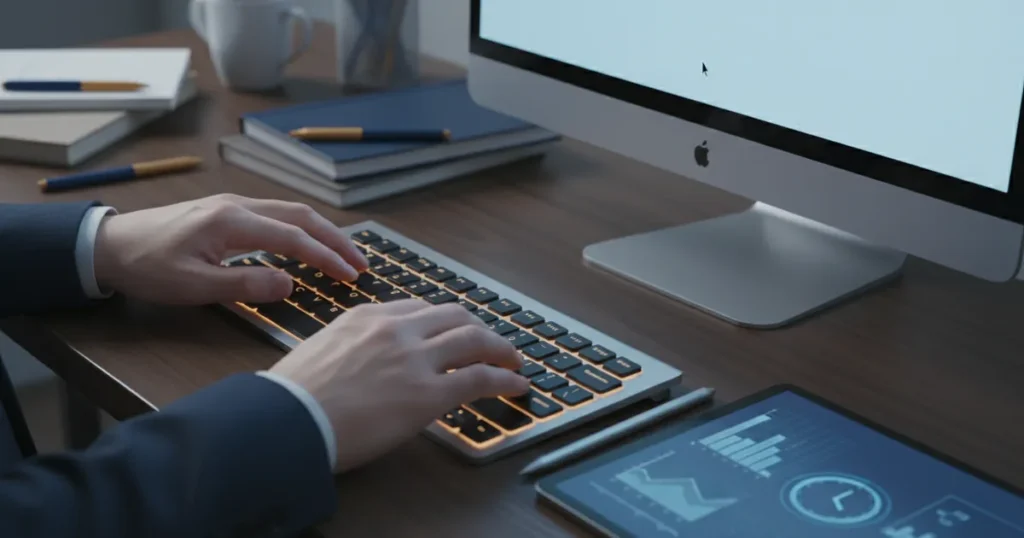
The most glaring difference lies in the Writing module. In the paper-based version, you must write your essays by hand. This requires legible handwriting and manual word counting, which can be stressful under time pressure. Conversely, the computer-based version allows you to type your responses. A major advantage here is the automatic word count feature, which eliminates the need to guess if you have met the 150 or 250-word requirements. For more strategies on mastering this section, see our latest ielts writing tips.
2. Listening Module: Headphones and Transfer Time
In the paper-based test, audio is often played through room speakers, although some centers now provide headphones. Crucially, you get 10 minutes at the end to transfer your answers from the question paper to the answer sheet. In the computer-based test, you are always provided with high-quality noise-canceling headphones. However, you only get 2 minutes to check your answers at the end, as you enter them directly into the computer during the test. Practice is key here; we recommend using our ielts listening practice to get used to the fast-paced digital entry.
3. Reading Module: Navigation and Highlighting
The computer-based Reading test uses a split-screen view. The text is on the left, and the questions are on the right. This eliminates the need to flip back and forth between pages, which is a common complaint in the paper-based format. While you cannot “circle” words on a screen, the computer version allows you to highlight text and add digital notes by right-clicking. Many students find this more efficient for the “matching headings” or “True/False/Not Given” question types.
Comparative Data: 2026 Format Breakdown
To help visualize the ielts computer-based vs paper-based 2026: key differences explained, we have compiled a comparison table based on current 2026 testing standards provided by official bodies like the British Council.
| Feature | Computer-Based IELTS | Paper-Based IELTS |
|---|---|---|
| Result Turnaround | 3 to 5 days | 13 days |
| Writing Method | Keyboard typing | Pencil and Paper |
| Listening Transfer Time | 2 minutes | 10 minutes |
| Test Frequency | Up to 7 days a week | Fixed dates (usually 4x a month) |
| Word Count | Automatic on-screen | Manual counting required |
| Reading Layout | Split-screen (Text & Questions) | Multi-page booklet |
| Speaking Test | Face-to-face or Video Call | Face-to-face with examiner |
Why This Choice Matters for Your IELTS Journey
Choosing the wrong format can lead to unnecessary anxiety. If you are a “digital native” who spends eight hours a day on a laptop, the paper-based test might feel archaic and slow. Your hand might cramp during the Writing section, and your speed might suffer. On the other hand, if you are not comfortable with a QWERTY keyboard, the computer-based test could result in numerous typos, which will negatively impact your Lexical Resource and Grammatical Accuracy scores.
Furthermore, the 2026 landscape shows that the ielts online preparation industry is heavily leaning towards computer-based simulations. This is because the digital format allows for instant feedback and more accurate progress tracking. When you practice on a platform that mirrors the real exam interface, you build “muscle memory” for the actual test day.
“The shift to computer-based testing isn’t just about technology; it’s about accessibility and speed. In 2026, students who choose the computer format often feel more in control of their timing, especially in the Writing module where editing is as simple as copy-paste.”
Senior Instructor, SimplyIELTS.com
Step-by-Step Practical Guide: How to Choose Your Format
If you are still undecided after reading about the ielts computer-based vs paper-based 2026: key differences explained, follow this step-by-step diagnostic to find your perfect match.
- Assess Your Typing Speed: Take an online typing test. If you type slower than 30 words per minute, the computer-based Writing section may be a struggle.
- Check Your Handwriting: Write a 250-word essay on paper. Is it easily readable by a stranger? If your handwriting is messy, you risk losing marks for clarity in the paper-based test.
- Evaluate Your Reading Habits: Do you prefer reading news on your phone/laptop, or do you still enjoy physical books and newspapers? Digital readers usually transition better to the computer-based Reading module.
- Consider Your Deadline: Do you need your results urgently? The computer-based test delivers results in less than a week, making it the superior choice for last-minute applications.
- Trial Both Formats: Use our ielts writing correction service to see how your typed vs. handwritten essays compare in quality and speed.
Deep Dive: The Pros and Cons of Each Format
Computer-Based IELTS in 2026
Pros:
- Editing Efficiency: You can easily delete, move, and rewrite sentences in the Writing module without making a mess on the paper.
- Legibility: You don’t have to worry about the examiner misunderstanding your letters.
- Quiet Environment: Computer-based labs are often smaller and quieter than large exam halls.
- Timer: A clear digital clock at the top of the screen turns red when you have 10 and 5 minutes remaining.
Cons:
- Screen Fatigue: Staring at a monitor for 3 hours can be taxing for some individuals.
- Technical Glitches: While rare in 2026, software issues can occasionally occur.
- No “Note-Taking” on Paper: While you get a piece of paper for notes, you cannot write directly on the digital question “booklet” as you would with a physical one.
Paper-Based IELTS in 2026
Pros:
- Tactile Interaction: Many students find it easier to focus when they can underline keywords and circle information with a pencil.
- Familiarity: It mimics the traditional school/university exam environment that most people grew up with.
- Listening Transfer Time: The extra 10 minutes at the end of the Listening section is a great “breathing space” to check spellings.
Cons:
- Hand Strain: Writing for an hour straight can be physically exhausting.
- Slow Results: Waiting 13 days can be agonizing if you are on a tight deadline.
- Limited Dates: You have to plan your life around specific Saturdays or Thursdays.
Expert Recommendations for 2026
As we look at the ielts computer-based vs paper-based 2026: key differences explained, our expert recommendation for the majority of students is to opt for the Computer-Based IELTS. The faster results, the word count feature, and the ability to edit the Writing section are massive advantages that outweigh the learning curve of the software.
However, we emphasize that preparation must be format-specific. If you choose the computer version, do not practice using only pen and paper. Use digital tools and simulators. Conversely, if you choose the paper version, make sure you are practicing on official-style answer sheets to get used to the spacing and layout. For those looking for the latest trends in the Speaking module, check out our 2026 guide on ielts speaking topics (updated for the current year).
Quick Tip: The Speaking Test is the Same!
Many students mistakenly believe that the computer-based test involves speaking to a computer (like the PTE or TOEFL). This is incorrect. In 2026, the IELTS Speaking test remains a human-to-human interaction. Even in the computer-based version, you will either sit in a room with an examiner or speak to them via a high-definition video call. The criteria for marking remain exactly the same.
Actionable Tips for Your 2026 IELTS Prep
- Master the “Right-Click”: In the computer-based Reading test, the right-click function is your best friend for highlighting. Practice this until it becomes second nature.
- Simulate the Environment: If taking the computer test, practice in a room with a keyboard, not just a laptop trackpad. The feel of the keys matters.
- Watch the Clock: In the paper test, you are dependent on the wall clock or the invigilator’s announcements. In the computer test, the on-screen timer is your primary guide.
- Spelling Matters: In the computer version, there is no spell-check. You must be just as careful with your spelling as you would be on paper.
- Check for “Ghost” Spaces: When typing your answers in the Listening or Reading sections, ensure you don’t accidentally hit the spacebar at the end of a word, as this can sometimes be flagged as an error.
- Stay Updated: Regularly visit the official British Council site to check for any local changes in test center technology for 2026.
Frequently Asked Questions
Is the computer-based IELTS easier than the paper-based?
No. The difficulty level of the questions is identical. The “ease” comes from your personal comfort with technology. If you type faster than you write, it will feel easier. If you prefer underlining on paper, the paper-based test will feel easier.
Can I take the computer-based test from home in 2026?
While “IELTS Online” exists in some regions, the standard “Computer-Based IELTS” is still taken at an official, secure test center. “IELTS Online” has specific requirements and is not accepted by all immigration authorities or universities, so always check your requirements first.
Do I need to bring my own laptop?
No. The test center provides all necessary equipment, including the computer, keyboard, mouse, and headphones. You are not allowed to use your own devices for security reasons.
Are the scores treated differently by universities?
Absolutely not. Your TRF (Test Report Form) will look the same, and institutions generally do not even know which format you took. They only care about your band scores.
Conclusion: Making Your Decision
In the debate of ielts computer-based vs paper-based 2026: key differences explained, there is no universal “better” option—only the option that is better for you. By 2026, the infrastructure for digital testing has matured to a point where it offers a seamless, efficient experience for the modern candidate. However, the integrity and reliability of the paper-based test remain a solid fallback for those who value tradition.
Before you book your test, we strongly recommend taking a full-length mock exam in both formats. Observe your stress levels, your time management, and your overall comfort. Remember, the goal is to eliminate any technical friction so that your true English proficiency can shine through.
Ready to start your journey? Whether you choose bits or ink, SimplyIELTS is here to support you. Explore our ielts online preparation for comprehensive lessons, or if you’re focusing on your writing, submit your first essay to our ielts writing correction service today. Let’s get you that Band 8.0!
Next Steps After Reading This Guide:
- Book a Mock: Find a local center that offers a “Computer-Delivered IELTS Familiarisation Test.” It’s usually free.
- Analyze Your Results: Compare your scores and how you felt during the session.
- Start a Study Plan: Once the format is decided, stick to it. Don’t switch back and forth during your preparation.
- Join a Community: Follow SimplyIELTS for more 2026 updates and tips from successful candidates.




Responses