
IELTS Paper-Based Test 2026: Complete Guide for First-Time Candidates


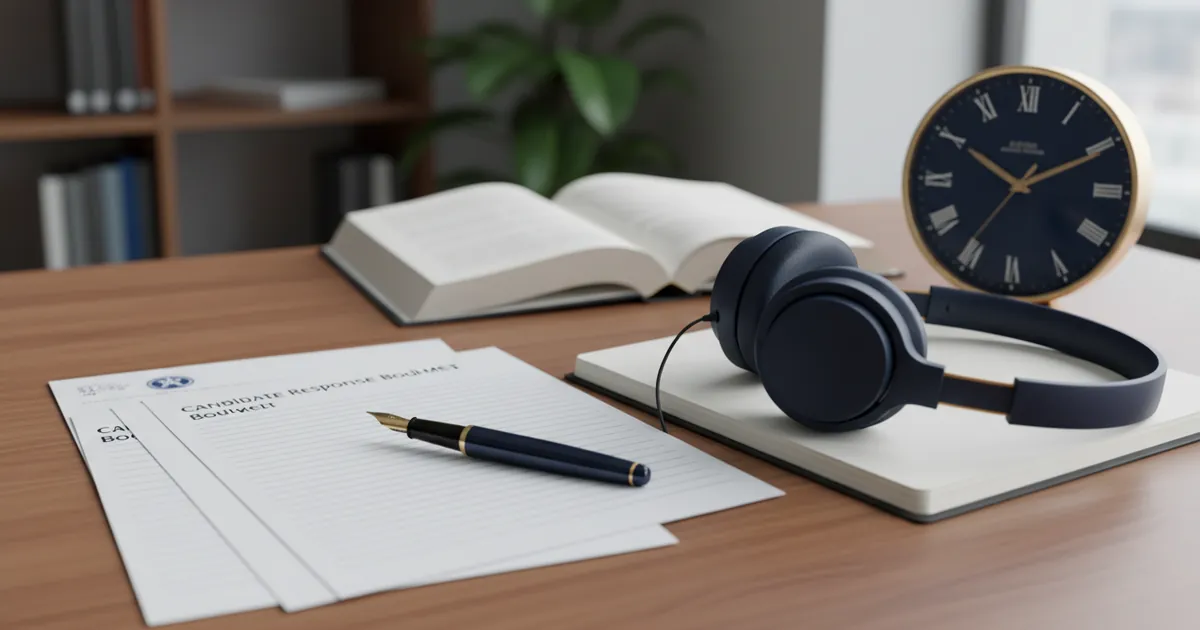
Stepping into the world of international English proficiency can feel like navigating a labyrinth, especially as we approach a new year of testing standards. If you are planning to take your exam soon, you have likely asked yourself whether you should stick to the traditional pen-and-paper method or opt for the digital version. This ielts paper-based test 2026: complete guide for first-time candidates is designed to demystify the process, provide you with actionable strategies, and help you decide if the tactile experience of paper is the right path for your academic or migration goals.
Despite the rapid rise of computer-delivered testing, the paper-based format remains a steadfast favorite for thousands of candidates globally. In 2026, the core structure of the IELTS remains consistent, but the environment in which you take the test continues to evolve with stricter security and more streamlined registration processes. Whether you are aiming for a university spot in the UK or a visa for Australia, understanding the nuances of the paper-based format is the first step toward achieving your target band score.
Success in the IELTS is not just about your English level; it is about your familiarity with the test format. By choosing the paper-based route, you are choosing a method that allows for physical interaction with the text—underlining keywords, circling instructions, and flipping through pages. In this guide, we will break down every component of the test, from the initial registration to the moment you receive your results, ensuring you feel confident and prepared for the big day.
Quick Answer: Is the IELTS Paper-Based Test Right for You in 2026?
The ielts paper-based test 2026: complete guide for first-time candidates suggests that this format is ideal if you have strong handwriting, prefer reading long passages on physical paper, and feel more comfortable with a traditional classroom-style exam setting. Unlike the computer-delivered test, where results are available in 3-5 days, the paper-based test results typically take 13 days. However, the extra time spent waiting is often worth it for candidates who find on-screen reading fatiguing or who struggle with fast typing speeds.
In 2026, the paper-based test continues to offer the same four modules: Listening, Reading, Writing, and Speaking. The first three are taken on the same day in a single sitting, while the Speaking test may be scheduled up to seven days before or after the main test date. If you are someone who likes to “visualize” your progress by seeing the physical thickness of the test booklet decrease as you work, the paper-based format provides a psychological comfort that digital screens often lack.
Decoding the IELTS Paper-Based Test 2026: Complete Guide for First-Time Candidates
When we look at the specifics of the paper-based exam, it is essential to understand that the content, difficulty level, and scoring criteria are identical to the computer-delivered version. The difference lies entirely in the delivery method. For many, the ability to annotate the question paper is a game-changer. If you’re worried about specific sections, our IELTS General Training Reading task types guide is a great place to start understanding how paper allows for better navigation of complex texts.
The Listening Module: The 10-Minute Advantage
One of the most significant advantages of the paper-based test is the final 10 minutes of the Listening section. While computer-delivered candidates only get 2 minutes to check their answers, paper-based candidates are given a full 10 minutes to transfer their notes from the question booklet to the official answer sheet. This is a crucial window to check for spelling errors and ensure that singular/plural nouns are used correctly. To sharpen your skills, you should regularly practice with our IELTS listening practice tests to get used to the pacing and the transfer process.
The Reading Module: Scanning and Skimming on Paper
In the Reading module, you have 60 minutes to answer 40 questions. On paper, you can see the entire passage and the questions simultaneously without scrolling. This makes “scanning” for keywords significantly faster for many people. You can physically underline potential answers in the text, which helps in cross-referencing when you reach the more difficult “True, False, Not Given” questions. We recommend you prepare for the reading section with our IELTS reading practice tests to master the art of time management on paper.
The Writing Module: Managing Space and Legibility
Writing is perhaps the most debated section when choosing between paper and computer. In the paper-based test, you must be mindful of your handwriting. If the examiner cannot read your writing, they cannot grade it. However, many candidates find that brainstorming and outlining ideas is more natural with a pencil. Mastering IELTS Writing Task 1 vocabulary is essential for the paper test, as you need to be precise and concise within the physical limits of the answer sheet. You don’t have a word counter on paper, so you must learn to estimate your word count based on the number of lines you fill.
Comparison Table: Paper vs. Computer in 2026
To help you visualize the differences, here is a breakdown of how the two formats compare in the current testing landscape.
| Feature | Paper-Based Test | Computer-Delivered Test |
|---|---|---|
| Results Delivery | 13 Days | 3-5 Days |
| Listening Transfer Time | 10 Minutes | 2 Minutes (Review only) |
| Writing Method | Pencil and Paper | Keyboard and Mouse |
| Reading Navigation | Physical page turning | On-screen scrolling |
| Speaking Test | Face-to-face with examiner | Face-to-face or via Video Call |
| Availability | Fixed dates (usually 48/year) | Almost daily in major cities |
What Examiners and Test Centres Say
Examiners often note that paper-based candidates tend to have more organized “working notes” in their margins, which can lead to higher accuracy in the Reading and Listening sections. However, they also caution that the lack of an automatic word count in the Writing section often leads to candidates writing either too little (incurring a penalty) or too much (running out of time). Test centres emphasize that the ielts paper-based test 2026: complete guide for first-time candidates must highlight the importance of arriving early, as the check-in process for large groups can be time-consuming.
“The biggest mistake we see in paper-based candidates is not the lack of English knowledge, but the failure to manage the physical aspects of the test—like forgetting to transfer answers to the sheet or writing illegibly under pressure.”
Senior IELTS Examiner, 2025
Key Tips and Practical Advice for 2026 Candidates
If you have decided that the paper-based route is for you, follow these actionable tips to maximize your score:
- Practice Handwriting Daily: In an age of smartphones, our handwriting muscles can get weak. Spend at least 30 minutes a day writing long-form essays by hand to build stamina.
- Use an HB Pencil: The scanners used by the British Council and IDP work best with HB pencil marks. Ensure your erasures are clean to avoid confusion during the automated parts of the marking process.
- Learn to Estimate Word Counts: Count how many words you typically write per line. During the test, you can quickly count your lines and multiply by your average to see if you’ve met the 150/250 word requirements.
- Master the Transfer: Use your practice sessions to simulate the 10-minute transfer time in Listening. Do not wait until the actual test to see how long it takes you to copy 40 answers.
- Annotate Aggressively: Use the question paper to your advantage. Circle keywords in the Reading passages and underline instructions like “NO MORE THAN TWO WORDS” to avoid silly mistakes.
- Simulate the Environment: Take at least three full-length mock tests in a quiet room, sitting on a hard chair, without any digital distractions.
For those aiming high in Speaking, which is common to both formats, check our ultimate guide to scoring Band 7+. Even though the Speaking test is a separate session, your performance there is vital for your overall average.
Common Myths Debunked
Myth 1: The Paper Test is Easier than the Computer Test
This is false. The questions are pulled from the same pool of validated materials. A Reading passage on paper is the exact same level of difficulty as one on a screen. The “ease” comes from your personal preference, not the test content itself.
Myth 2: Examiners Grade Paper Tests More Harshly
Actually, examiners follow strict rubrics (Public Band Descriptors). Whether they are reading a scanned copy of your handwriting or a typed essay, the criteria for Task Response, Coherence and Cohesion, Lexical Resource, and Grammatical Range and Accuracy remain identical.
Myth 3: You Can’t Take the Paper Test if You Have Bad Handwriting
You can, but you must be careful. “Bad” handwriting is fine as long as it is “legible.” If an examiner has to guess what a letter is, they will likely mark it wrong. If your handwriting is truly unreadable, you might want to consider the computer-delivered version or consider enrolling in our IELTS online courses where we provide feedback on clarity and structure.
What to Do Before, During, and After Your 2026 Test
Before the Test: Preparation and Logistics
Your preparation should start at least 3 months in advance. Register your seat early, as paper-based sessions have limited capacity compared to computer labs. Check the official British Council Take IELTS website for local center details and available dates in 2026. Ensure your identification documents (Passport or National ID) are valid and match the name you used for registration.
During the Test: Managing the Clock
On the day of the test, you will not be allowed to bring a watch into the room. There will be a large clock on the wall. In the paper-based test, the invigilator will announce the time at 40 minutes, 20 minutes, 10 minutes, and 5 minutes remaining for the Reading and Writing sections. Use these announcements to pace yourself. If you finish early, do not just sit there—re-read your Writing Task 2 for grammar slips.
After the Test: The Waiting Game
Once you leave the exam hall, the 13-day countdown begins. You will receive an SMS or email notification when your results are ready. You can collect your Test Report Form (TRF) from the centre or have it mailed to you. Remember, your IELTS score is valid for two years, so keep this document safe as it is your ticket to your future endeavors.
Frequently Asked Questions (FAQs)
Can I use a pen in the paper-based test?
For the Listening and Reading sections, you MUST use a pencil because the answer sheets are scanned by a computer. For the Writing section, you can use a pen or a pencil, but most tutors recommend a pencil so you can erase mistakes neatly.
What happens if I make a mistake on the answer sheet?
Simply erase it completely and write the correct answer. Do not use correction fluid (white-out), as it is generally not permitted in the exam room.
Is the Speaking test also on paper?
No, the Speaking test is a face-to-face interview with a human examiner. It remains the same regardless of whether you chose the paper or computer format for the other three modules.
How many times can I take the paper-based test in 2026?
There is no limit to how many times you can take the test. However, we recommend waiting until you have significantly improved your English level before paying for another attempt.
Summary and Action Checklist
As we conclude this ielts paper-based test 2026: complete guide for first-time candidates, it is clear that success comes down to a blend of English proficiency and tactical execution. The paper-based test is a reliable, time-tested method that offers unique advantages for those who prefer physical media.
Your 2026 Action Plan:
- Choose your format: Confirm that you prefer handwriting over typing.
- Register early: Secure your spot 2-3 months in advance via the official British Council or IDP portals.
- Build a study routine: Focus on one skill per day, but integrate “handwriting practice” into all of them.
- Take Mock Exams: Use our IELTS reading practice tests and listening tests under timed conditions.
- Review Vocabulary: Ensure you are using high-level vocabulary for Writing Task 1 and Task 2.
- Stay Calm: On test day, remember that the paper is just a tool to show off the English skills you have worked so hard to build.
Are you ready to begin your journey? Explore our full range of IELTS online courses today and let us help you reach your target band score with confidence. The 2026 testing season is yours for the taking!



Responses