
Is IELTS Hard? Honest Difficulty Review for First-Time Test Takers 2026

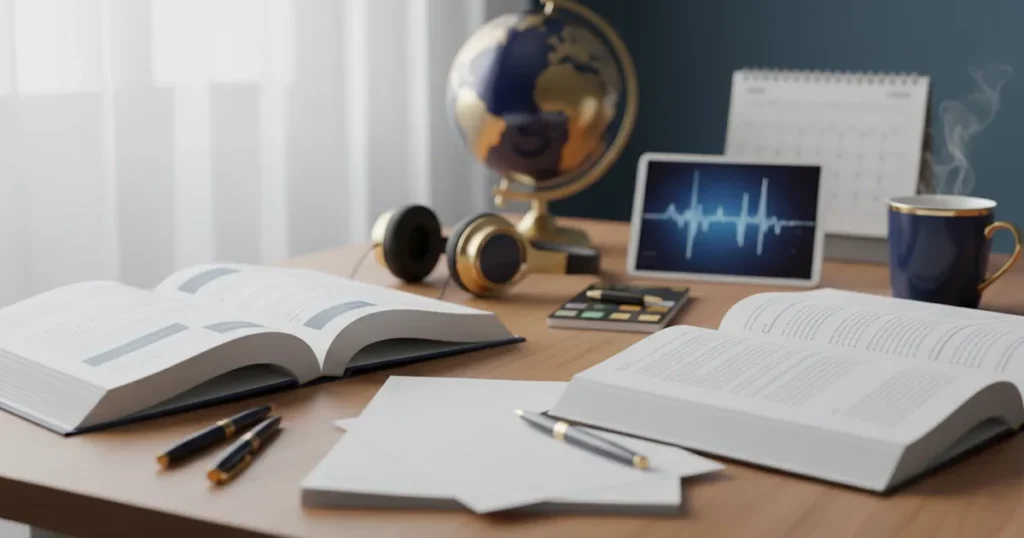

Stepping into the world of international English testing can feel like navigating a labyrinth without a map. If you are planning to move abroad for study or work, the question at the forefront of your mind is likely: is ielts hard? honest difficulty review for first-time test takers 2026. This concern is entirely natural. The International English Language Testing System (IELTS) is the world’s most popular high-stakes English language proficiency test, and its reputation for being a “gatekeeper” to global opportunities often precedes it. However, difficulty is subjective, and understanding what makes the test challenging—and what makes it manageable—is the first step toward success.
As we head into 2026, the landscape of the IELTS exam continues to evolve with more flexible options like the Computer-delivered IELTS and the “One Skill Retake” feature. Despite these technological advancements designed to make the test-taking experience smoother, the core academic standards remain rigorous. In this guide, we will peel back the layers of the exam to provide a transparent look at what you can expect. Whether you are aiming for a Band 7.0 for a Master’s degree or a Band 8.0 for migration, this review is designed to ground your expectations in reality and equip you with the mindset needed to conquer the challenge.
The short answer to the question is that IELTS is not “hard” in the sense of being a trick-based exam; rather, it is a comprehensive assessment of your ability to communicate effectively in English. It tests your stamina, your precision, and your ability to synthesize information under pressure. For a first-time test taker, the difficulty often lies not in the English language itself, but in the specific format and the strict timing of the test modules. By the end of this article, you will have a clear understanding of why some find it daunting and how you can transform that difficulty into a structured path toward your target score.
Is IELTS Hard? Honest Difficulty Review for First-Time Test Takers 2026: The Quick Answer
If you are looking for a straightforward verdict, here it is: IELTS is moderately difficult for those who treat it like a standard school exam, but it is highly achievable for those who treat it as a skill-based performance. The difficulty of the IELTS depends heavily on your current English proficiency level and your familiarity with the test format. For most first-time test takers in 2026, the real challenge is the “IELTS logic”—the specific way the test asks questions and expects answers. It is quite possible for a native speaker to get a lower score than a prepared non-native speaker simply because they didn’t understand the marking criteria.
To succeed, you must move beyond general English and focus on academic or workplace-specific communication. The test is designed to reflect how you will use English in the real world. Therefore, the “hardness” is often a reflection of a gap in specific skills, such as skimming a 900-word text in minutes or maintaining a coherent argument in an essay. If you approach your preparation by taking a Free IELTS Mock Test Online, you will quickly see where your personal “difficulty” lies, allowing you to bridge that gap before the actual test day.
Breaking Down the Difficulty by Module
To provide an is ielts hard? honest difficulty review for first-time test takers 2026, we must look at the four distinct components of the test. Each module presents its own set of hurdles, and most candidates find that they have a “strong” module and a “weak” module.
IELTS Listening: The Challenge of Concentration
Listening is often considered the easiest module to score highly in, but it is also the easiest to fail due to a momentary lapse in focus. In 2026, the recordings feature a variety of accents—British, American, Australian, and Canadian—which can be tricky for those only used to one type of media. The difficulty here isn’t just understanding the words; it’s the multitasking. You must listen, read the questions, and write your answers simultaneously. To master this, you should study how to improve IELTS Listening scores to Band 8.0 or higher in 2026, focusing specifically on “distractors”—information the speaker says and then corrects.
IELTS Reading: A Race Against the Clock
Reading is where many first-time takers struggle with time management. You are required to answer 40 questions based on three long texts in just 60 minutes. The Academic version includes complex, semi-scientific or sociological texts that can be intimidating. The difficulty lies in the question types, such as “Matching Headings” or “True/False/Not Given.” Many students lose marks because they “overthink” the text rather than using specific IELTS Reading strategies 2026 like skimming for the main idea and scanning for keywords.
IELTS Writing: The Toughest Nut to Crack
Statistically, Writing is the lowest-scoring module globally. Why? Because it requires a very specific structure and a high level of grammatical range. For Task 2, you must produce a 250-word essay that is logically organized and addresses all parts of the prompt. First-timers often fail because they write a general essay rather than following a strict IELTS Writing Task 2 structure guide. The examiners are looking for “Cohesion and Coherence,” which means your ideas must flow logically using transition words.
IELTS Speaking: Managing the Nerves
The Speaking test is a face-to-face (or via video call) interview with a certified examiner. The difficulty here is largely psychological. Many candidates freeze or become overly repetitive when they are nervous. To score well, you need to display “Lexical Resource,” which involves using a variety of IELTS Speaking vocabulary 2026 without sounding like you have memorized a dictionary. It’s about natural fluency and the ability to expand on your answers.
What the Experts Say: A Professional Perspective
Understanding the examiner’s perspective can demystify the perceived difficulty of the test. Examiners are not looking for perfection; they are looking for “communicative competence.” They use a set of public band descriptors to grade your performance objectively.
The IELTS exam is designed to be a fair reflection of a candidate’s ability to survive and thrive in an English-speaking environment. The ‘difficulty’ candidates face is usually a lack of familiarity with the assessment criteria rather than a lack of English knowledge. Once a student understands what we are looking for in terms of task response and coherence, their scores tend to jump significantly.
Senior IELTS Examiner, 2026 Panel
To get a feel for this, many students find it helpful to engage in a IELTS Speaking practice test to receive feedback that aligns with official standards. Similarly, taking structured IELTS Writing Task 2 lessons can help you see the “logic” behind the marking, making the test feel much less like an insurmountable wall.
Difficulty Comparison: Academic vs. General Training
One common question in our is ielts hard? honest difficulty review for first-time test takers 2026 is which version of the test is harder. While the Listening and Speaking modules are identical for both, the Reading and Writing modules differ significantly.
| Feature | Academic IELTS | General Training IELTS |
|---|---|---|
| Reading Content | Complex texts from journals, books, and magazines. | Workplace manuals, advertisements, and general interest. |
| Writing Task 1 | Describing a visual (graph, chart, diagram). | Writing a formal, semi-formal, or informal letter. |
| Reading Scoring | More ‘lenient’ (fewer correct answers needed for a Band 7). | Stricter (more correct answers needed for a Band 7). |
| Overall Difficulty | Higher cognitive demand for analysis. | Higher demand for accuracy in everyday contexts. |
Key Tips for Overcoming the Difficulty
If you are feeling overwhelmed, remember that preparation is the ultimate antidote to difficulty. Here are the most effective ways to prepare for your first attempt in 2026:
- Understand the Band Descriptors: Don’t guess what the examiner wants. Read the public version of the marking criteria for Writing and Speaking.
- Practice Under Timed Conditions: Doing a Reading test in two hours is easy; doing it in 60 minutes is the real challenge. Always use a timer.
- Focus on Your Weaknesses: If you are naturally good at speaking but struggle with grammar, spend 70% of your time on Writing.
- Use Official Materials: Always refer to the British Council for official practice papers to ensure the difficulty level is authentic.
- Build a Vocabulary Bank: Don’t just learn words; learn collocations (words that naturally go together) and how to use them in context.
- Take a Structured Course: If you feel lost, an Online IELTS Preparation Course can provide the roadmap you need to stay on track.
- Master the “One Skill Retake”: In 2026, if you underperform in just one module, you may be eligible to retake only that part. This significantly reduces the pressure on your first attempt.
Common Myths Debunked
Part of why people ask is ielts hard? honest difficulty review for first-time test takers 2026 is due to the myths circulating on social media. Let’s clear some of those up:
Myth 1: Certain Test Centers are “Easier”
This is false. IELTS examiners undergo rigorous training and regular monitoring to ensure consistency worldwide. Whether you take the test in London, Mumbai, or Sydney, the marking standards are identical. Your score depends on your performance, not your location.
Myth 2: You Need “Big Words” to Get a Band 9
Actually, using complex vocabulary incorrectly (a “vocabulary dump”) will lower your score. Examiners prefer “less common” words used accurately and naturally. Clarity is always more important than complexity.
Myth 3: The Computer-Delivered Test is Harder
The content is the same. The “difficulty” depends on your typing speed versus your handwriting speed. Many 2026 test takers prefer the computer version because it includes a word count tool for Writing and allows you to easily edit your answers.
What to Do: Before, During, and After the Test
Success in IELTS isn’t just about what happens during the three hours of the exam; it’s about the entire process. Here is a timeline to help you manage the difficulty effectively.
Before the Test: The Foundation Phase
In the 2-3 months leading up to your exam, focus on immersion. Read English news, listen to podcasts, and write daily. This is the time to take a Free IELTS Mock Test Online to establish your baseline. If you are scoring a 5.5 and need a 7.5, you know you need a significant period of intensive study rather than a “quick fix.”
During the Test: The Execution Phase
On test day, mindset is everything. For the Listening module, if you miss an answer, let it go immediately. If you dwell on it, you will miss the next three questions. In the Reading module, don’t read every word; use your skimming and scanning skills. In Writing, spend the first 5 minutes planning your essay structure—this prevents you from getting stuck halfway through.
After the Test: The Reflection Phase
Once the test is over, take a breath. Results for the computer-delivered test usually arrive in 3-5 days, while paper-based results take 13 days. If you didn’t get the score you needed, don’t panic. Analyze your “Test Report Form” (TRF). If you were only 0.5 off in one category, look into the “One Skill Retake” option available in many regions in 2026.
Frequently Asked Questions
How long does it take to prepare for IELTS?
For most students, 8 to 12 weeks of consistent study is sufficient to see a significant improvement in their band score. However, this depends on your starting level. If you are already at a C1 level of English, you might only need 2-3 weeks to learn the test format.
Is the IELTS Speaking examiner trying to trick me?
No. The examiner’s job is to help you perform at your best. If they interrupt you, it’s usually because they have heard enough to grade that specific skill and need to move on to the next part of the test to ensure you have the chance to show a range of abilities.
Can I use American English in the IELTS?
Yes. IELTS accepts both British and American spellings and vocabulary, as long as you are consistent. Avoid mixing them too much within the same essay if possible, but you will not be penalized for using “color” instead of “colour.”
Summary and Action Checklist
To wrap up this is ielts hard? honest difficulty review for first-time test takers 2026, let’s summarize the key takeaways. IELTS is a challenging but fair assessment. It requires a blend of linguistic proficiency and strategic test-taking skills. The difficulty is high for those who go in unprepared, but manageable for those who follow a structured plan.
- Baseline Check: Take a mock test today to see where you stand.
- Skill Identification: Identify which of the four modules is your weakest.
- Resource Gathering: Bookmark the British Council website for official updates.
- Daily Practice: Dedicate at least 1 hour a day to English immersion.
- Structure Mastery: Learn the specific layouts for Writing Task 1 and Task 2.
- Vocabulary Building: Focus on topic-specific vocabulary (environment, education, technology).
- Stay Positive: Remember that thousands of students pass this test every week; with the right approach, you will be one of them.
Are you ready to start your journey? Don’t let the fear of “difficulty” hold you back. Explore our comprehensive IELTS Preparation Course and take the first step toward your global future today. The 2026 testing season is full of opportunities—make sure you are prepared to seize them!
Related Resources
- Most Repeated IELTS Writing Task 2 Topics of All Time: Master These First
- IELTS Paper-Based Test 2026: Complete Guide for First-Time Candidates
- Describe a Time you Did Something For the First Time as an Adult — IELTS Speaking Cue Card (Band 9 Sample Answer)
- Describe a Time you Ate Something for the First Time — IELTS Speaking Cue Card (Band 9 Sample Answer)
- Describe an Outdoor Sport you Would Like to Try for the First Time — IELTS Speaking Cue Card (Band 9 Sample Answer)
- Describe a Time When you Tried a New Food for the First Time — IELTS Speaking Cue Card (Band 9 Sample Answer)
- IELTS Tips
- IELTS Band Score Calculator




Responses