
Black Pen Rule in IELTS Paper-Based Test 2026: Everything You Need to Know

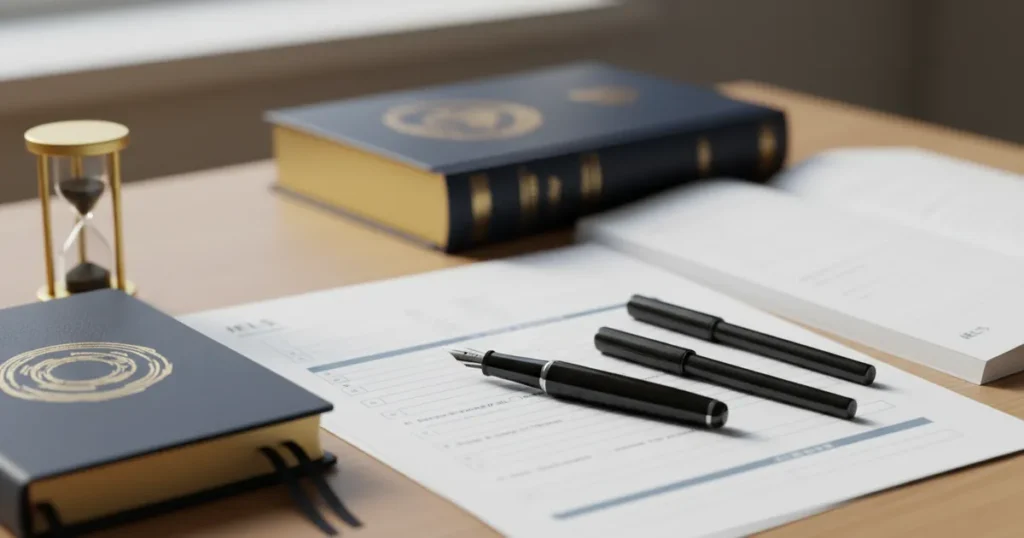

Stepping into an IELTS test center can feel like entering a high-stakes arena where every detail matters. From your identification documents to the way you structure your essays, precision is the name of the game. However, one of the most frequently overlooked details by candidates is the specific stationery requirements, often referred to as the black pen rule ielts. Understanding this rule is not just about following bureaucracy; it is about ensuring that your hard work is actually readable by the examiners and the sophisticated scanning technology used by IDP and the British Council. If you are wondering how long does the IELTS test last, you should also be asking what tools you need to carry through those intense hours.
The black pen rule ielts has gained significant attention as the testing bodies move toward more centralized and digital marking systems. While the shift to computer-delivered IELTS has removed the need for physical pens for many, the paper-based test remains the preferred choice for thousands of students worldwide in 2026. In this comprehensive guide, we will break down exactly why a black pen is your best friend in the Writing module, why it is forbidden in others, and how you can prepare your stationery kit to avoid any last-minute panic at the test center. Whether you are preparing to describe a prize you have received or tackling a complex Task 2 essay, the right tools are essential.
As an expert instructor at SimplyIELTS, I have seen brilliant students lose confidence simply because they were told their blue ink might not scan correctly. This guide aims to eliminate that uncertainty. We will explore the technical nuances of the black pen rule ielts, compare the use of pencils versus pens, and provide a definitive checklist for your exam day. By the end of this article, you will be fully equipped to handle the administrative side of the test, leaving you free to focus on achieving that elusive Band 8 or 9 score.
What is the Black Pen Rule IELTS?
The black pen rule ielts refers to the specific regulation regarding the type of writing instrument allowed during the paper-based IELTS Writing module. While the Listening and Reading modules strictly require the use of a pencil, the Writing module allows candidates the choice between a pencil or a pen. However, if a candidate chooses to use a pen, it must be a black ink pen. This requirement is rooted in the way the IELTS Official Website describes the marking process: test papers are often scanned and sent to examiners digitally. Black ink provides the highest level of contrast against the white paper, ensuring that every word is captured clearly by the high-speed scanners.
It is a common misconception that this rule is arbitrary. In reality, it is a technical necessity. When you describe an occasion when you were not allowed to use your mobile phone, you understand that certain environments have strict rules for functional reasons. The same applies to the IELTS test center. The black pen rule ielts ensures that there is no ambiguity in your handwriting due to faint ink or color variations that might occur with blue, green, or red pens. In 2026, the scanning technology has become even more sensitive, making the use of high-contrast black ink more important than ever.
The Distinction Between Modules
One of the most confusing aspects for students is why they can use a pen for one part of the test but not others. To clarify, the black pen rule ielts applies exclusively to the Writing component. For the Listening and Reading sections, your answers are marked by an Optical Mark Recognition (OMR) system or a scanner that specifically looks for graphite marks. Pencils allow you to erase and change your answers easily, which is vital in these fast-paced sections. If you were to use a black pen in the Reading section, you would not be able to correct a mistake cleanly, and the scanner might fail to read your answer correctly.
Pencil vs. Pen: When the Black Pen Rule IELTS Applies
Deciding whether to use a pencil or a black pen for your Writing test is a personal choice, but it must be an informed one. The black pen rule ielts allows you the flexibility to use a pen if you feel it helps your writing flow or makes your script more legible. Many candidates find that a gel pen or a high-quality ballpoint pen requires less pressure than a pencil, which can reduce hand fatigue during the 60-minute writing session. However, the trade-off is that you cannot easily erase mistakes. You must neatly cross out errors, which some feel makes their paper look untidy.
If you are following our Complete Guide to the IELTS Test, you know that presentation matters. While examiners do not explicitly penalize for “messy” crossing out, a clear and legible script is much easier to mark. If you choose to adhere to the black pen rule ielts and use a pen, ensure you practice writing at length with that specific pen before the exam. This will help you gauge how much space your handwriting takes and how to handle corrections without making the text illegible.
| IELTS Section | Tool Required/Allowed | Reasoning |
|---|---|---|
| Listening | Pencil ONLY | Required for OMR scanning and easy corrections. |
| Reading | Pencil ONLY | Required for OMR scanning and easy corrections. |
| Writing | Pencil or Black Pen | Black pen offers high contrast for digital scanning. |
| Speaking | None (Examiner uses pen) | Candidate does not need to write, only speak. |
Why the Black Pen Rule IELTS Exists: Scanning Technology
To understand the black pen rule ielts, we must look at what happens to your paper after you leave the exam hall. In the modern IELTS ecosystem, papers are often digitized. This allows examiners from different parts of the world to mark your work, ensuring a fair and unbiased assessment. The scanners used for this process are optimized for “True Black” ink. Blue ink, especially light or turquoise shades, can sometimes “drop out” during the scanning process or appear very faint, making it difficult for the examiner to distinguish between an ‘a’ and an ‘o’, or a ‘u’ and a ‘v’.
Furthermore, the black pen rule ielts helps in maintaining the integrity of the test. Black ink is generally more permanent and less susceptible to fading than other colors. When you are asked to describe a product from your area in the Speaking test, you are using your voice to convey clarity; in the Writing test, the black pen is your “voice.” It ensures that there is no technical barrier between your thoughts and the examiner’s eyes. This is why the British Council IELTS guidelines are so specific about stationery.
The Role of OCR and Digital Marking
Optical Character Recognition (OCR) is increasingly used to assist in the administrative handling of test papers. While human examiners still mark your essays for Task 1 and Task 2, OCR systems might be used to register your candidate number and center details. These systems are notoriously picky about color. Following the black pen rule ielts ensures that your paper is correctly assigned to your profile without any manual intervention required, which could potentially delay your results.
What Happens if You Use Blue Ink Instead?
This is the question that keeps many students awake at night. If you accidentally use a blue pen, will you get a Band 0? The short answer is no. You will not be disqualified for using blue ink. However, you are making the process significantly harder for everyone involved. If your paper does not scan clearly because you ignored the black pen rule ielts, the examiner may struggle to read your response. In the worst-case scenario, if the scan is truly unreadable, your paper might have to be physically shipped to a marking center, which can lead to significant delays in receiving your TRF (Test Report Form).
Think of it like this: if you had to describe a time when you missed an appointment, the frustration you felt then is similar to what an examiner feels when they cannot read a candidate’s work. By adhering to the black pen rule ielts, you are showing respect for the process and ensuring your writing is presented in the best possible light. Most invigilators will catch this error before the test starts and provide you with a black pen, but you should never rely on this.
The black pen rule ielts is not about penalizing creativity; it is about guaranteeing visibility. In a high-pressure environment, the last thing a candidate should worry about is whether their ink is dark enough for a scanner to see.
Senior IELTS Invigilator, 2026
Stationery Preparation Checklist for 2026
Preparation is the key to success. Just as you would prepare to describe an interesting neighbor by thinking of key vocabulary, you must prepare your stationery kit. To ensure you are fully compliant with the black pen rule ielts and other regulations, follow this checklist:
- Two High-Quality Black Pens: Always bring a backup. Ballpoint pens are reliable, but gel pens often provide a darker, more consistent line. Ensure they are comfortable for long-form writing.
- Three HB or 2B Pencils: These are essential for the Listening and Reading sections. HB is standard, but 2B provides a darker mark that OMR scanners love.
- A High-Quality Eraser: Avoid erasers that smudge. You want to be able to clear your mistakes completely in the Reading and Listening sections.
- A Small Sharpener: If you prefer wooden pencils over mechanical ones, a sharpener is a must.
- A Clear Pencil Case: Most test centers require your stationery to be in a transparent bag or case so they can easily see you are not hiding any “cheat sheets.”
- Water in a Clear Bottle: While not stationery, staying hydrated is vital. Ensure the bottle is transparent and all labels are removed.
Following these IELTS Tips will put your mind at ease. When you walk into that room, knowing you have everything required by the black pen rule ielts allows you to channel all your energy into the actual English tasks at hand.
The Psychology of the Black Pen Rule IELTS
There is also a psychological component to the black pen rule ielts. Black ink is often associated with formality and authority. Writing in black can subconsciously put you in a more professional mindset, encouraging you to use more academic language and formal structures. When you describe a special cake you received from others in a practice session, notice how your choice of words changes when you feel you are writing “for real” versus just doodling.
Furthermore, the physical act of writing with a pen can be more “permanent” than a pencil. This encourages some students to think more carefully before they put pen to paper, leading to better-planned paragraphs and fewer grammatical slips. Adhering to the black pen rule ielts isn’t just a hurdle; it’s a part of the ritual of the exam that signals to your brain that it is time to perform at your peak.
Common Questions About the Black Pen Rule IELTS
Can I use a mechanical pencil for Writing?
Yes, you can use a pencil (including mechanical ones) for the Writing section. The black pen rule ielts only dictates the color if you choose to use a pen. However, many tutors recommend a black pen for Writing because it stands out better against the lines on the answer sheet, making it easier for the examiner to read your work quickly.
Are gel pens allowed under the black pen rule ielts?
Yes, gel pens are allowed and often preferred because they produce a very dark, opaque black line. However, be careful if you are a fast writer or left-handed, as gel ink takes a few seconds to dry and can smudge, potentially violating the black pen rule ielts‘s ultimate goal: legibility.
What if my pen runs out of ink?
This is why the checklist above recommends two pens. If both fail, raise your hand and the invigilator will assist you. They usually have a supply of “official” pens that comply with the black pen rule ielts to ensure no candidate is left unable to complete the test.
Conclusion: Master the Rules, Master the Test
The black pen rule ielts might seem like a minor detail in the grand scheme of your IELTS preparation, but it is these small details that build the foundation of a successful test day. By ensuring you have the right tools—pencils for Listening and Reading, and a reliable black pen for Writing—you remove unnecessary stress and technical risks. You’ve spent weeks or months learning how to describe a prize you have received or analyzing complex graphs; don’t let a simple ink color choice stand in your way.
At SimplyIELTS, we are dedicated to providing you with the most accurate and up-to-date information for your 2026 exam journey. From understanding the black pen rule ielts to mastering the nuances of the Speaking cue cards, we are here to support you. If you found this guide helpful, be sure to explore our other resources, such as our Complete Guide to the IELTS Test or read more about our mission on the About SimplyIELTS page. Success in IELTS is a combination of English proficiency and tactical awareness—now you have both. Good luck with your exam!
Ready to take your preparation to the next level? Join our community today and get access to premium mock tests, expert feedback, and the latest tips to ensure you don’t just pass the IELTS, but excel at it.





Responses