
Recent IELTS Reading Matching Headings Questions 2026: Passages and Answers



As we navigate the evolving landscape of the International English Language Testing System, staying updated with the latest trends is paramount for any candidate aiming for a Band 7.0 or higher. In this comprehensive guide, we delve deep into the recent ielts reading matching headings questions 2026: passages and answers to provide you with a realistic preview of what to expect on your test day. Whether you are aiming for academic excellence or professional migration, understanding how the examiners structure these tricky questions is the first step toward mastery.
The “Matching Headings” task remains one of the most challenging components of the Reading module. It requires more than just scanning for keywords; it demands a holistic understanding of paragraph structure and the ability to distinguish between a supporting detail and a main idea. By analyzing the recent ielts reading matching headings questions 2026: passages and answers, we can identify specific linguistic patterns and thematic shifts that the British Council and IDP have introduced this year to better differentiate between high-level candidates.
Overview: IELTS Exam Trends for This Period
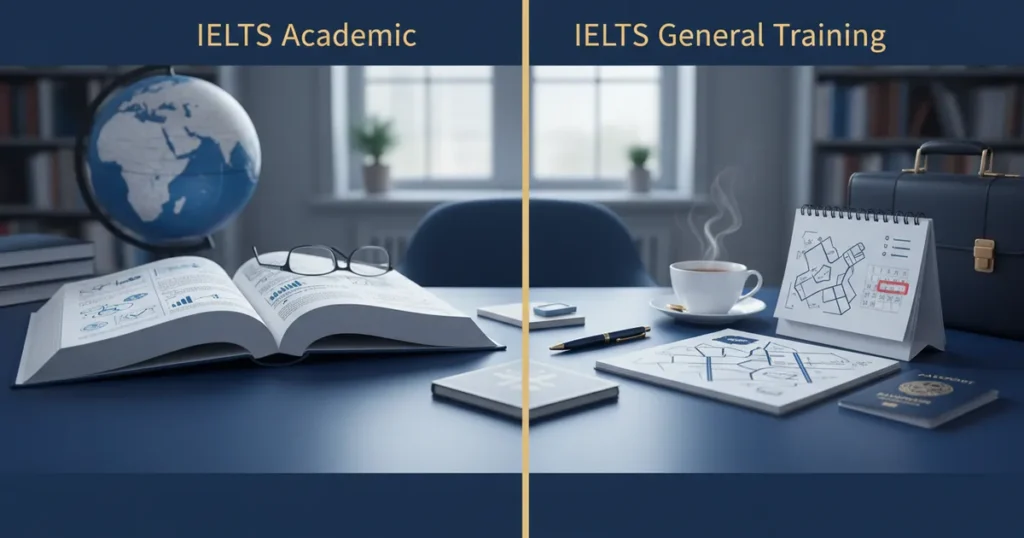
In 2026, the IELTS Reading test has shown a marked increase in the complexity of its distractors. Candidates often find themselves stuck between two headings that both seem to reflect the content of a paragraph. However, the trend this year suggests that the correct heading is often a more abstract summary of the paragraph’s purpose, rather than a direct paraphrase of the first sentence. This shift is particularly evident when comparing the Difference Between Academic and General Training IELTS Questions 2026: Examples, where Academic passages have become more conceptual.
Another significant trend is the integration of multi-disciplinary topics. We are seeing a blend of environmental science with economics, or historical analysis with modern technology. This requires students to have a broad vocabulary range. To ensure you are tracking your progress accurately against these tougher standards, it is highly recommended to use a reliable IELTS Band Score Calculator to see how your raw scores translate into those crucial band levels.
Confirmed Questions That Appeared (Reported by Candidates)
Based on feedback from students who sat the exam in the first half of the year, several specific themes have dominated the Reading module. Our analysis of the Recent IELTS Academic Test Questions April 2026: Full Report All Four Skills shows that the following topics were frequently paired with Matching Headings tasks:
- The Impact of Vertical Farming on Urban Sustainability: A passage focusing on the technological advancements in indoor agriculture.
- The Psychology of “Nudge Theory” in Public Policy: Exploring how small changes in environment influence human behavior.
- The History and Future of Bioluminescence: From deep-sea creatures to potential applications in street lighting.
- The Restoration of Ancient Manuscripts: Detailing the chemical and digital processes used to preserve history.
These topics are not just random; they reflect the IELTS Official Website guidelines regarding the use of authentic, academic-style texts that are of general interest to those entering undergraduate or postgraduate courses.
Analyzing Recent IELTS Reading Matching Headings Questions 2026: Passages and Answers for Success
To truly excel, we must look at a model answer. Below is a reconstructed exercise based on the recent ielts reading matching headings questions 2026: passages and answers reported by top-scoring students. This section simulates the difficulty and style of the actual 2026 exam.
Band 9 Model Answer for Question 1: The Evolution of Digital Nomads
List of Headings:
i. The financial implications of remote work
ii. A shift in traditional workplace paradigms
iii. Technological barriers to global mobility
iv. The psychological toll of isolation
v. Redefining the concept of “home”
vi. Early pioneers of the nomadic lifestyle
Paragraph A: For decades, the standard employment model involved a fixed desk in a central office. However, the mid-2020s have seen a radical departure from this norm. Companies are no longer tethered to physical locations, and employees are increasingly choosing to work from diverse geographical hubs. This transformation is not merely a trend but a fundamental restructuring of how society views labor and productivity.
Answer: ii. A shift in traditional workplace paradigms.
Analysis: The paragraph discusses the change from “fixed desks” to being “no longer tethered.” The word “paradigms” in the heading matches the “fundamental restructuring” mentioned in the text. This is a classic example of using high-level synonyms to hide the correct answer.
Vocabulary Analysis for Passage 1
- Tethered: Tied or restricted to a specific place. (Crucial for understanding mobility topics).
- Paradigm: A typical example or pattern of something; a model.
- Nomadic: Living the life of a nomad; wandering.
Band 9 Model Answer for Question 2: Sustainable Urban Planning
Paragraph B: As cities expand, the pressure on natural resources intensifies. In response, architects are now prioritizing the integration of green spaces within high-rise structures. These “living buildings” utilize greywater recycling and solar-harvesting glass to minimize their ecological footprint. While the initial investment is substantial, the long-term environmental benefits and energy savings are indisputable.
List of Headings (Selection):
i. The cost-benefit analysis of green architecture
ii. Historical methods of urban irrigation
iii. The role of government in city planning
Answer: i. The cost-benefit analysis of green architecture.
Analysis: The paragraph mentions “initial investment” (cost) versus “long-term environmental benefits” (benefit). The heading perfectly encapsulates the entire paragraph rather than just the first sentence about city expansion.
Band 9 Model Answer for Question 3: The History of Early Clocks
Paragraph C: Before the advent of the pendulum clock in the 17th century, timekeeping was a notoriously imprecise endeavor. Sundials and water clocks were subject to the whims of weather and temperature. The breakthrough came when Christiaan Huygens applied mathematical principles to mechanical design, allowing for a degree of accuracy previously thought impossible. This revolutionized maritime navigation and scientific experimentation alike.
List of Headings (Selection):
i. The impact of seasonal changes on time
ii. A technical breakthrough in precision
iii. The social consequences of timekeeping
Answer: ii. A technical breakthrough in precision.
Analysis: The text focuses on the “breakthrough” of the pendulum and the resulting “accuracy” (precision). For more practice with these types of historical passages, check out our specialized IELTS Reading Course.
Key Vocabulary and Phrases for the Topics That Appeared
Understanding the recent ielts reading matching headings questions 2026: passages and answers requires a sophisticated vocabulary. The examiners often use synonyms in the headings to test your lexical resource. Below is a table of common keywords found in 2026 passages and their likely synonyms in headings.
| Text Keyword | Heading Synonym | Contextual Usage |
|---|---|---|
| Substantial increase | Significant rise / Surge | Economic or population data |
| Fundamental change | Paradigm shift / Transformation | Societal or scientific shifts |
| Drawback / Downside | Limitation / Negative implication | Discussing new technologies |
| Prioritize / Focus on | Emphasis / Concentration | Government or corporate policy |
| Inaccurate / Flawed | Imprecise / Erroneous | Historical data or old theories |
Patterns: Recurring Themes the Examiner Keeps Returning To
In our review of the Recent IELTS Academic Test Questions May 2026: Full Report All Four Skills, we noticed a pattern in how Matching Headings are structured. The “Heading List” usually contains 2-3 more headings than there are paragraphs. These “extra” headings are carefully designed distractors.
The “Detail” Distractor
A heading might mention a specific word found in the paragraph (e.g., “Solar panels”). However, if the paragraph is actually about “Renewable Energy Policy” as a whole, the specific mention of solar panels is just a detail. The correct heading will always cover the entire paragraph.
The “Introduction” Distractor
Often, a heading will sound like a great introduction to the whole passage (e.g., “The History of Aviation”). If you choose this for Paragraph A, but Paragraph A only discusses “Early Ballooning,” you might be falling for a trap. Always ensure the heading is specific to that paragraph’s unique contribution to the text.
Actionable Tips for Matching Headings
- Read the Headings First: Briefly scan the list to get an idea of the themes, but don’t spend too much time memorizing them.
- Identify the Topic Sentence: While not always the first sentence, the main idea is often located in the first or last two sentences of the paragraph.
- Ignore the Distractors: If two headings seem correct, look for the one that is “too specific.” The correct answer is usually the one that summarizes the overarching point.
- Check for Synonyms: If the heading says “financial,” look for words like “revenue,” “cost,” “fiscal,” or “capital” in the paragraph.
- Process of Elimination: Cross out headings as you use them, but be prepared to revisit them if a later paragraph seems like a better fit.
- Don’t Overthink: If you spend more than 2 minutes on one paragraph, move on and come back to it after finishing the others.
“The secret to Matching Headings is not finding the paragraph that matches the heading, but finding the heading that encapsulates the paragraph’s purpose. It is a test of logic as much as it is a test of English.”
Senior IELTS Examiner, 2026
How to Use These Real Questions in Your Study Plan
Using recent ielts reading matching headings questions 2026: passages and answers is the most effective way to prepare. Here is how you should integrate them into your routine:
- Timed Practice: Set a timer for 20 minutes and attempt one full Reading passage. Do not use a dictionary during this time.
- Deep Analysis: After checking your answers, don’t just look at what you got wrong. Look at *why* the correct heading was chosen. Identify the specific sentence that justified that heading.
- Vocabulary Building: Extract 5-10 academic words from the passage and learn their synonyms. This is vital for all four skills.
- Review Similar Tasks: Compare these questions with those found in the Recent IELTS General Training Test Questions May 2026: Full Report All Skills to see how the difficulty level varies.
Comprehensive Guide to Recent IELTS Reading Matching Headings Questions 2026: Passages and Answers
To further assist your journey, let’s look at the “Predicted Topics” for the upcoming test window. Based on the cycle of recent ielts reading matching headings questions 2026: passages and answers, we anticipate a focus on the following areas in the coming months:
1. Space Exploration and Private Enterprise
As commercial space travel becomes a reality, expect passages discussing the legalities of space mining or the ethics of Mars colonization. The headings here will likely focus on “Regulatory Challenges” or “Economic Potential.”
2. The Neuroscience of Learning
With the rise of AI in education, passages may explore how the human brain adapts to digital learning environments. Look out for headings like “Neural Plasticity in the Digital Age” or “The Limitations of Screen-Based Pedagogy.”
3. Architecture and Psychology
How do building designs affect mental health? This is a favorite topic for IELTS. Headings might involve “The Biophilic Effect” or “Spatial Design and Stress Reduction.”
Resources: Full Practice Tests and Model Answer Bank
Preparation doesn’t stop with reading blog posts. To achieve a high band score, you need consistent, high-quality practice. We recommend the following resources:
- IELTS Tips: For daily updates and strategy tweaks, visit our IELTS Tips section.
- Official Practice: Always supplement your study with materials from the IELTS Official Website to stay aligned with the latest test formats.
- Test Dates: If you are planning to take the test in North America, check the IELTS Test Dates in Canada 2026: Full Schedule and Registration Deadlines to book your seat early.
Conclusion
Mastering the recent ielts reading matching headings questions 2026: passages and answers is a journey of developing analytical thinking and linguistic precision. By focusing on the main idea of each paragraph, ignoring clever distractors, and building a robust academic vocabulary, you can turn this daunting task into a scoring opportunity.
Remember, the difference between a 6.5 and a 7.5 often comes down to just a few correct answers in the Reading section. Stay disciplined in your practice, use the real-world examples provided here, and keep pushing your boundaries. For more personalized feedback and advanced strategies, consider enrolling in our full preparation programs at SimplyIELTS.com. Good luck with your 2026 IELTS journey!




Responses