
Recent IELTS General Training Reading Topics 2026: Sections A B and C Reviewed



As we navigate the middle of the year, candidates are reporting a significant shift in the complexity and variety of the reading module. Staying ahead of the curve requires more than just basic comprehension; it demands a deep dive into the recent ielts general training reading topics 2026: sections a b and c reviewed to understand how the examiners are framing questions this season. Whether you are aiming for a Band 7 or the elusive Band 9, understanding the nuances of these latest reports is your first step toward success.
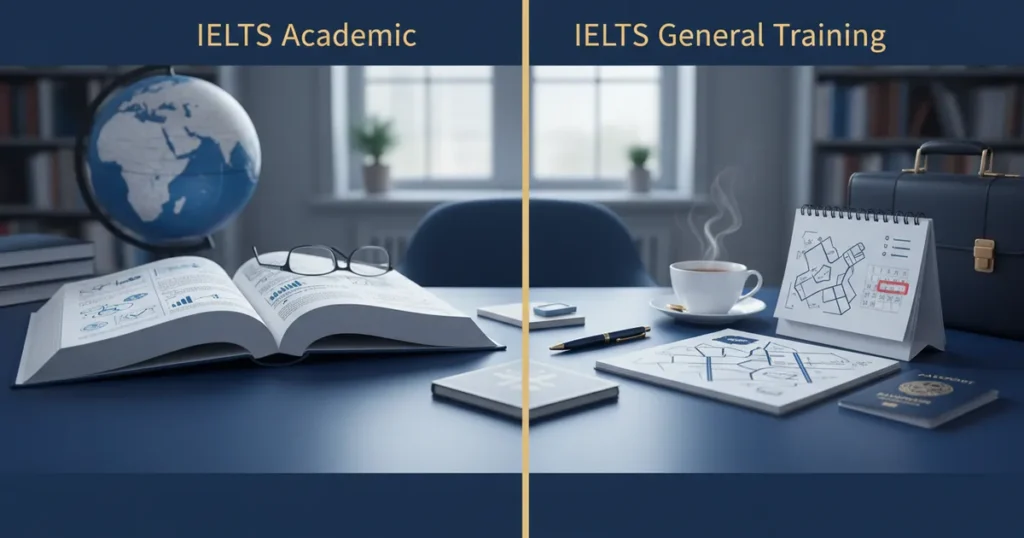
The General Training (GT) Reading test is often perceived as easier than its Academic counterpart, but this can be a dangerous misconception. While the texts in Section A and B are shorter and more practical, the “traps” set by the examiners are becoming increasingly sophisticated. To truly master the paper, candidates should explore the difference between Academic and General Training IELTS questions 2026: examples to see how the logic of “Social Survival” and “Workplace Survival” differs from purely academic analysis.
In this comprehensive review, we will break down the specific themes that have emerged in the most recent test windows. From community library policies to complex workplace safety manuals and lengthy articles on environmental history, we provide the analysis you need to transform your preparation. If you are just starting your journey, our IELTS Reading Course offers a structured path to mastering these specific question types.
Overview: IELTS Exam Trends for This Period
The 2026 testing cycle has seen a noticeable trend toward “digital literacy” and “sustainability” within the reading passages. Unlike previous years where topics were strictly traditional (e.g., train timetables), we are now seeing texts that mimic modern digital environments, such as email threads, app terms of service, and remote work guidelines. This shift reflects the evolving nature of English usage in global professional settings.
Candidates have reported that the “True, False, Not Given” questions in Section C have become particularly challenging, often hinging on a single adverb or modal verb. Furthermore, the time pressure in Section B has increased due to the higher density of information in workplace-related texts. To gauge where you currently stand with these trends, you can use our IELTS Band Score Calculator to convert your practice raw scores into the band scores required for your visa or university application.
Confirmed Questions That Appeared (Reported by Candidates)
Based on feedback from test-takers who recently sat for the exam in various regions, including those mentioned in the recent IELTS General Training test questions May 2026: full report all skills, several specific topics have appeared multiple times. These “recycled” or “parallel” topics are crucial for your revision.
Section A: Social Survival Topics
- Local Community Gardening Project: A set of short notices about how to join a community garden, the rules for composting, and how to donate tools.
- Public Transport Smart Card Terms: Detailed instructions on how to top up a travel card, what to do if it is lost, and the discounts available for seniors.
- Volunteer Opportunities at a Wildlife Rescue: Advertisements for different volunteer roles, including administrative work and direct animal care.
Section B: Workplace Survival Topics
- Company Paternity Leave Policy: A text explaining the eligibility criteria, the duration of leave, and the notice period required for new fathers.
- Fire Safety and Evacuation Procedures: A formal manual detailing the roles of fire wardens, the location of assembly points, and the frequency of fire drills.
- Professional Development Grants: Information on how employees can apply for funding to attend workshops or pursue further certifications.
Section C: General Interest Topics
- The Evolution of Modern Architecture: A long passage discussing the move from traditional materials to glass and steel, featuring the influence of specific architects.
- The History of the Tea Trade: A chronological account of how tea became a global commodity, the impact of trade routes, and the cultural significance in different eras.
- The Science of Sleep: An analysis of circadian rhythms, the impact of artificial light on sleep quality, and the benefits of power naps in the workplace.
Band 9 Model Answer for Question 1 with Vocabulary Analysis
In Section A, a common question type is “Matching Information” or “Short Answer Questions.” Let’s look at a reported topic: “Rules for the City Shared-Bike Scheme.”
Sample Question: According to the text, what must a user do if they find a damaged bike at a docking station?
Model Answer: The user must report the issue via the mobile application and press the ‘faulty’ button on the dock to lock the bike for repair.
Vocabulary Analysis:
- Docking station: A specific location where bikes are stored and locked.
- Faulty: Not working correctly; defective. In the IELTS, the text might use “broken” or “malfunctioning,” but the answer often requires the specific term used in the instructions.
- Via: By way of; through the medium of. A common preposition in instructional texts.
Band 9 Model Answer for Question 2 with Vocabulary Analysis
In Section B, “Sentence Completion” is a frequent task. A recent topic was “Employee Grievance Procedures.”
Sample Question: If an informal resolution is not possible, the employee should submit a ________ to their immediate supervisor.
Model Answer: formal written complaint
Vocabulary Analysis:
- Grievance: A real or imagined cause for complaint, especially unfair treatment. This is a high-level workplace term frequently seen in GT Section B.
- Informal resolution: Solving a problem through discussion rather than official paperwork.
- Immediate supervisor: The person directly above an employee in the company hierarchy.
Band 9 Model Answer for Question 3 with Vocabulary Analysis
Section C often involves “Summary Completion” or “Multiple Choice.” A recurring topic in the recent ielts general training reading topics 2026: sections a b and c reviewed has been “The Reintroduction of Wolves to Yellowstone National Park.”
Sample Question: What was the unexpected ecological benefit of reintroducing wolves?
Model Answer: The wolves controlled the elk population, which allowed riverside vegetation to recover, subsequently stabilizing the riverbanks.
Vocabulary Analysis:
- Ecological: Relating to the relation of living organisms to one another and to their physical surroundings.
- Reintroduction: The process of releasing captive-born or wild-caught animals into an area where they once lived.
- Stabilizing: Making something unlikely to change, fail, or decline. In this context, it refers to preventing erosion.
Key Vocabulary and Phrases for the Topics That Appeared
To succeed in the 2026 Reading test, you must build a robust vocabulary bank. Here are the most frequent terms categorized by the section they usually appear in:
| Section | Topic Category | Key Vocabulary to Learn |
|---|---|---|
| Section A | Public Notices | Eligibility, mandatory, concession, non-refundable, prior notice, amenities. |
| Section B | Workplace | Appraisal, probation, misconduct, statutory, entitlement, remuneration, health and safety. |
| Section C | General Interest | Hypothesis, chronological, unprecedented, detrimental, empirical evidence, socio-economic. |
When studying these words, don’t just memorize definitions. Try to use them in sentences or look for them in official resources like the IELTS official website to see how they are used in context. For more practical help, check out our IELTS Tips page for daily updates.
Patterns: Recurring Themes the Examiner Keeps Returning To
After reviewing the recent ielts general training reading topics 2026: sections a b and c reviewed, we have identified three core patterns that appear in almost every test version:
- The “Synonym Trap”: The question uses one word (e.g., “yearly”), but the text uses another (e.g., “annually”). This is the most common way candidates lose points.
- The “Distractor” in Section A: When matching advertisements to people’s needs, there is often one person who seems to fit two ads, but a tiny detail (like “must be open on Sundays”) rules one out.
- Technicality in Section B: Workplace texts often use specific jargon. You don’t need to know the jargon beforehand, but you must be able to find its definition or explanation within the text.
“The General Training Reading test is less about your knowledge of the world and more about your ability to locate specific evidence within a text. In 2026, the ‘evidence’ is often hidden behind paraphrasing that is more subtle than in previous years.”
Lead Instructor, SimplyIELTS.com
How to Use These Real Questions in Your Study Plan
Knowing the topics is only half the battle; the other half is application. Here is how you should integrate these recent ielts general training reading topics 2026: sections a b and c reviewed into your daily routine:
- Timed Practice: Take one of the reported topics (like “Company Paternity Leave”) and find a similar policy online. Give yourself 10 minutes to read it and summarize the key points.
- Keyword Spotting: Scan a text for the vocabulary listed in our table above. See how many seconds it takes you to find each word.
- Analyze Your Errors: If you get a question wrong, don’t just look at the answer. Go back and find exactly where you misread the text. Was it a synonym you didn’t know? Or did you miss a “not” or “only”?
- Parallel Reading: If a topic like “The History of Tea” appeared, read a Wikipedia article or a news piece on a similar commodity (like coffee or silk) to familiarize yourself with that style of writing.
- Mock Tests: Regularly take full-length tests to build stamina. For a comprehensive look at how all skills interact, read the IELTS full test report India May 2026: all four skills with answers.
Predicted Topics for the Next Test Window
Based on the current trajectory of the recent ielts general training reading topics 2026: sections a b and c reviewed, we expect the following topics to appear in the coming months:
Section A: Community and Lifestyle
Expect texts on “E-scooter Rental Regulations” and “Local Heritage Walking Tours.” These topics combine modern technology with community information, a favorite of the current examiners.
Section B: Employment and Training
We anticipate more focus on “Mental Health in the Workplace” and “Data Protection (GDPR) Guidelines for Employees.” These are timely and provide plenty of “True/False/Not Given” opportunities.
Section C: Science and History
Likely topics include “The Discovery of Deep-Sea Hydrothermal Vents” or “The Impact of the Printing Press on Literacy.” These historical-scientific hybrids allow for complex “Matching Headings” tasks. If you are planning to take your test soon, especially if you are looking at IELTS test dates in Canada 2026: full schedule and registration deadlines, start researching these broad themes now.
Resources: Full Practice Tests and Model Answer Bank
To truly excel, you need a variety of materials. Beyond reading, don’t forget that your writing and grammar play a role in how you interpret complex sentences. For example, understanding sentence variety in writing can help you decode the long, complex sentences found in Section C. If you feel your foundations are shaky, try our Elementary Grammar Test 2 to shore up your basics.
For those who want to see the full scope of what a recent test looks like, we highly recommend reviewing the recent IELTS Academic test questions April 2026: full report all four skills even if you are a General Training candidate. The Section C of the GT test is very similar to Academic passages, and practicing with them will make the GT Section C feel much easier by comparison.
Conclusion: Your Path to a Band 8+ in Reading
Mastering the recent ielts general training reading topics 2026: sections a b and c reviewed is a journey of precision and practice. By understanding the specific themes that are currently in rotation—from community garden rules to complex ecological histories—you remove the element of surprise on test day. Remember, the Reading test doesn’t just measure your English; it measures your ability to remain calm under pressure and find specific information accurately.
Are you ready to take your preparation to the next level? Start by analyzing the recent IELTS General Training test questions April 2026: full report all skills to see how the reading module fits into the overall exam experience. With the right strategies and a deep understanding of these recurring topics, your target band score is well within reach. Happy studying!





Responses