
Describe a Place in Nature That you Enjoyed Visiting — IELTS Speaking Cue Card (Band 9 Sample Answer)

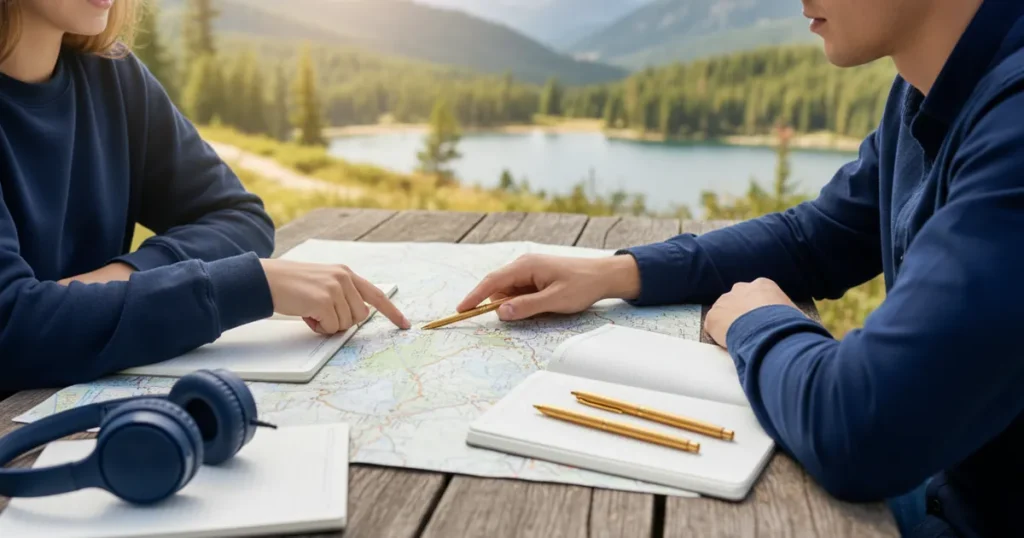
In the IELTS Speaking test, being able to vividly narrate personal experiences is key to achieving a high score. This guide focuses on a frequently occurring topic: how to describe a place in nature that you enjoyed visiting ielts speaking cue card, providing you with a Band 9 model answer and expert strategies to succeed.
The Cue Card
A place in nature that you enjoyed visiting.
You should say:
• Where this place was and when you went there
• Who you went there with
• What you did while you were there
And explain why you found this place so enjoyable and significant.
Band 9 Sample Answer
If I had to pick just one place, it would undoubtedly be a secluded valley in the Lake District of England called Buttermere. I visited it about three summers ago when I was feeling a bit burnt out from work and desperately needed to recharge my batteries. I went there with my younger brother, who’s a bit of an outdoors enthusiast, and we stayed in a tiny stone cottage nearby. We spent about four days hiking through the rugged terrain, but there was one specific afternoon that stands out in my mind. We reached the shore of the lake just as the sun was beginning to dip behind the fells, casting this incredible golden hue across the water. It was absolutely breathtaking, like something straight out of a landscape painting. We didn’t do anything particularly adventurous; we simply sat on a fallen log for a couple of hours, skipping stones and watching the ripples expand. What made it so memorable wasn’t just the scenery, although that was spectacular, but the profound sense of serenity that enveloped the area. There was no cell service, no traffic noise—just the sound of the wind rustling through the pines and the occasional bleat of a sheep in the distance. It felt like we’d stepped back in time to a world untouched by the frantic pace of modern life. I think this experience was significant for me because it served as a poignant reminder of how much we need the natural world to maintain our mental equilibrium. Even now, when I’m stuck in a stuffy office, I often close my eyes and try to transport myself back to that lakeshore. It was a transformative trip that really changed my perspective on how I spend my leisure time, and it’s a memory I cherish deeply.
Band 7 Sample Answer
I want to talk about a beautiful forest near my hometown that I visited last year. It is a very large park with many old trees and a small river running through the middle. I went there with my best friends during the autumn because we wanted to see the leaves changing color from green to vibrant oranges and reds. We spent the whole day walking along the trails and taking many photos for our social media. We even had a small picnic by the river, which was very relaxing. I enjoyed this visit because the air was so fresh and clean compared to the polluted city where I live. It was very quiet and peaceful, which helped me relax after my final university exams. I think visiting nature is important because it makes people feel happy and healthy. I remember feeling very refreshed and energized when I finally went home. Even though it is not a famous tourist destination, it is very special to me because of the good memories I have with my friends there. I definitely hope to go back again next year when the weather is nice.
How the Band 9 Answer Scores Top Marks
Fluency and Coherence
The speaker maintains a natural flow without any noticeable effort or hesitation. The use of cohesive devices like “undoubtedly,” “not just… but,” and “even now” helps connect ideas logically. The narrative follows a clear chronological path while also diving into the emotional significance of the trip. Much like when you describe a person who inspires you to learn new things, the ability to weave a story rather than just listing facts is what elevates the coherence score.
Lexical Resource
The vocabulary is sophisticated and topic-specific. Words like “secluded,” “rugged terrain,” “fells,” “hue,” and “mental equilibrium” show a high level of precision. The speaker also uses idiomatic language naturally, such as “recharge my batteries” and “burnt out.” These phrases are used in the correct context, proving the speaker has a flexible command of the English language. This level of detail is also essential when you describe an app on your phone that you find very useful, as specific terminology demonstrates your range.
Grammatical Range and Accuracy
The answer showcases a variety of complex structures. We see the use of the second conditional (“If I had to pick…”), past continuous for setting the scene (“sun was beginning to dip”), and relative clauses (“who’s a bit of an outdoors enthusiast”). The grammar is consistently accurate, and the sentence structures are varied to avoid repetition, which is a hallmark of a Band 9 performance according to the IELTS Official Website guidelines.
Pronunciation
While we cannot hear the text, a Band 9 speaker would use “chunking”—grouping words into meaningful phrases—and use sentence stress to highlight key information like “absolutely breathtaking.” The intonation would rise and fall naturally to reflect the speaker’s genuine interest in the topic, making the answer sound more like a conversation and less like a memorized script.
Vocabulary and Idioms to Use
| Word/Phrase | Meaning | Example Sentence |
|---|---|---|
| Secluded | Hidden away; private and quiet. | “We found a secluded beach where there were no other tourists.” |
| Breathtaking | Extremely beautiful or amazing. | “The view from the mountain peak was absolutely breathtaking.” |
| Recharge one’s batteries | To regain energy by resting. | “I need a weekend in the countryside to recharge my batteries.” |
| Rugged | (Of land) having a broken, rocky surface. | “The rugged coastline of Scotland is perfect for hiking.” |
| Serenity | The state of being calm, peaceful, and untroubled. | “The serenity of the forest helped me forget my stress.” |
| Off the beaten track | In a place where few people go. | “I prefer visiting places that are off the beaten track.” |
| Unspoiled | (Of a place) not changed by people or industry. | “The village remains unspoiled by modern tourism.” |
| Pristine | In its original condition; clean and fresh. | “The lake’s water was pristine and crystal clear.” |
| Flora and fauna | Plants and animals of a particular region. | “The guide explained the unique flora and fauna of the rainforest.” |
| A stone’s throw away | Very close by. | “Our hotel was just a stone’s throw away from the national park.” |
| Mental equilibrium | A state of emotional and mental stability. | “Spending time in nature is vital for my mental equilibrium.” |
| Spectacular | Beautiful in a dramatic and eye-catching way. | “The sunset over the canyon was truly spectacular.” |
Grammar Structures That Boost Your Band Score
- Second Conditional for hypothetical choice: “If I were to recommend a place for a nature lover, it would have to be the Swiss Alps.”
- Past Continuous for background action: “While we were walking through the woods, we spotted a rare species of bird.”
- Past Perfect for sequencing: “By the time we reached the summit, the fog had already cleared.”
- Not only… but also (Correlative Conjunctions): “The park is not only a great place for exercise but also a sanctuary for local wildlife.”
- Relative Clauses for detail: “The river, which flows through the heart of the valley, is famous for its trout.”
- Present Perfect for current relevance: “I have visited many national parks, but none have left such a lasting impression as this one.”
- Used to/Would for past habits: “When I was a child, my father would take me to this forest every Sunday.”
- Passive Voice for focus: “The area was designated as a UNESCO World Heritage site in 1995.”
Part 3 Follow-up Questions
1. Why do you think people like to spend time in nature?
I believe the primary reason is the psychological respite it offers from the relentless pace of urban life. In today’s digital age, we are constantly bombarded with notifications and noise, which can be incredibly draining. Nature provides a sensory contrast—the visual rhythm of trees, the sound of water, and the fresh air—which has been scientifically proven to lower cortisol levels. Furthermore, it allows for a sense of perspective; when you are standing in front of a vast ocean or a towering mountain, your personal problems tend to feel much smaller and more manageable. It’s essentially a form of natural therapy that helps people recalibrate their minds.
2. Do you think it is important for children to learn about the natural world?
Absolutely, it is of paramount importance. If children grow up disconnected from nature, they are less likely to value or protect it as adults. Exposure to the outdoors fosters a sense of curiosity and wonder that classroom learning simply cannot replicate. By observing ecosystems firsthand, children develop an early understanding of biodiversity and the delicate balance of our planet. Moreover, outdoor play is crucial for physical development and risk assessment skills. In an era where “nature deficit disorder” is becoming a real concern, integrating environmental education into the curriculum is essential for raising a generation of environmentally conscious citizens.
3. How has tourism affected popular natural attractions in your country?
Tourism is a double-edged sword for our natural landmarks. On the positive side, the revenue generated from visitors often funds conservation efforts and provides jobs for local communities, which can discourage harmful activities like illegal logging. However, the downside is “over-tourism.” Popular spots often suffer from soil erosion, littering, and the disturbance of local wildlife. In some cases, the infrastructure required to support thousands of tourists—like paved roads and hotels—can destroy the very “wildness” that people came to see. It’s a difficult balance to strike, requiring strict regulations like visitor caps and “leave no trace” policies to ensure these places remain pristine.
4. What can governments do to protect natural areas?
Governments play a decisive role in environmental preservation. Firstly, they can designate more areas as national parks or protected reserves, which legally prevents commercial development or resource extraction. Secondly, they should invest in public awareness campaigns to educate the populace about the importance of biodiversity. Financial incentives for “green” businesses and heavy fines for industrial polluters are also effective tools. Finally, international cooperation is vital, as environmental issues like climate change and migratory bird patterns don’t respect national borders. By prioritizing long-term ecological health over short-term economic gain, governments can secure these natural treasures for future generations.
5. Do you think technology helps or hinders our appreciation of nature?
It’s a bit of both, honestly. On one hand, technology like high-quality cameras and social media can inspire people to visit beautiful locations they might never have heard of. Apps that identify plants or constellations can also deepen our understanding of what we see. On the other hand, there’s the “screen barrier.” I often see people more focused on getting the perfect Instagram shot than actually experiencing the moment. This “digital distraction” can prevent the deep immersion that makes nature so beneficial. If we use technology as a tool to enhance the experience rather than a replacement for it, then it can certainly be a positive force.
Common Mistakes to Avoid
- Being too vague: Avoid saying “The park was nice and the trees were green.” Use descriptive adjectives like “The park was lush and the ancient oaks provided a dense canopy.”
- Focusing only on the “where”: Many students spend too much time describing the location and forget to explain why they enjoyed it. The “why” is where you show your emotional range and complex vocabulary.
- Lack of structure: Don’t jump back and forth between points. Use the bullet points on the cue card as a roadmap for your story.
- Over-relying on “beautiful”: This is the most overused word in IELTS. Try “stunning,” “picturesque,” “magnificent,” or “aesthetically pleasing” instead.
- Ignoring the “who”: Even if you went alone, explain why you chose to go solo and how that affected your experience of the nature spot.
- Forgetting the past tense: Since you are describing a visit that already happened, ensure your verb tenses are consistent. Mixing up “I go” and “I went” is a common Band 6 mistake.
Practice Tips for This Cue Card
- Visualize the place: Close your eyes and think of five sensory details (sight, sound, smell, touch, temperature) before you start speaking. This makes your description more authentic.
- Record and Review: Record yourself speaking for two minutes. Listen back and count how many “topic-specific” words you used. If you used “nice” or “good” more than once, find synonyms.
- Use a Timer: Practice speaking for exactly 2 minutes. Many students stop at 1 minute and 30 seconds, missing out on the chance to demonstrate more complex grammar.
- Create a Mind Map: Instead of writing a full script, draw a mind map with the four bullet points. This helps you practice thinking on your feet, which is what the real exam requires.
- Link to other topics: Practice transitioning from this topic to others. For instance, if you mention a small cafe near the nature spot, you could practice how to describe a successful small business you know about.
Mastering the “describe a place in nature that you enjoyed visiting ielts speaking cue card” topic requires a blend of vivid imagery and personal reflection. By using the advanced vocabulary and structures provided in this guide, you can confidently aim for a Band 8 or 9. For more practice and to see the latest trends, check out the IELTS Speaking Topics for 2026 and continue refining your skills with our comprehensive courses.







Responses