
IELTS Life Skills: Complete Guide 2026


So, you’ve heard about IELTS and you’re trying to figure out which test is right for you. Maybe you’re applying for a UK visa, or perhaps you need to prove your English for immigration purposes. But here’s the thing – the standard IELTS Academic or General Training test might be more than what you actually need. That’s where IELTS Life Skills comes in.
Let me walk you through everything you need to know about this test, who it’s for, and whether it’s the right choice for you.
What is IELTS Life Skills?
IELTS Life Skills is a bit different from the regular IELTS you might have heard about. It’s a simpler, shorter English test designed specifically for people who need to prove their speaking and listening skills for UK visa and immigration purposes.
Here’s the thing about this test – it only covers Speaking and Listening. No reading. No writing. Just a face-to-face conversation with an examiner and another test taker.
The test lasts between 16-22 minutes (depending on which level you’re taking), and it’s designed to assess whether you can communicate effectively in basic English. Think of it as checking whether you can handle everyday conversations – introducing yourself, talking about your family, discussing likes and dislikes, that sort of thing.
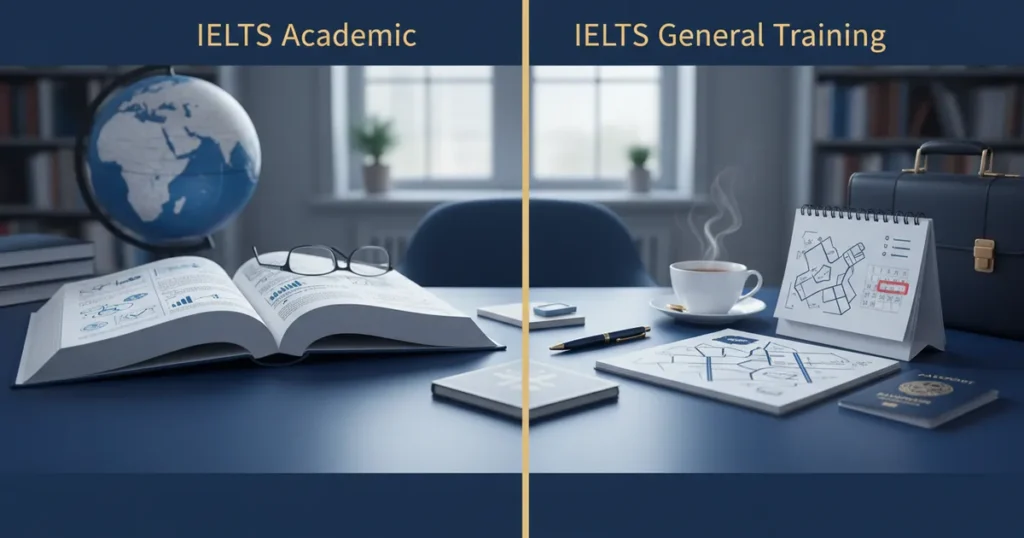
I’ve seen many students get confused between IELTS Academic, General Training, and Life Skills. The key difference is this: if you’re going to university or need to work in a professional field, you’ll want Academic or General Training. But if you’re applying for a family visa, spouse visa, or some types of settlement visas, Life Skills might be all you need.
The Three Levels of IELTS Life Skills
Now, here’s where it gets a bit interesting. IELTS Life Skills isn’t just one test – it comes in three different levels, and which one you need depends entirely on your visa requirements.
IELTS Life Skills A1 – This is the most basic level. It’s for people who need to prove their English is at beginner to elementary level. The test takes about 16-18 minutes, and you’ll be assessed on your ability to understand and use basic everyday expressions and simple phrases. You don’t need complex vocabulary or grammar here – just enough to show you can get by in simple situations.
IELTS Life Skills A2 – This is the intermediate level. Same format as A1, but the expectations are a bit higher. The conversation flows at a slightly faster pace, and you’ll need to show you can express opinions, describe experiences, and engage in more detailed discussions. This test takes about 20 minutes. Most students I’ve worked with find A2 a good step up from A1 – not dramatically harder, but you do need to show more range in your language.
IELTS Life Skills B1 – This is the advanced level. It’s roughly equivalent to Band 4 on the regular IELTS scale. The conversation runs for about 22 minutes, and you’ll need to demonstrate you can handle more complex topics – perhaps discussing your work, explaining your opinions on social issues, or talking about plans and aspirations. This isn’t a test for complete beginners – you need a solid foundation in English before attempting B1.
The tricky part is that you can’t just choose whichever level you fancy. Your UK visa application will specify which level you need, and that’s what you have to take. Always check your visa requirements carefully before booking – I’ve seen students turn up for the wrong test, and it’s a stressful situation you want to avoid.
Who Needs IELTS Life Skills?
Right, so this is the million-dollar question – who actually needs this test? Let me break it down for you.
Family Visa Applicants – If you’re applying to join your spouse or partner in the UK, you’ll likely need Life Skills A1. This includes family route visas, spouse visas, and partner visas. The UK government wants to ensure you can communicate basic English for everyday life together.
Settlement and Permanent Residence – Some indefinite leave to remain (ILR) applications and permanent residence applications require A2 level. This shows that not only could you arrive in the UK with basic English, but you’ve developed your language skills while living there.
Citizenship Applications – When you’re ready to become a British citizen, you might need B1 level Life Skills. It’s about showing you can participate fully in UK society – understanding conversations, expressing yourself clearly, and engaging with your community.
Extended Family Members – If you’re an adult dependent relative of someone settled in the UK, or you’re applying as a parent of a child in the UK, different visa categories have different English requirements. Some require A1, others A2 – it all depends on the specific visa type.
Here’s something important I want you to know – if you’re applying for a work visa, student visa, or most business visas, Life Skills won’t be enough. You’ll need the full IELTS Academic or General Training test. Life Skills is specifically for family and immigration routes, not for work or study purposes.
Test Format: What Happens on the Day?
Okay, so you’ve booked your IELTS Life Skills test. What can you expect on the day? Let me paint a picture for you.
First off, it’s much more relaxed than standard IELTS. You’ll arrive at the test centre, show your ID (passport is best), and go through the usual security checks. But here’s the nice bit – there’s no separate speaking test, no listening section with headphones, no written papers. It’s all one continuous conversation.
The Format – You’ll be paired with another test taker. This could be someone you’ve never met before, and honestly, that’s part of the test. The examiner wants to see how you interact with another person in English. You’ll sit at a table with the examiner, and the three of you will have a conversation.
Part 1: Introduction – The examiner will ask you both some introductory questions. What’s your name? Where are you from? What do you do? This is just to get you comfortable and set the scene. It’s casual, friendly, and designed to help you settle into the test.
Part 2: General Conversation – This is where most of the assessment happens. The examiner will guide a conversation on everyday topics. You might talk about your hobbies, your family, your work, or your home country. What’s interesting is that both test takers are expected to participate – it’s not just you and the examiner. The examiner might ask you to discuss something together, or ask each other questions about your experiences.
Part 3: Topic Discussion – At A2 and B1 levels, you might get a more in-depth discussion on a particular topic. You could be asked to talk about your favourite holiday, describe your hometown, discuss your future plans, or talk about something you’re proud of. This is your chance to show more advanced language skills – expressing opinions, giving reasons, using more complex sentences.
Throughout the test, the examiner is listening for:
- Can you understand what’s being said to you?
- Can you respond appropriately?
- Is your pronunciation clear enough to be understood?
- Can you keep the conversation going naturally?
- Are you using a range of vocabulary and grammar suitable for the level?
It’s worth mentioning that the examiner isn’t looking for perfection. Life Skills tests aren’t about flawless English – they’re about effective communication. If you mispronounce a word or use slightly wrong grammar but still get your meaning across, that’s usually fine.
How is IELTS Life Skills Scored?
Here’s something that confuses a lot of students – IELTS Life Skills doesn’t give you bands like 5.0, 6.0, 7.0, and so on. It’s a pass/fail test. That’s it. Either you pass, or you don’t.
The examiner assesses your performance against four criteria:
- Obtaining information – Can you understand questions and information from the examiner and the other test taker?
- Conveying information – Can you express yourself clearly so others understand you?
- Speaking to communicate – Can you participate in a conversation effectively?
- Engaging in discussion – Can you discuss topics, give opinions, and respond appropriately?
If you meet the required standard across these four areas, you pass. If you don’t meet the standard in one or more areas, you fail. There’s no partial credit, no “close but not quite” – it’s straightforward pass or fail.
Now, I know what you’re thinking – “What if I freeze up? What if I say something completely wrong?” The good news is that examiners are trained to assess your overall communication ability, not nitpick every single thing you say. If you stumble over a word, don’t panic. Take a breath, and try again. What matters most is that you keep communicating.
One thing I always tell my students – if you don’t understand something, it’s okay to ask. “Could you please repeat that?” or “I’m not sure I understand – could you explain again?” are perfectly acceptable responses. In fact, asking for clarification shows you’re trying to communicate effectively, which is exactly what the test is about.
Preparing for IELTS Life Skills
So, you’ve decided to take IELTS Life Skills. How do you prepare? Let me share some strategies that have worked well for my students.
Practise Speaking Every Day – This sounds obvious, but you’d be surprised how many students only practise occasionally. Talk to yourself in English. Describe what you’re doing as you cook dinner. Narrate your commute. Have conversations with friends or family members who speak English. The more you speak, the more natural it becomes.
Listen to English Regularly – Since Listening is 50% of the test, you need to get comfortable understanding spoken English. Watch English TV programmes with subtitles first, then without. Listen to English podcasts. Watch YouTube videos on topics that interest you. The goal is to get your ear used to different accents, speeds, and ways of speaking.
Learn Everyday Vocabulary – Unlike IELTS Academic, where you might need specialised vocabulary, Life Skills is all about everyday language. Focus on words and phrases you’d use in real life – talking about your family, your hobbies, your work, your daily routine. Make lists of useful expressions and practise using them.
Practise with a Partner – Remember, part of the test involves interacting with another test taker. Find a friend or family member to practise with. Have conversations, ask each other questions, discuss topics together. Get used to turn-taking, responding to what someone else says, and keeping a conversation flowing.
Record Yourself – I know this feels a bit awkward, but it’s incredibly useful. Record yourself having a conversation or answering questions, then listen back. You’ll notice pronunciation issues, filler words (like “um” and “uh”), and areas where you can improve. Most students are surprised by what they hear when they listen to themselves – in a good way, because it highlights things they can work on.
Use Official Practice Materials – The British Council and IELTS official websites have sample Life Skills tests. Practise with these so you know exactly what to expect. Familiarity breeds confidence, and knowing the test format will help you feel more relaxed on the day.
Don’t Overcomplicate Things – One mistake I see regularly is students trying to use overly complex language because they think it sounds more impressive. For Life Skills, natural, clear communication is better than fancy but confusing language. Use expressions and structures you’re comfortable with, not ones you’ve just memorised from a textbook.
Test Day Tips
Right, test day is approaching. Here are some practical tips to help you do your best.
Arrive Early – Give yourself plenty of time to get to the test centre, go through security, and settle in. Rushing will just make you stressed before you even start. Aim to arrive at least 30 minutes before your test time.
Bring the Right ID – Your passport is the best form of identification. Make sure it’s valid and in good condition. Without proper ID, you won’t be able to take the test, and that’s a situation you definitely don’t want to find yourself in.
Dress Comfortably – There’s no dress code for IELTS Life Skills. Wear something comfortable that you feel good in. You’re not being assessed on your appearance – just your English.
Stay Calm and Focused – Easier said than done, I know. But remember, the examiner is on your side. They want you to do well. Take deep breaths, listen carefully, and respond naturally. If you make a mistake, don’t let it throw you off. Just keep going.
Be Friendly and Engaging – You’re being assessed on your ability to communicate, and communication involves more than just words. Smile, make eye contact, show interest in what the examiner and your fellow test taker are saying. A positive, friendly attitude goes a long way.
Listen to the Other Test Taker – This is important. When the other person in your test is speaking, listen to them. Respond to what they say. Show that you’re following the conversation. The examiner is watching how you interact with others, not just how you respond to direct questions.
Don’t Memorise Answers – The examiner will spot this a mile away. Memorised speeches sound unnatural and won’t help you in a real conversation. Instead, prepare ideas and vocabulary you can use flexibly. This way, you can adapt to whatever the conversation brings.
After the Test: Results and What’s Next
One of the best things about IELTS Life Skills is the quick turnaround. You’ll get your results within 7 days of taking the test – often even sooner. Your results will show a simple “Pass” or “Fail” for each of the four criteria I mentioned earlier.
If you pass – congratulations! You can use your results for your visa application. Keep your Test Report Form safe, as you’ll need to submit it with your application. Results are valid for two years, so you have a reasonable window to use them.
If you don’t pass – don’t panic. This isn’t the end of the world. You can retake the test as soon as you’re ready. The examiner will give you feedback on what you need to improve, so use that to guide your preparation. Many students fail on their first attempt but pass comfortably on their second or third try.
One thing I want to stress – if you don’t pass, don’t immediately book the same test again. Take some time to reflect on what went wrong, practise those areas, and build up your confidence. Retaking too soon without proper preparation often leads to the same result.
IELTS Life Skills vs Regular IELTS: Which One Do You Need?
This is the question that causes the most confusion, so let me make it crystal clear.
Choose IELTS Life Skills if:
- You’re applying for a UK family visa, spouse visa, or partner visa
- You need to prove basic English for settlement or citizenship
- Your visa requirements specifically mention A1, A2, or B1 Life Skills
- You only need to prove speaking and listening skills
Choose IELTS Academic if:
- You’re applying for university or higher education in the UK
- You need to show you can handle academic English (reading academic texts, writing essays)
- Your chosen university requires IELTS Academic for admission
Choose IELTS General Training if:
- You’re applying for work in the UK
- You need to show workplace English skills
- You’re applying for certain types of work visas or professional registration
Here’s the key takeaway: you can’t just choose whichever test you prefer. Your visa or application requirements will specify exactly which test you need. Always check the official UK government guidance or speak to an immigration adviser if you’re unsure.
Common Mistakes to Avoid
After years of helping students prepare for IELTS Life Skills, I’ve noticed some common mistakes that trip people up. Let me help you avoid them.
Not Checking Visa Requirements Properly – I’ve lost count of the number of students who book the wrong test. Always, always check your specific visa requirements. Don’t assume A1 is enough when you actually need A2. Don’t book Life Skills when you need Academic. Check the official guidance, or better yet, confirm with an immigration adviser.
Not Practising with a Partner – Remember, this is a conversation test. You need to be comfortable interacting with another person. Practising alone might help your individual speaking, but it won’t prepare you for the dynamic of a conversation with another test taker.
Trying to Memorise Answers – Examiners are trained to detect memorised responses. Instead, prepare ideas and vocabulary that you can use naturally. It’s better to speak simply but authentically than to deliver a rehearsed speech that doesn’t fit the conversation.
Being Too Quiet or Passive – Some students make the mistake of only speaking when directly addressed. Remember, you’re being assessed on your ability to engage in a conversation. Participate actively, ask questions, respond to what others say. Show that you’re following and contributing.
Using Overly Formal Language – Life Skills is about everyday communication, not formal academic language. Don’t use words and structures you’ve just memorised from a textbook. Use natural, conversational English that you’d use in real life.
Panicking When You Don’t Understand Something – It happens to everyone. The examiner might speak too fast, or use a word you don’t know. Don’t freeze. Ask them to repeat or explain. It’s completely acceptable and shows good communication skills.
Not Listening to the Other Test Taker – I’ve seen students completely ignore what their fellow test taker is saying, focusing only on the examiner. This is a mistake. You need to interact with both the examiner and the other person. Respond to what they say, show interest, ask follow-up questions.
Final Thoughts
IELTS Life Skills might seem less intimidating than the full IELTS test, and in many ways, it is. But that doesn’t mean you shouldn’t prepare properly. Good preparation will give you confidence, and confidence will help you perform at your best.
Remember, this test is about showing you can communicate in everyday situations. Focus on practical, real-life English – the kind you’d use meeting new people, talking about your life, and discussing your plans. That’s what Life Skills is all about.
If you’re unsure about anything – whether Life Skills is the right test for you, which level you need, or how to prepare – don’t guess. Check the official guidance, speak to an immigration adviser, or get help from a qualified English teacher. Getting it right from the start will save you time, money, and unnecessary stress.
You’ve got this. With the right preparation and a positive attitude, IELTS Life Skills is entirely achievable. And once you’ve passed, you’ll be one step closer to your goals – whether that’s joining family in the UK, building a new life there, or becoming a British citizen. Good luck!
Want more IELTS preparation tips and guidance? Check out our other resources on IELTS preparation strategies and explore our free IELTS courses to help you succeed.


Responses