
IELTS Speaking Part 2 Cue Cards 2026: Recent Topics with Answers

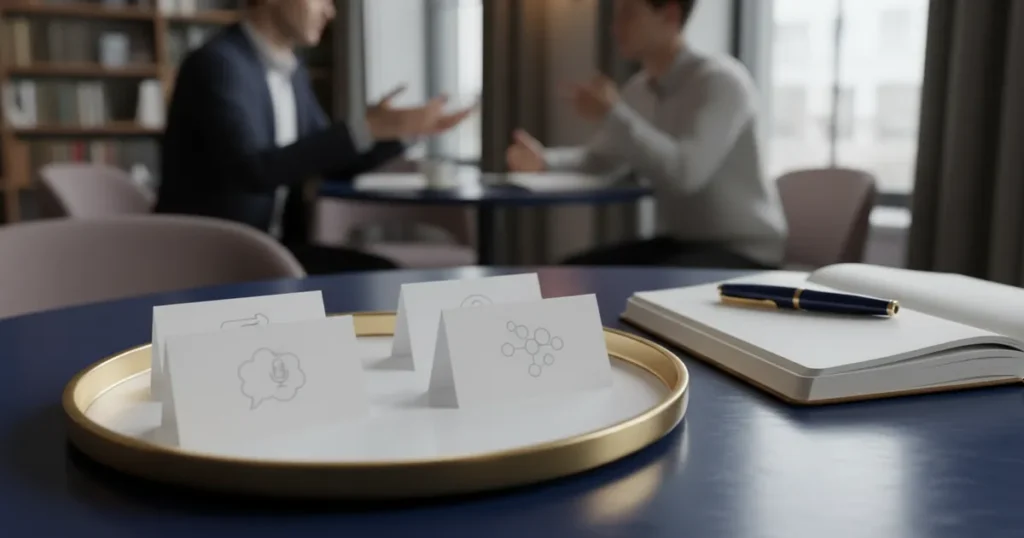
As we move into a new year of testing, staying ahead of the curve is essential for any candidate aiming for a Band 7.0 or higher. The IELTS speaking part 2 cue cards 2026 represent a blend of classic themes and contemporary issues, reflecting the changing global landscape. Whether you are a first-time test-taker or looking to improve your previous score, understanding the nuances of the “long turn” is the key to unlocking your potential. In this guide, we will break down the most recent topics, provide high-scoring model answers, and share the strategies used by examiners to evaluate your performance.
The Speaking test is often the most nerve-wracking component of the IELTS exam. Unlike the Writing or Reading sections, you have no time to delete or rewrite your thoughts. In Part 2, you are required to speak for one to two minutes on a specific topic given on a task card. This is where many students struggle with “fluency drops” or running out of things to say. By mastering the IELTS speaking part 2 cue cards 2026, you can ensure that you have a mental library of ideas ready to be deployed, regardless of the prompt you receive on test day.
Success in this section isn’t just about speaking English; it’s about structure, storytelling, and the strategic use of advanced vocabulary. When preparing for your exam, reviewing a wide variety of IELTS Speaking Part 2: Cue Card Topics and Sample Answers is the best way to build confidence. In the following sections, we will explore the mechanics of the test and dive deep into 50 of the most frequent topics you are likely to encounter this year.
How Speaking Part 2 Works: The Mechanics of the Long Turn
In Part 2 of the IELTS Speaking test, the examiner will hand you a piece of paper (the cue card) and a pencil with a notepad. You will have exactly one minute to prepare your response. The card will contain a main prompt, such as “Describe a beautiful place you have visited,” followed by three or four bullet points that guide your talk. These bullet points usually ask “Who,” “Where,” “When,” and “Why.”
It is a common misconception that you must follow the bullet points in order. While they are helpful guides, you are free to organize your talk however you wish, as long as you stay on topic. The examiner will not interrupt you for at least one minute, but they will stop you at the two-minute mark. To understand the broader context of the exam, you might want to start with a general overview of the IELTS Speaking test to see how Part 2 fits between the introductory questions of Part 1 and the abstract discussion of Part 3.
According to the IELTS Official Website, the examiner is looking for your ability to speak at length without unnecessary hesitation. They are assessing your “coherence”—how well your ideas hang together. If you stop after only 45 seconds, you will likely lose marks in the Fluency and Coherence category. Conversely, if you speak until the examiner stops you at two minutes, it shows you have a “willingness to speak at length,” which is a requirement for Band 7 and above.
The 1-Minute Planning Method for IELTS Speaking Part 2 Cue Cards 2026
The biggest mistake candidates make is trying to write full sentences during their one minute of preparation. You simply do not have enough time. Instead, you should use “keyword mapping.” This involves writing down 5-8 high-level vocabulary words and a brief outline of the story you want to tell. A popular method is the “PPF” technique: Past, Present, and Future.
The PPF Strategy
By shifting the tense of your story, you naturally demonstrate a wider range of grammatical structures. For example, if you are describing a person you admire:
- Past: How you first met them or when you first heard about them.
- Present: What they are doing now and why they are important to you today.
- Future: How you hope to emulate them or what you plan to do with them in the future.
This approach ensures you don’t run out of content and helps you satisfy the grammatical requirements for higher bands. For more specific advice on timing and delivery, our IELTS Speaking Tips provide a deeper dive into the psychological aspects of the test.
Top 10 Most Common Cue Card Topics for 2026
While there are hundreds of possible questions, most IELTS speaking part 2 cue cards 2026 fall into five major categories: People, Places, Objects, Experiences, and Habits. Here are the 10 most recurring topics currently appearing in the 2026 rotation:
- Describe a person who has had a significant influence on your life.
- Describe a place you visited that had a lot of noise.
- Describe a piece of technology you find difficult to use.
- Describe a time you had to be extremely patient.
- Describe a beautiful city you would like to visit in the future.
- Describe an environmental problem in your hometown.
- Describe a traditional celebration in your country.
- Describe a book that you have read multiple times.
- Describe a time you helped someone you didn’t know.
- Describe a successful small business you know.
When preparing for these, it is helpful to look for overlaps. For instance, a “successful small business” could also be a “place you like to visit” or “a place that is noisy.” By creating “universal stories,” you can reduce the amount of memorization required. To see how these topics change seasonally, keep an eye on our Speaking Topics Jan–Apr 2026 update.
Understanding the Marking Criteria
To score well, you must understand what the examiner is writing down on their assessment sheet. They evaluate you on four distinct criteria, each worth 25% of your total Speaking score.
| Criterion | What it Means | How to Improve |
|---|---|---|
| Fluency & Coherence | Speaking smoothly without long pauses or “ums/ahs.” | Use transition words like “Furthermore,” “In addition,” and “Consequently.” |
| Lexical Resource | Using a wide range of vocabulary and idiomatic expressions. | Avoid “nice” or “good.” Use “spectacular,” “breathtaking,” or “phenomenal.” |
| Grammatical Range | Using a mix of simple and complex sentence structures. | Incorporate relative clauses, conditionals, and perfect tenses. |
| Pronunciation | Being easy to understand with natural intonation. | Focus on word stress and avoid a “robotic” monotone delivery. |
Model Answer 1: Describe a Person (The Influential Figure)
Cue Card: Describe a person you know who is very adventurous.
You should say:
– Who this person is
– How you know them
– What adventurous things they do
– And explain why you think they are adventurous.
Sample Band 8.5 Answer
“I’d like to talk about my cousin, Marcus, who is undoubtedly the most adventurous person I’ve ever had the pleasure of knowing. We’ve been close since childhood, but as he grew older, his thirst for adrenaline really started to set him apart from the rest of the family. While most of us are content with a quiet weekend at home, Marcus is usually halfway up a mountain or exploring some remote corner of the globe.
One of the most remarkable things he does is solo backpacking in extreme environments. Last year, for instance, he spent three weeks trekking through the Andes in South America. He didn’t just stick to the tourist trails; he went off the beaten path, interacting with local tribes and sleeping under the stars. He’s also a certified scuba diver and has explored shipwrecks in the Red Sea, which I find both terrifying and fascinating.
I consider him adventurous because he possesses a rare combination of physical courage and intellectual curiosity. He isn’t just looking for a ‘rush’; he’s genuinely interested in pushing his own limits and learning about the world firsthand. His lifestyle is quite a contrast to the digital-heavy world most of us live in. Speaking of which, if you’re interested in how modern life affects us, you should read our guide on IELTS Speaking: Technology and Social Media Topics. Anyway, Marcus inspires me to step out of my comfort zone, even if I’m not quite ready to jump out of a plane just yet!”
Vocabulary Analysis
- Thirst for adrenaline: A strong desire for excitement.
- Off the beaten path: Places where few people go.
- Intellectual curiosity: A desire to learn and understand things.
- Step out of my comfort zone: To do things that you don’t feel comfortable with.
Model Answer 2: Describe a Place (The Environmental Focus)
Cue Card: Describe a place you visited that has been affected by pollution.
You should say:
– Where it is
– When you visited it
– What kind of pollution you saw
– And explain how you felt about it.
Sample Band 8.0 Answer
“I want to describe a coastal town in my country called Marisol, which I visited last summer. Historically, Marisol was famous for its pristine white beaches and crystal-clear waters. However, when I arrived, I was absolutely devastated to see the state of the coastline. The area has been heavily impacted by plastic pollution and industrial runoff from a nearby manufacturing hub.
As I walked along the shore, instead of shells and seaweed, the sand was littered with single-use plastics—bottles, bags, and discarded fishing nets. The water, which used to be a vibrant turquoise, looked murky and had a slight oily film on the surface. It was a stark reminder of the ecological crisis we are currently facing. This is a topic that comes up frequently in the exam, and I found the IELTS Speaking: Environment and Nature Topics (2026 Guide) very helpful for learning the right terminology for this.
Feeling-wise, it was a mixture of sadness and anger. It’s heartbreaking to see such natural beauty being sacrificed for industrial convenience. It made me realize that if we don’t take drastic action soon, places like Marisol will be lost forever. I believe that local authorities need to implement stricter waste management protocols and perhaps invest in large-scale cleanup operations to restore the area to its former glory.”
Vocabulary Analysis
- Pristine: In its original condition; unspoiled.
- Industrial runoff: Chemicals or waste that flows from factories into water.
- Murky: Dark and dirty; not clear.
- Stark reminder: A very clear or unpleasant sign of something.
Model Answer 3: Describe an Experience (Patience and Behavior)
Cue Card: Describe a time when you had to wait in a long line (queue).
You should say:
– When it was
– Where you were
– Why you were waiting
– And explain how you felt about waiting in that line.
Sample Band 7.5 Answer
“I remember a particularly grueling experience about two years ago when I had to wait in a queue for nearly four hours. It was the launch day of a new gallery exhibition in the city center. I’m a huge fan of contemporary art, so I thought I’d arrive early to beat the crowd. Unfortunately, it seemed like half the city had the same idea.
The line snaked around three city blocks. The weather wasn’t particularly helpful either; it was one of those damp, drizzly days that makes you feel chilled to the bone. If you’re looking for ways to describe such conditions, the IELTS Speaking: Weather and Climate Topics guide is an excellent resource. While waiting, I tried to keep myself occupied by listening to podcasts and chatting with the person behind me, which actually made the time pass a bit faster.
To be honest, I felt quite frustrated initially. My legs were aching, and I kept questioning if the exhibition would even be worth the wait. However, once I finally got inside, the irritation melted away. The artwork was breathtaking, and the sense of accomplishment I felt for sticking it out was quite rewarding. This experience taught me a lot about self-control. For those interested in how to discuss personality traits in the exam, I highly recommend the lesson on IELTS Speaking: Behaviour & Patience.”
Expert Tips for Mastering the Cue Card
“The secret to a high score in Part 2 is not just what you say, but how you connect your ideas. Examiners are looking for ‘discourse markers’—words that act as signposts for your listener. Instead of saying ‘And then,’ try ‘Moving on to the next point’ or ‘As a consequence of this.'”
Senior IELTS Examiner, SimplyIELTS.com
To truly excel with the IELTS speaking part 2 cue cards 2026, follow these actionable tips:
- Use the full minute: Even if you think you’re ready, keep brainstorming. Write down idioms or rare adjectives you want to include.
- Don’t memorize: Examiners are trained to spot memorized answers. They will penalize you if your speech sounds unnatural or “canned.”
- Extend your answers: If you finish the bullet points and the examiner hasn’t stopped you, keep talking! Talk about your feelings or the future implications of the topic.
- Vary your tone: Use your voice to show emotion. If you are describing something sad, slow down. If it’s exciting, speak with more energy.
- Practice with a timer: Use your phone to record yourself. Listen back and check if you are speaking for at least 1 minute and 40 seconds.
- Focus on accuracy: While range is important, constant grammatical errors will pull your score down. Balance complex sentences with structures you are 100% sure of.
Vocabulary Building for 2026 Topics
The IELTS speaking part 2 cue cards 2026 often require specific vocabulary depending on the theme. Here is a quick reference guide for some of the most common categories:
Technology & Innovation
When discussing gadgets or AI, avoid simple words like “useful.” Try these instead:
- Cutting-edge / State-of-the-art: Very modern and advanced.
- User-friendly: Easy to use.
- Revolutionize: To change something radically.
- Obsolete: No longer produced or used; out of date.
For more on this, see our article on IELTS Writing Task 2: AI and Technology Essay Topics, as the vocabulary is highly interchangeable between Speaking and Writing.
People & Personality
Don’t just say someone is “kind” or “smart.” Use more descriptive terms:
- Gregarious: Sociable and fond of company.
- Empathetic: Showing an ability to understand and share the feelings of others.
- Tenacious: Persistent and determined.
- A pillar of the community: Someone who is very active and respected in their local area.
Common Mistakes to Avoid
Even the most fluent speakers can fail to reach their target score if they fall into these common traps:
- Answering “I don’t know”: If you get a topic you have no experience with (e.g., “Describe a time you saw a rare animal”), you must invent a story. The examiner is testing your English, not your honesty.
- Over-using fillers: Words like “like,” “you know,” and “actually” are fine in moderation, but using them every three seconds will hurt your Fluency score.
- Ignoring the prompts: While you don’t have to follow them strictly, the bullet points are there to help you. If you ignore them completely, you might miss the “essence” of the task.
- Misinterpreting the question: If the card asks for a “piece of equipment,” don’t describe a “place.” Take a few seconds during your prep time to ensure you understand the core noun of the prompt.
If you find that you’re struggling with the basics, it might be worth revisiting IELTS Speaking Part 1: Common Questions to build your foundational confidence before tackling the long turn of Part 2.
How to Practice Effectively
The best way to prepare for the IELTS speaking part 2 cue cards 2026 is through consistent, varied practice. Don’t just read sample answers; speak them out loud. Better yet, find a partner and take turns being the examiner. If you’re looking for a structured path to success, our IELTS English Speaking Course offers personalized feedback and comprehensive lessons on all parts of the test.
Additionally, don’t neglect your reading skills, as reading high-quality articles can naturally improve your vocabulary. For a change of pace, try analyzing the language used in our Bats to the Rescue — IELTS Reading exercise to see how academic English is structured.
Conclusion: Your Path to a Band 8.0
Mastering the IELTS speaking part 2 cue cards 2026 is a marathon, not a sprint. By understanding the marking criteria, using the 1-minute planning time effectively, and building a repertoire of flexible stories and advanced vocabulary, you can walk into the exam room with total confidence. Remember, the examiner is not there to judge your opinions, but to evaluate your ability to communicate them clearly and fluently in English.
Start today by choosing one of the 10 common topics listed above. Set a timer for one minute, make your notes, and then record yourself speaking for two minutes. Listen to the recording, identify your “fluency gaps,” and try again. With persistence and the right resources from SimplyIELTS, your target score is well within reach. Good luck!
Ready to take your preparation to the next level? Explore our full range of IELTS Speaking Tips and join thousands of successful students who have achieved their dreams with SimplyIELTS.







Responses