
IELTS Reading Short Answer Questions: Band 9 Tips 2026


Success in the IELTS Reading module often hinges on your ability to navigate specific question types with precision and speed. Among the various tasks you will encounter, the short answer format remains one of the most straightforward yet deceptively challenging components of the exam. To achieve a top-tier score, you must understand that “short” does not mean “easy.” This comprehensive guide provides the ultimate ielts reading short answer questions: band 9 tips 2026 to help you master this section and secure your target score.
Many candidates lose marks not because they fail to understand the text, but because they overlook the strict technical requirements of the question. Whether it is exceeding the word limit or failing to identify a synonym, these small errors can be the difference between a Band 7 and a Band 9. By following the strategies outlined here, you will learn how to approach these questions systematically, ensuring that you extract the correct information from the passage every single time.
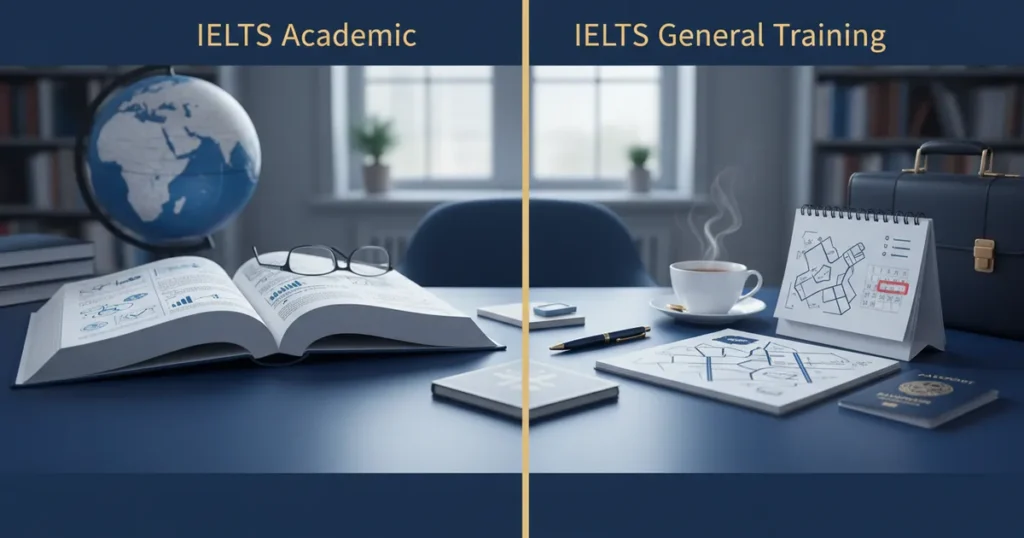
As we look forward to the testing environment of 2026, the IELTS examiners continue to refine their methods of testing reading comprehension. While the core principles remain, the sophistication of distractors and the complexity of paraphrasing are increasing. Therefore, staying updated with the latest ielts reading short answer questions: band 9 tips 2026 is essential for any serious test-taker aiming for excellence in the Academic or General Training modules.
Understanding the Short Answer Question Format
In the IELTS Reading test, short answer questions require you to find a specific piece of information in a passage and write a brief answer. Unlike multiple-choice questions, there are no options provided to guide you; you must locate the exact words within the text itself. The instructions will always specify a word limit, such as “NO MORE THAN TWO WORDS AND/OR A NUMBER.”
One of the most critical rules to remember is that you must take the words directly from the passage. You should not change the form of the word (e.g., changing a verb to a noun) or use your own words to summarize the answer. If the text says “environmental preservation” and you write “protecting nature,” your answer will be marked incorrect, even if the meaning is identical. This precision is a cornerstone of the ielts reading short answer questions: band 9 tips 2026 methodology.
Key Characteristics of Short Answer Questions
- Order of Information: Answers almost always appear in the same order in the text as the questions. If you find the answer to question 1 and then question 3, the answer to question 2 will be located in the text between them.
- Word Limits: These are non-negotiable. If the limit is two words and you write three, you get zero marks.
- Direct Extraction: You are looking for specific facts, names, dates, or technical terms.
- Grammatical Accuracy: While the answer must come from the text, it must also fit the grammatical context of the question being asked.
Mastering ielts reading short answer questions: band 9 tips 2026
To reach a Band 9, you need a workflow that minimizes time waste and maximizes accuracy. The following step-by-step approach is designed to help you handle even the most complex passages with confidence. This method integrates the latest advice from the IELTS Official Website regarding task fulfillment and reading skills.
Step 1: Analyze the Instructions and Word Count
Before reading the questions, look at the word limit. Is it “ONE WORD ONLY,” “NO MORE THAN TWO WORDS,” or “NO MORE THAN THREE WORDS AND/OR A NUMBER”? Understanding this constraint prevents you from writing unnecessary words. For instance, if the answer is “the blue whale” but the limit is two words, you must write “blue whale” or “the whale” (though “blue whale” is more specific and likely correct).
Step 2: Identify Keywords in the Question
Underline the keywords in each question. Focus on “hard” keywords like names, dates, and numbers, as these are easy to spot. Then, identify “soft” keywords—nouns and verbs that carry the main meaning. Remember that the passage will likely use synonyms for these soft keywords. While practicing this, you might find it helpful to compare this technique with IELTS reading tips for true false not given questions 2026, as both require high-level keyword matching.
Step 3: Predict the Type of Information Needed
Before you go to the text, think about what kind of word you are looking for. Is it a person’s name? A measurement? A cause of a problem? A specific material? By predicting the category of the answer, your brain becomes more efficient at filtering out irrelevant data during the scanning process.
Step 4: Scan the Passage
Move your eyes quickly over the text to find the keywords or their synonyms. Do not read every word at this stage. Once you locate the relevant section, switch to intensive reading to pinpoint the exact answer. If you find the answer to Question 5 but haven’t found Question 4, stop and look slightly above the section you just found.
Step 5: Verify the Answer and Word Count
Once you have the answer, check it against the question. Does it answer the “Who,” “What,” “Where,” or “Why” correctly? Finally, double-check that you haven’t exceeded the word limit and that the spelling is exactly as it appears in the text.
Locating Answers: Skimming vs. Scanning
The difference between a Band 6 and a Band 9 often comes down to reading speed. You cannot afford to read the entire passage slowly. You must master the dual skills of skimming and scanning. Skimming is reading for the “gist” or the main idea of a paragraph. Scanning is searching for specific details without reading the sentences for meaning.
For short answer questions, scanning is your primary tool. You are looking for a needle in a haystack. However, skimming is useful for understanding the organization of the passage so you know *which* haystack to look in. For example, if the passage is about the history of architecture and a question asks about 19th-century materials, you should skim the headings or first sentences of paragraphs to find where the 19th century is discussed, then scan that paragraph for “materials.”
“The secret to IELTS Reading success isn’t reading faster; it’s reading less. By knowing exactly what you are looking for before you look at the text, you eliminate 90% of the distractions.”
Lead Instructor at SimplyIELTS
The Keyword and Synonym Matching Technique
IELTS examiners are masters of paraphrasing. They will almost never use the exact word from the question in the text, unless it is a technical term or a proper noun. To succeed with ielts reading short answer questions: band 9 tips 2026, you must build a strong vocabulary of synonyms and parallel expressions.
| Question Keyword | Passage Synonym/Paraphrase |
|---|---|
| Significant increase | Substantial growth / Dramatic rise |
| Primary reason | Main factor / Fundamental cause |
| Annual | Every year / Per annum |
| Inhabitants | Residents / Local population |
| Constructed | Built / Erected / Fabricated |
| Vulnerable | At risk / Susceptible / Defenceless |
When you encounter a question like “What was the main cause of the building’s collapse?”, do not just look for the word “cause.” Look for “reason,” “due to,” “resulted from,” or “triggered by.” This flexibility in your search criteria is what separates high-scoring candidates from the rest.
Common Traps Set by IELTS Examiners
The IELTS test is designed to distinguish between those who understand the text and those who simply match words. Here are the most common traps you will face in 2026:
1. The Distractor Trap
The text might mention two different numbers or names. For example, a passage might say, “While the project was initially expected to cost $5 million, the final expenditure reached $7.2 million.” If the question asks for the final cost, writing “$5 million” is a common error caused by stopping at the first number found.
2. The Plural vs. Singular Trap
If the question asks for “Which materials…” and the text says “The structure was reinforced with steel and concrete,” you must include both if the word limit allows, or ensure the word you choose is plural if required. Always copy the word exactly as it appears; if the text says “apples,” do not write “apple.”
3. The Hyphenated Word Rule
In IELTS, hyphenated words (e.g., “state-of-the-art” or “well-being”) count as ONE word. This is a crucial detail for staying within the word limit. If the limit is two words and the answer is “high-speed rail,” you have used two words, which is perfectly acceptable.
Time Allocation per Question Type
You have 60 minutes to answer 40 questions across three passages. This gives you roughly 1.5 minutes per question, including reading time. However, short answer questions should ideally be completed faster because the answers are literal and found directly in the text.
Aim to spend no more than 60 seconds on each short answer question. If you cannot find the answer within a minute, move on to the next one. Because the questions follow the order of the text, finding the answer to the next question will help you narrow down the location of the one you missed. Efficient time management is a core component of ielts reading short answer questions: band 9 tips 2026.
Worked Example with Annotated Passage
Let’s look at a sample passage to apply these ielts reading short answer questions: band 9 tips 2026 in a real-world scenario.
Passage Excerpt:
“The development of the modern bicycle was a gradual process. In 1817, Baron Karl von Drais invented the ‘Laufmaschine’ or ‘running machine.’ It was made entirely of wood and lacked pedals, requiring the rider to push their feet against the ground. It wasn’t until the 1860s that French inventors Pierre Michaux and Pierre Lallement added a mechanical crank drive with pedals on an enlarged front wheel, creating what became known as the ‘boneshaker’ due to its uncomfortable ride on cobblestone streets.”
Question 1: What was the original material used to construct the Laufmaschine?
Analysis: Keywords are “original material” and “Laufmaschine.” Scanning the text, we find “Laufmaschine” in the second sentence. The text says it was “made entirely of wood.”
Answer: WOOD (One word)
Question 2: Which part of the bicycle did Michaux and Lallement attach the pedals to?
Analysis: Keywords are “Michaux,” “Lallement,” and “pedals.” The text says they added pedals on an “enlarged front wheel.”
Answer: ENLARGED FRONT WHEEL (Three words) or FRONT WHEEL (Two words). Always check the word limit instruction.
Question 3: What nickname was given to the 1860s bicycle because of its vibration?
Analysis: Keywords are “nickname,” “1860s,” and “vibration.” The text mentions the “boneshaker” and explains it was due to the “uncomfortable ride.” Vibration is a synonym for the cause of the discomfort here.
Answer: BONESHAKER
Advanced Strategies for ielts reading short answer questions: band 9 tips 2026
To truly push into the Band 8.5 or 9.0 range, you must refine your ability to handle “hidden” answers. Sometimes, the answer isn’t a single noun but a phrase that must be condensed. Here are actionable tips to improve your accuracy:
- Ignore Articles if Necessary: If the word limit is two words and the answer is “the atmosphere,” you can simply write “atmosphere” to save space if you need to include another adjective like “upper atmosphere.”
- Focus on Grammar: If the question asks “What did the researchers find?” and the text says “The discovery of a new species surprised the team,” the answer is “new species.” Writing “discovery” would be grammatically correct but wouldn’t answer “what” they found as accurately.
- Watch for Negatives: Examiners love to use words like “rarely,” “seldom,” “never,” or “not.” A question might ask what a group *failed* to do. If the text says “The expedition was unable to reach the summit,” the answer is “reach the summit.”
- Check for Capitalization: While IELTS is not strictly case-sensitive (you can write in all caps), it is good practice to capitalize proper nouns like “London” or “September” to ensure clarity.
- Don’t Overthink: If the answer seems too simple, it might actually be correct. Don’t look for deep hidden meanings; the Reading test is a test of your ability to locate and understand information, not your ability to analyze literature.
Your 2-Week Reading Improvement Plan
Consistency is the key to mastering the ielts reading short answer questions: band 9 tips 2026. Follow this structured plan to see a significant jump in your performance.
Week 1: Skill Building
Days 1-2: Focus exclusively on scanning. Take five different IELTS passages and, without answering questions, try to find 10 specific nouns or dates in each passage as fast as possible. Aim for under 30 seconds per item.
Days 3-4: Vocabulary expansion. Read academic articles (from sources like The Economist or National Geographic) and write down synonyms for common verbs and adjectives. This will help you recognize paraphrasing in the exam.
Days 5-7: Untimed practice. Complete short answer question sets from official Cambridge IELTS books. Focus on 100% accuracy rather than speed. Analyze every mistake—did you miss a synonym? Did you exceed the word limit?
Week 2: Speed and Stamina
Days 8-10: Timed question sets. Give yourself exactly 1 minute per question. This forces you to use the skimming and scanning techniques discussed earlier. During this phase, also practice other question types like IELTS reading tips for true false not given questions 2026 to build overall test-taking agility.
Days 11-13: Full-length practice tests. Sit in a quiet room and complete a full 60-minute Reading module. This builds the mental stamina required to stay focused for the entire hour.
Day 14: Review and Refine. Look back at all the questions you got wrong over the last two weeks. Identify patterns. If you consistently struggle with word limits, spend the day doing word-count drills.
Marking Criteria and Scoring
It is helpful to know how your raw score translates into the Band scale. While the exact conversion can vary slightly between tests, the following table provides a reliable estimate for the Academic Reading module.
| Raw Score (out of 40) | IELTS Band Score |
|---|---|
| 39-40 | 9.0 |
| 37-38 | 8.5 |
| 35-36 | 8.0 |
| 33-34 | 7.5 |
| 30-32 | 7.0 |
| 27-29 | 6.5 |
| 23-26 | 6.0 |
As you can see, to achieve a Band 9, you have almost no room for error. You can only afford to miss one question out of 40. This is why technical precision in short answer questions is so vital—they are the “easy” marks that you cannot afford to lose through carelessness.
Conclusion
Mastering ielts reading short answer questions: band 9 tips 2026 requires a blend of speed, vocabulary, and strict adherence to instructions. By treating the word limit as a law, utilizing scanning to find keywords, and staying alert to the traps of paraphrasing, you can turn this section of the test into a guaranteed source of points.
Remember that the IELTS Reading test is not just about how much you know, but how well you can find and process information under pressure. Use the 2-week plan provided, keep refining your synonym bank, and approach every question with a systematic mindset. If you found this guide helpful, be sure to explore our other resources on SimplyIELTS.com to continue your journey toward a Band 9.
Ready to take the next step? Start practicing today by downloading our latest Reading mock tests and applying these strategies in real-time. Your dream score is within reach!





Responses