
Differences between IELTS indicator and regular IELTS test
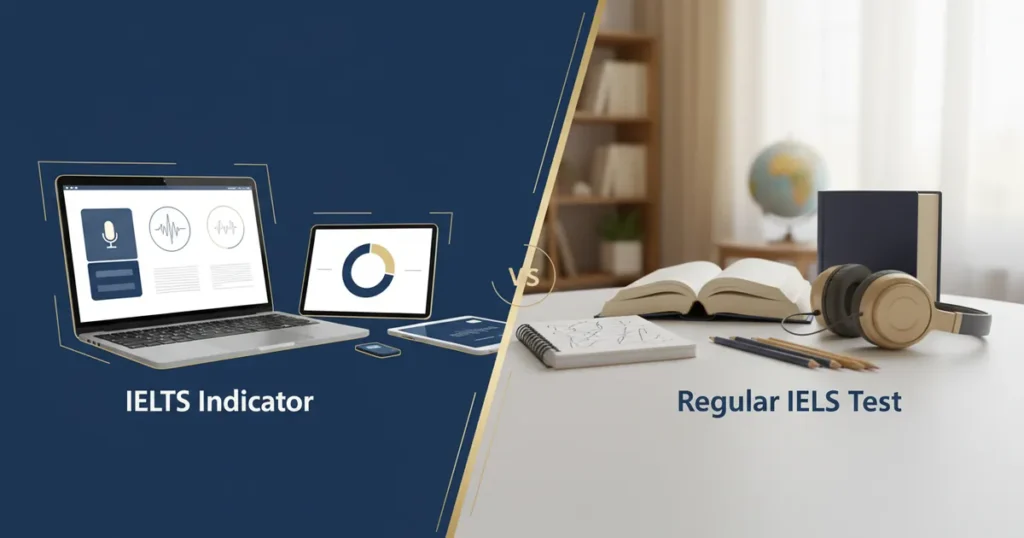
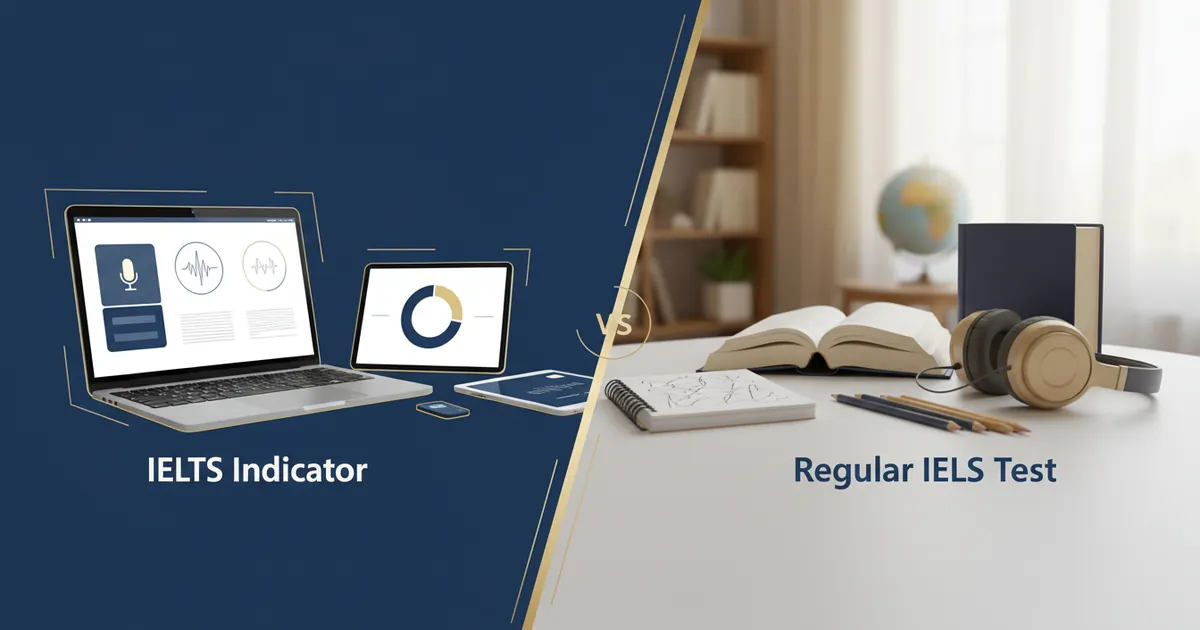
Are you confused about which version of the English proficiency exam you should book for your university application? With the landscape of international education shifting rapidly, understanding the Differences between IELTS indicator and the traditional IELTS test is crucial for your academic success. While both exams are designed by the same experts, they serve very different purposes and are held in completely different environments. Choosing the wrong one could mean your results are not accepted by your target institution, leading to wasted time and resources.
The IELTS Indicator was launched as a temporary solution during the global pandemic when test centers were forced to close. However, as we move into 2026, many students still find themselves weighing the pros and cons of an at-home test versus a center-based one. Before you decide to register, it is essential to understand that while the content remains high-quality, the recognition of these tests varies significantly. You should always verify the requirements of your specific organization on the IELTS Official Website before making a final commitment.
In this comprehensive guide, we will break down the structural, logistical, and technical nuances of both formats. Whether you are aiming for a band 7.0 or just starting your journey, knowing these Differences between IELTS indicator and regular IELTS will help you prepare more effectively. We will also provide expert tips on how to transition your study habits from one format to the other, ensuring you are ready for test day, no matter where it takes place.
Exploring the Primary Differences between IELTS indicator and Regular IELTS
The most fundamental distinction lies in the delivery method. The regular IELTS test is conducted in a secure, physical environment—a designated test center. You have the choice between the paper-based test or the computer-delivered version. On the other hand, the IELTS Indicator is a fully online test that you take from the comfort of your own home. While this sounds convenient, it comes with a strict set of technical requirements that can be just as stressful as traveling to a center.
When considering which path to take, you must first determine if you need the Academic or General Training module. If you are unsure which one fits your profile, our guide on IELTS Academic vs General Training provides a deep dive into the specific purposes of each. Note that the IELTS Indicator is currently only available for the Academic module, making it unsuitable for migration or work visa purposes in most countries.
Test Environment and Security
In a regular IELTS test center, the environment is strictly controlled by invigilators. You are provided with the necessary equipment, and the risk of technical failure is managed by the staff. However, with the IELTS Indicator, you are the “IT manager.” You must ensure a stable internet connection, a functioning webcam, and a quiet room where you will not be interrupted. The test uses a Locked Browser and human proctors via your webcam to ensure integrity, but the psychological pressure of maintaining your own tech setup is one of the notable Differences between IELTS indicator and center-based exams.
Institutional Recognition
This is perhaps the most critical point for any applicant. Regular IELTS (both paper and computer) is globally recognized by over 12,000 organizations, including immigration authorities in the UK, Canada, Australia, and New Zealand. The IELTS Indicator, however, is an “indicative” score. While many universities accepted it during peak lockdown periods, many have now reverted to requiring the standard IELTS or the newer IELTS Online (the permanent remote version). Before booking, check the IELTS exam dates and verify with your university’s admissions office if they still accept “Indicator” scores.
Technical Comparison: A Side-by-Side Look
To help you visualize the Differences between IELTS indicator and the standard test, we have compiled a comparison table. This covers the essential logistics that every candidate should know before paying their registration fee.
| Feature | IELTS Indicator (Online) | Regular IELTS (Center) |
|---|---|---|
| Location | Your Home | Official Test Center |
| Availability | Once a week (Limited) | Up to 7 days a week |
| Modules | Academic Only | Academic & General Training |
| Speaking Test | Video Call (Zoom) | Face-to-Face with Examiner |
| Result Turnaround | 7 Days | 3-5 Days (Computer) / 13 Days (Paper) |
| Recognition | Selective Universities | Global (Immigration & Education) |
| Equipment | Personal Laptop/PC Required | Provided by Test Center |
Key Concepts & Vocabulary for Modern Testing
As you prepare for either format, you will encounter specific terminology that describes the testing process. Understanding these terms is part of your preparation. For instance, the term “Proctoring” refers to the supervision of your exam. In the Indicator version, this is done remotely, whereas in a regular test, it is done in person. If you want to boost your lexical resource for the exam itself, try our IELTS vocabulary quiz to see where you stand.
Essential Testing Vocabulary
- Invigilation: The act of supervising test candidates to prevent cheating.
- Indicative Score: A score that provides an estimate of your level but may not be used for official visa purposes.
- Band Descriptor: The criteria used by examiners to grade your writing and speaking performance.
- Locked Browser: Security software that prevents you from opening other tabs or programs during an online test.
- Face-to-Face Interaction: The traditional method of the Speaking test, emphasizing real-time human communication.
Examining the Speaking and Writing Components
One of the most discussed Differences between IELTS indicator and regular IELTS is the Speaking module. In a regular test, you sit in a private room with a certified examiner. This allows for natural body language and a more organic flow of conversation. In the Indicator version, the Speaking test is conducted via a video call. While the questions are identical, the “vibe” is different. You must be comfortable speaking into a camera and ensuring your audio is crystal clear.
For the Writing component, the challenges are similar across both computer-delivered formats. You need to be proficient at typing and organizing your thoughts quickly. If you are struggling with structure, our IELTS Writing Task 2 Mastery Course offers step-by-step templates that work for both online and offline exams. Remember, the marking criteria (Task Response, Coherence and Cohesion, Lexical Resource, and Grammatical Range) remain exactly the same regardless of the format.
“The shift to online testing like the IELTS Indicator hasn’t changed the standard of English required; it has only changed the medium. A student who can write a cohesive essay on paper can do the same on a screen, provided they have practiced the specific digital interface.”
Senior IELTS Consultant at SimplyIELTS
Examples and Model Scenarios
To better understand the Differences between IELTS indicator, let’s look at two hypothetical students and which test they should choose based on their needs for 2026.
Scenario A: The University Applicant
Sarah is applying for a Master’s degree in Germany. Her target university explicitly states they accept “online indicative scores” due to the distance Sarah lives from the nearest testing city. For Sarah, the IELTS Indicator is a perfect, cost-effective choice. She should focus on her IELTS speaking part 1 strategies to ensure she makes a great first impression over the video call.
Scenario B: The Skilled Migration Candidate
Ahmed wants to move to Australia for work. The Australian Department of Home Affairs requires a “Secure English Language Test” (SELT). In this case, the IELTS Indicator is not an option. Ahmed must book a regular IELTS test at a center. He should be wary of common mistakes to avoid in IELTS writing task 2, as his professional future depends on a high band score that is recognized by immigration authorities.
Why the Differences between IELTS indicator Matter for Your Application
Choosing the wrong format isn’t just a minor inconvenience; it can lead to immediate rejection of your application. Many students assume that “IELTS is IELTS,” but the “Indicator” label is a specific marker that tells institutions the test was taken in an unproctored physical environment (your home). While the technology is robust, it lacks the “Gold Standard” security of a physical test center where your identity is verified through biometrics and physical passport checks.
Furthermore, the Differences between IELTS indicator extend to how you receive your results. Regular IELTS provides you with a Test Report Form (TRF) which is a physical, high-security document. The Indicator provides a digital-only result. If your university requires a hard copy sent via courier, the Indicator will not meet your needs. Always ensure you are following the correct IELTS writing task 1 report format to maximize your score, regardless of how those results are delivered.
Important Tips for Success in Any IELTS Format
Regardless of whether you choose the online indicator or the traditional center-based exam, your preparation strategy should be rigorous. Here are seven actionable tips to ensure you perform your best:
- Check Compatibility: If taking the Indicator, run a system check at least 48 hours before the test to ensure your laptop meets the requirements.
- Master the Interface: Practice using a computer-delivered mock test to get used to highlighting text and using the “Notes” function.
- Focus on Reading: Learn how to improve IELTS reading score by practicing skimming and scanning on a screen rather than just on paper.
- Simulate the Environment: If testing at home, practice in the exact room you will use, ensuring it is free from background noise and distractions.
- Watch the Clock: In both formats, time management is your greatest enemy. Practice Task 2 writing within a strict 40-minute limit.
- Speak to the Camera: For online Speaking tests, look at the webcam, not the screen, to simulate eye contact with the examiner.
- Verify Acceptance: We cannot stress this enough—email your university’s admissions team and ask: “Do you accept the IELTS Indicator for the 2026 intake?”
Quick Tip: The “IELTS Online” Alternative
Be aware that there is now a third option: IELTS Online. This is different from the Indicator. IELTS Online is the permanent remote version of the Academic test and is more widely accepted than the Indicator. When looking at the Differences between IELTS indicator, always check if “IELTS Online” is what your university actually prefers.
Final Thoughts on Choosing the Right Test
Understanding the Differences between IELTS indicator and the regular test is the first step in your study abroad journey. While the Indicator offers unparalleled convenience, the regular IELTS remains the king of recognition and security. If you are in a rush and your university accepts it, the Indicator is a fantastic tool. However, for the majority of students—especially those looking at migration or high-ranking global universities—the center-based test is the safer bet.
At SimplyIELTS, we are dedicated to helping you navigate these choices. Our resources are designed to bridge the gap between your current level and your target band score. Don’t leave your future to chance by picking the wrong test format or failing to prepare for the specific challenges of digital testing.
Ready to start your preparation? Explore our IELTS Writing Mastery Course today and join thousands of successful students who have achieved their dreams of studying and working abroad. Whether you choose the Indicator or the regular test, we have the tools you need to succeed!




Responses