
Describe an Item of Clothing That Someone Gave you — IELTS Speaking Cue Card (Band 9 Sample Answer)

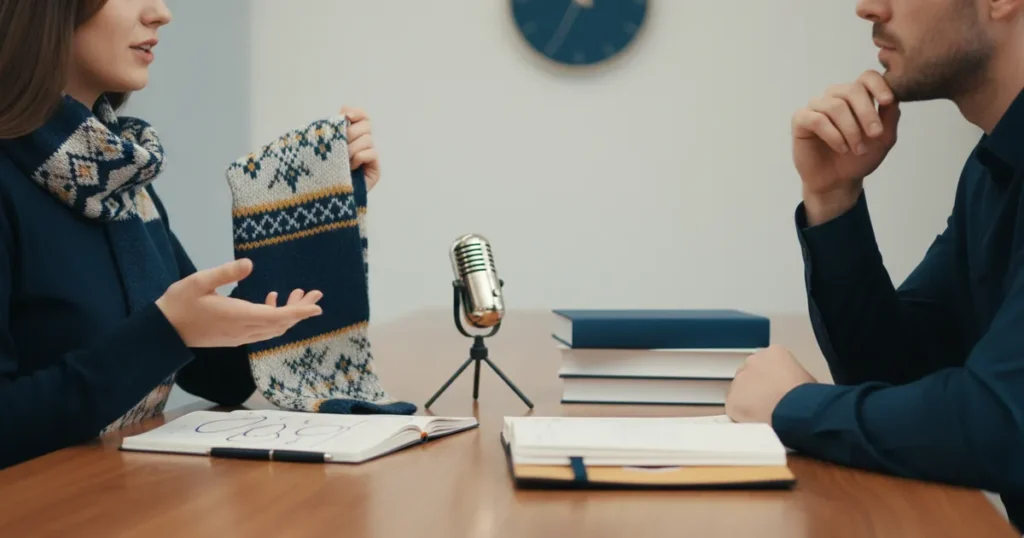
If you are preparing for your exam, you will likely encounter a prompt asking you to describe an item of clothing that someone gave you. This particular topic has become a staple in recent tests, and mastering it requires a blend of descriptive vocabulary and personal storytelling. In this guide, we provide a comprehensive general overview of IELTS Speaking strategies alongside Band 7 and Band 9 model answers to help you excel.
The Cue Card
Describe an item of clothing that someone gave you.
You should say:
• What the item of clothing is
• Who gave it to you
• When and why they gave it to you
And explain how you feel about this item of clothing.
Band 9 Sample Answer
To be perfectly honest, I’m not usually someone who gets overly attached to material possessions, but there is one particular garment that holds a very special place in my heart. I’m going to talk about a charcoal-grey, double-breasted wool overcoat that my grandfather gave me just before I moved abroad for my university studies. It happened about three years ago during a family farewell dinner. He’d noticed I was frantically packing light summer clothes and gently reminded me that the winters in northern Europe would be a far cry from the tropical climate I was used to. He then disappeared into his room and emerged with this stunning, heavy-duty coat that he’d had tailored for himself decades ago in London. The coat itself is a masterpiece of craftsmanship; it’s made from a thick, high-quality wool blend that feels incredibly substantial. Even though it’s a vintage piece, the cut is timeless, and it fits me like a glove, which is quite remarkable considering the age gap between us. What makes it so significant isn’t just its utility—although it has certainly saved me from freezing on many occasions—but the sentimental value attached to it. It feels like a protective layer, not just against the elements, but a physical connection to my family while I’m thousands of miles away. Every time I slip it on, I’m reminded of his wisdom and the promise I made to someone special—myself, actually—to make the most of my opportunities abroad. It’s more than just a piece of clothing; it’s a heritage item that I plan to keep for the rest of my life, as it represents a bridge between my past and my future.
Band 7 Sample Answer
I would like to describe a blue hoodie that my best friend gave me for my birthday last year. We were at a small party at my house when he surprised me with this gift. He knew that I really liked a specific brand of sportswear, so he saved up his money to buy me this high-quality sweatshirt. It is a very bright blue color with a small logo on the chest. The material is very soft and comfortable, which makes it perfect for wearing when I am relaxing at home or going to the gym. I think this item is very important to me because it reminds me of our long friendship. Whenever I wear it, I feel happy and I remember the fun times we have had together. It was also a very thoughtful gift because he remembered exactly what kind of style I like. Even though it is just a simple piece of clothing, I value it more than my more expensive clothes because of the person who gave it to me. I try to take good care of it so that it lasts for a long time. If you want more advice on how to improve your delivery, check out these IELTS Speaking tips for better fluency.
How the Band 9 Answer Scores Top Marks
Fluency and Coherence
The speaker uses natural discourse markers and fillers that make the speech flow effortlessly. Phrases like “To be perfectly honest” and “Actually” help bridge different ideas without awkward pauses. The narrative is logically structured, moving from the description of the event to the physical attributes of the coat, and finally to the emotional significance. This logical progression is vital for achieving a high score in IELTS Speaking: Behaviour & Patience, as it shows the examiner you can maintain a coherent long turn.
Lexical Resource
The vocabulary used is both precise and sophisticated. Instead of using generic words like “old” or “good,” the speaker uses “vintage piece,” “masterpiece of craftsmanship,” and “heavy-duty.” Idiomatic expressions such as “fits me like a glove” and “a far cry from” demonstrate a high level of English proficiency. The use of the term “heritage item” adds a layer of depth that is typical of a Band 9 performance.
Grammatical Range and Accuracy
The response showcases a variety of complex structures. For instance, the speaker uses the past perfect tense (“he’d had tailored”) to describe actions completed before another past action. There is also effective use of relative clauses (“which is quite remarkable considering…”) and conditional-style thinking (“it has certainly saved me from freezing”). This variety ensures the speaker meets the criteria for grammatical range.
Pronunciation
While we cannot hear the answer, the text suggests a speaker who uses word stress to emphasize emotion. For example, emphasizing “thousands of miles away” or “masterpiece” would help convey the speaker’s feelings. Clear articulation of complex words like “substantial” and “sentimental” is essential for a top score.
Vocabulary and Idioms to Use
| Word/Phrase | Meaning | Example Sentence |
|---|---|---|
| Fits like a glove | Fits perfectly | The jacket my mom bought me fits like a glove. |
| A far cry from | Very different from | The cold weather here is a far cry from my home city. |
| Sentimental value | Emotional importance | This watch has great sentimental value as it was my father’s. |
| Timeless | Not affected by fashion trends | A white shirt is a timeless piece of clothing. |
| Masterpiece | A work of outstanding skill | The hand-knitted sweater is a masterpiece of craftsmanship. |
| Substantial | Sturdy and of good quality | This wool coat feels very substantial and warm. |
| To slip on | To put on clothes easily | I usually slip on a cardigan when it gets chilly. |
| Heritage item | An object passed down through generations | This silk scarf is a heritage item in our family. |
| Bespoke / Tailored | Made specifically for one person | He wears bespoke suits for all his business meetings. |
| Versatile | Able to be used in many ways | A black dress is very versatile for different occasions. |
| To cherish | To protect and care for lovingly | I will cherish this gift for many years to come. |
| Fast fashion | Inexpensive, mass-produced trendy clothing | I try to avoid fast fashion because of its environmental impact. |
Grammar Structures That Boost Your Band Score
To reach the higher bands, you must demonstrate more than just basic sentence patterns. Incorporate these into your IELTS English Speaking Course practice sessions:
- Past Perfect for Background: “By the time he gave it to me, he had already owned it for twenty years.”
- Relative Clauses: “The scarf, which was hand-woven in my village, is my favorite accessory.”
- Present Perfect for Impact: “I have worn this jacket nearly every day since I received it.”
- Conditionals (Type 3): “If she hadn’t given me that umbrella, I would have been soaked to the bone.”
- Passive Voice: “The fabric was sourced from a local market in the mountains.”
- Used to / Would for Past Habits: “My grandmother would always knit us sweaters during the winter months.”
- Cleft Sentences: “What I love most about this shirt is the intricate embroidery on the collar.”
- Participle Phrases: “Knowing how much I love blue, my sister chose this specific shade for the dress.”
Part 3 Follow-up Questions
Why do people give clothes as gifts?
Well, to my mind, giving clothes is a deeply personal gesture because it requires the giver to have a good understanding of the recipient’s taste, size, and personality. It’s not just about providing a functional item; it’s an expression of care. For instance, when someone gifts you a hand-knitted sweater, they are essentially gifting you their time and effort. Furthermore, clothes are often seen as a way to help someone mark a new chapter in their life, such as giving a suit for a first job interview, which acts as a form of encouragement and support.
Do you think fashion is important?
In my view, fashion is often dismissed as superficial, but it serves a crucial role in self-expression and cultural identity. It’s almost like a visual language that tells the world who we are before we even speak. From a scientific perspective, exploring fashion can be as detailed as a describe an area of science that interests you topic, particularly when looking at textile technology and sustainable materials. Beyond that, the fashion industry is a massive economic driver globally. However, it’s important to distinguish between following every fleeting trend and developing a personal style that makes one feel confident and comfortable.
Should schools require students to wear uniforms?
There are certainly two sides to this debate. On one hand, uniforms promote a sense of equality by minimizing the visible gap between students from different socioeconomic backgrounds. It reduces the pressure to wear expensive brands, which can prevent bullying. I remember when I described an occasion when you asked someone for advice about school stress, and they mentioned that not having to choose an outfit every morning actually saved them a lot of anxiety. On the other hand, critics argue that uniforms stifle individuality and self-expression, which are important during a child’s developmental years.
Is the quality of clothes today better than in the past?
I would argue that the quality of garments has seen a significant decline due to the rise of fast fashion. In the past, clothes were built to last and were often repaired rather than replaced. Today, however, many brands prioritize low costs and high turnover, resulting in items that lose their shape or fall apart after just a few washes. If I described a time when you gave advice to someone about shopping, I would tell them to invest in “slow fashion”—high-quality pieces that may be more expensive but offer much better longevity and environmental sustainability.
How does what we wear affect our mood?
Absolutely, there is a psychological phenomenon known as “enclothed cognition,” which suggests that the clothes we wear can influence our psychological processes. For example, wearing formal attire can make a person feel more authoritative and focused, while wearing bright colors might boost someone’s mood on a gloomy day. I once described a time when you encouraged someone to do something difficult, and I suggested they wear their favorite “power outfit” to feel more confident. When we feel good in what we are wearing, it naturally radiates outward as confidence and positivity.
Common Mistakes to Avoid
- Being Too Generic: Avoid saying “I liked it because it was nice.” Instead, explain the texture, the color, and the specific reason it matters to you.
- Focusing Only on the Brand: While brands can be part of the story, the examiner is looking for descriptive language and emotional connection, not a marketing pitch.
- Losing Track of Time: If you speak for only 40 seconds, you won’t demonstrate enough range. Use the bullet points to expand your story.
- Repetitive Vocabulary: Try not to use the word “clothes” or “gave” in every sentence. Use synonyms like “garment,” “attire,” “outfit,” or “gifted” and “presented with.”
- Getting Distracted: Ensure you don’t sound like you’re recounting a time when you answered a phone call in the middle of your story; stay focused on the clothing item itself.
Practice Tips for This Cue Card
- Use a Mirror: Practice describing an actual item in your wardrobe out loud. This helps with natural gesturing and facial expressions.
- Record and Transcribe: Record your answer, then write it down. Look for places where you could have used a more advanced adjective or a complex grammar structure.
- The 1-Minute Plan: Practice using your one-minute preparation time to write down keywords only, not full sentences. Focus on the “why” and “how” to ensure depth.
- Focus on Adjectives: Make a list of 10 adjectives related to fabric (silky, coarse, breathable) and 10 related to style (chic, understated, flamboyant).
- Connect to Emotions: Always link the physical object to a feeling or a memory. This makes the answer more engaging and easier to sustain for two minutes.
Mastering the “describe an item of clothing that someone gave you” cue card is a fantastic way to showcase your descriptive abilities. By combining personal anecdotes with high-level vocabulary, you can easily reach your target score. For more practice and to stay updated with the latest trends, be sure to check our list of IELTS Speaking Topics Jan–Apr 2026 and continue refining your skills.






Responses