
Describe a Time you Had a Disagreement with Someone — IELTS Speaking Cue Card (Band 9 Sample Answer)

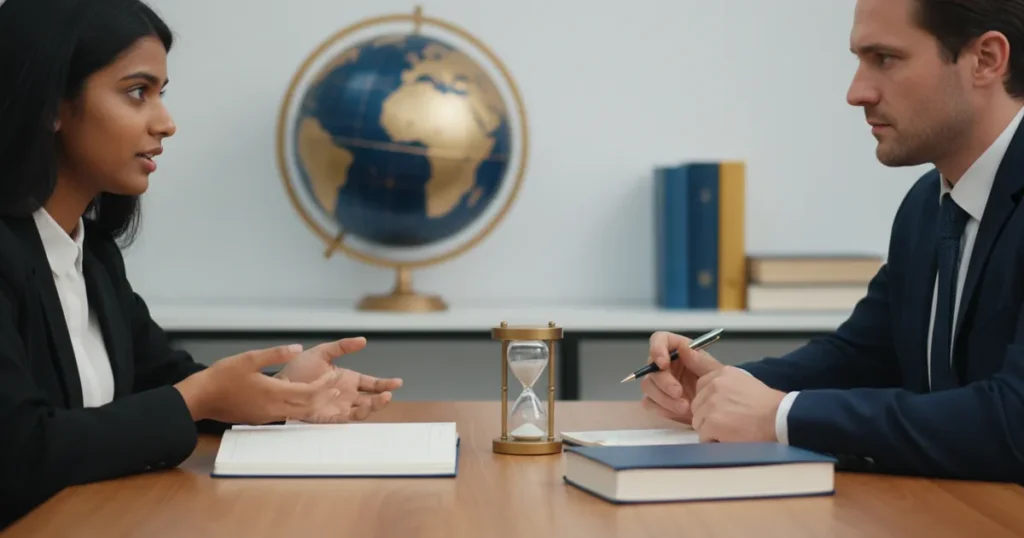

In this comprehensive guide, we will explore how to describe a time you had a disagreement with someone ielts speaking, which is a frequent and challenging topic in recent exams. This post provides a high-level Band 9 model answer, a detailed breakdown of the scoring criteria, and expert strategies to help you navigate this cue card with confidence and linguistic precision.
The Cue Card
A time you had a disagreement with someone.
You should say:
• When and where it happened
• Who you had a disagreement with
• What the disagreement was about
• And explain how you resolved it and how you felt about it.
Band 9 Sample Answer
I’m going to tell you about a rather heated disagreement I had with my best friend, Mark, about eighteen months ago while we were planning a trip. We were in the middle of organizing a two-week backpacking excursion across Japan, which had been a bucket-list dream of ours for years. However, as we got into the nitty-gritty of the itinerary, things started to go south. Mark was absolutely adamant about sticking to a shoestring budget, wanting to stay in cramped hostels and eat exclusively from convenience stores to save every penny. On the other hand, I felt that since it was a once-in-a-lifetime trip, we should splurge a bit on authentic ryokans and high-quality sushi. The bone of contention wasn’t just the money; it was the entire philosophy of the trip. At one point, our discussion became quite acrimonious, and we actually stopped talking for a couple of days because neither of us was willing to budge. It felt like we were at loggerheads, and I even worried the trip might be cancelled altogether, which was quite distressing. Eventually, I realized that our friendship was far more valuable than a fancy hotel room, so I reached out to him to clear the air. We sat down for a coffee to have a proper heart-to-heart. We eventually reached a compromise: we decided to stay in budget accommodation for the first half of the trip and then treat ourselves to luxury stays for the final few days. To be honest, I felt an immense sense of relief once we’d ironed out our differences. Looking back, the disagreement was actually beneficial because it forced us to communicate more openly. It taught me that even the closest friends can have vastly different perspectives, but with a bit of flexibility and empathy, you can find a middle ground that satisfies everyone involved.
Band 7 Sample Answer
I want to talk about a disagreement I had with my colleague last year at my office. We were working together on a marketing project for a new client, and we had different ideas about the strategy. My colleague wanted to use traditional advertising like newspapers, but I thought we should focus more on social media because the target audience was quite young. We had a long meeting where we both argued for our ideas, and it was a bit stressful because the deadline was approaching very quickly. The disagreement lasted for about a week, and we didn’t see eye to eye at first. The atmosphere in the office was a bit tense during that time. However, our manager noticed the conflict and stepped in to help us resolve it. We had a private meeting where we both explained our points of view clearly. In the end, we decided to use a mix of both methods, which was a good compromise. I felt much better after we resolved the issue because I don’t like having conflict at work. It was a good lesson in how to work in a team and how to listen to other people’s opinions even when you disagree with them strongly.
How the Band 9 Answer Scores Top Marks
Fluency and Coherence
The Band 9 answer flows naturally, much like a real conversation. The speaker uses sophisticated discourse markers and cohesive devices to link ideas without sounding robotic. For instance, phrases like “However, as we got into the nitty-gritty” and “Eventually, I realized” guide the listener through the timeline of the story. There is no hesitation related to searching for words, and the response is logically organized, moving from the context of the disagreement to the conflict itself, and finally to the resolution. This level of organization is similar to the structure required when you describe a time you gave a speech or presentation, where clear sequencing is vital for a high score.
Lexical Resource
The vocabulary used is both precise and idiomatic. Instead of saying “we disagreed,” the speaker uses “at loggerheads” and “bone of contention.” These are high-level idiomatic expressions that demonstrate a mastery of English. Furthermore, the use of topic-specific vocabulary like “shoestring budget,” “acrimonious,” and “ironed out our differences” shows a wide range of lexical resource. The speaker avoids overused words like “bad” or “angry,” opting for more descriptive terms like “distressing” or “adamant.”
Grammatical Range and Accuracy
The response showcases a variety of complex structures. We see the use of the past continuous (“were planning,” “were organizing”) to set the scene, the past perfect to show the relationship between past events (“had been a bucket-list dream”), and conditional-style thinking (“neither of us was willing to budge”). The speaker also uses relative clauses (“which had been a dream of ours for years”) and complex sentence starters (“Looking back, the disagreement was…”). This variety is essential for reaching the top bands, as outlined on the IELTS Official Website.
Pronunciation
While the text doesn’t show pronunciation, a Band 9 speaker would use word stress and intonation to convey emotion. For example, emphasizing the word “absolutely” in “absolutely adamant” or using a rising and falling intonation when listing the two different viewpoints (hostels vs. ryokans). The speaker would also use contractions like “wasn’t” and “didn’t” to maintain a natural, spoken rhythm rather than a formal, stilted one.
Vocabulary and Idioms to Use
| Word/Phrase | Meaning | Example Sentence |
|---|---|---|
| Bone of contention | The main subject of a disagreement. | The budget was the main bone of contention between us. |
| At loggerheads | In strong disagreement. | The two departments have been at loggerheads over the new policy. |
| To see eye to eye | To agree with someone. | We don’t always see eye to eye, but we respect each other. |
| To clear the air | To remove bad feelings between people. | We had a meeting to clear the air after the argument. |
| Acrimonious | Angry and bitter (usually of a dispute). | The meeting ended in an acrimonious debate about funding. |
| Compromise | An agreement reached by each side making concessions. | We reached a compromise that satisfied both parties. |
| To iron out | To resolve small problems or details. | We need to iron out the final details of the contract. |
| Shoestring budget | A very small amount of money. | We traveled across Europe on a shoestring budget. |
| Heart-to-heart | A candid and honest conversation. | We finally had a heart-to-heart and resolved our issues. |
| To budge | To change one’s opinion or decision. | Neither side was willing to budge on the price. |
| Friction | Conflict or animosity caused by a clash of wills. | There was a lot of friction between the two siblings. |
| Middle ground | An area of agreement between two opposing views. | It was difficult to find a middle ground in the negotiation. |
Grammar Structures That Boost Your Band Score
- Third Conditional (Regrets/Hypotheticals): “If we hadn’t reached a compromise, the trip would have been a total disaster.”
- Cleft Sentences (for emphasis): “What bothered me the most was his refusal to consider my point of view.”
- Participle Clauses: “Having discussed the matter for several hours, we finally found a solution.”
- Non-defining Relative Clauses: “My friend Mark, who is usually very easy-going, became quite stubborn during the planning phase.”
- Wish + Past Perfect: “I wish I had been more patient at the beginning of our discussion.”
- Inversion for Emphasis: “Not only was the disagreement stressful, but it also threatened our long-term friendship.”
- Passive Voice: “The issue was eventually resolved after a long and difficult conversation.”
- Future in the Past: “I was about to give up on the project when my colleague finally agreed to my terms.”
Part 3 Follow-up Questions
Why do children often disagree with their parents?
In my opinion, the primary reason for disagreements between children and parents is the generational gap. Parents often prioritize security and traditional values, whereas children, especially teenagers, are driven by a desire for autonomy and self-expression. This can lead to friction regarding lifestyle choices, career paths, or even daily routines. Furthermore, as children grow, they begin to form their own worldviews, which may clash with the established beliefs of their parents. It’s a natural part of development, but it requires open communication from both sides to ensure that these disagreements don’t lead to a permanent rift in the relationship.
Is it better to avoid conflict or face it directly?
While avoiding conflict might seem easier in the short term to maintain a sense of peace, I believe it is far better to face it directly but constructively. When we avoid disagreements, emotions tend to simmer beneath the surface, which can lead to resentment and eventually a much larger “explosion” later on. Dealing with issues head-on allows for a resolution and prevents the problem from festering. However, the key is to approach the conflict with a mindset of finding a solution rather than just winning an argument. This approach is much healthier for any relationship, whether it’s personal or professional, and often leads to growth. This is quite different from when people describe a time you received bad news, where the focus is more on coping rather than resolving.
Do you think people disagree more now than in the past?
It certainly feels that way, and I think social media plays a massive role in this. Nowadays, people are often trapped in “echo chambers” where they only hear opinions that align with their own. When they encounter a differing view, the reaction is often more extreme because they aren’t used to civil debate. Additionally, the anonymity of the internet allows people to express their disagreements in much more aggressive and acrimonious ways than they would in a face-to-face setting. In the past, community ties were perhaps stronger, and people had to find ways to get along despite their differences. Today, the digital world sometimes seems designed to highlight our divisions rather than our commonalities, which is often reflected when you describe a news story that surprised you involving social conflict.
How can managers resolve conflicts at work?
Managers play a crucial role as mediators in the workplace. To resolve conflicts effectively, they should first remain neutral and listen to all parties involved without jumping to conclusions. It’s important to provide a safe, private space for employees to voice their grievances. A good manager will focus on the behavior or the specific issue rather than personal traits. By encouraging active listening and helping the parties find common ground, a manager can turn a potentially destructive situation into a constructive one. Sometimes, implementing clear protocols for conflict resolution can also help prevent minor disagreements from escalating into major disruptions that affect the whole team’s productivity.
Should schools teach conflict resolution to students?
Absolutely. I think conflict resolution is a vital life skill that is just as important as academic subjects like math or science. If children learn how to manage their emotions and negotiate differences from a young age, they will be much better equipped to handle the complexities of adult life. Teaching students about empathy, active listening, and the importance of compromise can significantly reduce bullying and create a more harmonious school environment. In the long run, this benefits society as a whole by fostering a generation of individuals who are capable of resolving disputes through dialogue rather than aggression or withdrawal.
Common Mistakes to Avoid
- Being too vague: Don’t just say “we disagreed about a project.” Explain the specific points of contention to make your story more engaging and to use more descriptive vocabulary.
- Focusing only on the person: The prompt asks about the disagreement. Don’t spend the whole two minutes describing your friend’s personality without explaining the actual conflict.
- Using robotic transitions: Avoid saying “First I will tell you who, then I will tell you why.” Use natural connectors like “It all started when…” or “The main issue was…”
- Lack of resolution: Make sure you spend enough time explaining how the situation ended. Examiners want to see how you describe the process of reconciliation.
- Repeating the same words: Try to avoid using the word “disagree” or “argue” repeatedly. Use synonyms like “clash,” “dispute,” or “difference of opinion.”
- Speaking too fast: When describing an emotional topic like a disagreement, students often speed up. Maintain a steady pace to ensure your pronunciation remains clear.
Practice Tips for This Cue Card
- Record yourself: Tell your story and listen back to see if you used enough idiomatic language. Did you sound natural when describing the resolution?
- Mind map synonyms: Create a list of words related to “argument,” “peace,” and “compromise” before you practice.
- Practice the “why”: The last part of the cue card (“explain how you felt”) is where you can show off your complex grammar. Practice using “Looking back…” or “I realized that…”
- Timed practice: Use a timer to ensure you can speak for the full two minutes. If you finish early, expand on the lessons you learned from the disagreement.
- Check current trends: Keep an eye on the IELTS Speaking Topics January to April 2026 to see if this topic remains a priority in the current exam cycle.
Mastering the ability to describe a time you had a disagreement with someone ielts speaking requires a balance of storytelling and advanced vocabulary. By practicing the structures and idioms provided in this guide, you will be well-prepared to achieve a high band score. For more in-depth practice and personalized feedback, consider enrolling in our comprehensive IELTS Speaking Course to refine your skills further.






Responses