
IELTS Writing Test Format 2026: Task 1 and Task 2 Explained

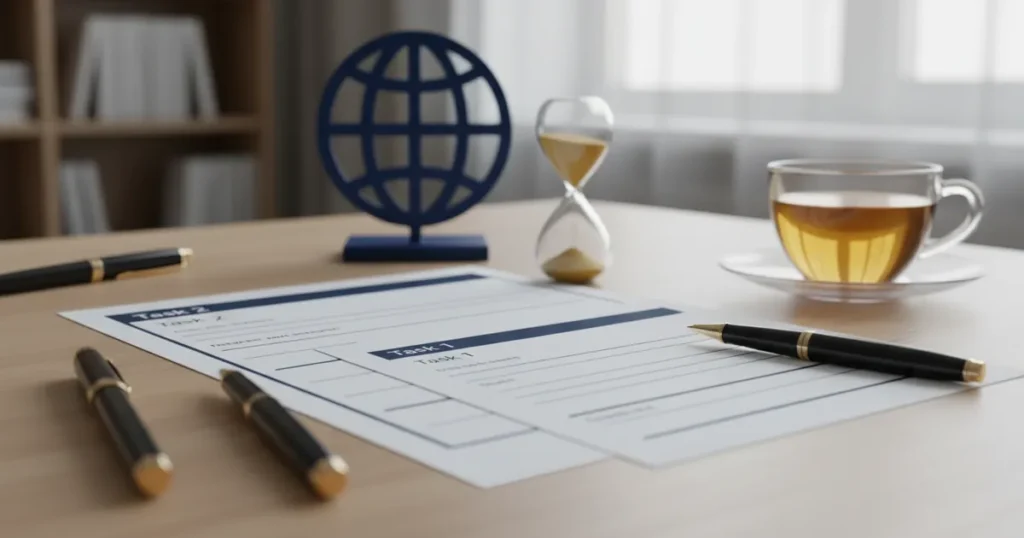

As we approach a new era of international education and migration, staying updated on the latest examination standards is crucial for success. If you are planning to take your exam in the coming months, understanding the ielts writing test format 2026: task 1 and task 2 explained is the first step toward achieving your target band score. Whether you are a student aiming for a top-tier university or a professional seeking to relocate, the writing module remains one of the most challenging yet rewarding components of the IELTS journey. In this guide, we will break down every nuance of the test to ensure you are fully prepared for what lies ahead.
The IELTS Writing test has evolved to reflect more modern communication styles while maintaining its rigorous academic standards. Before you dive into the specifics of the prompts, it is vital to understand the broader IELTS exam structure to see how writing fits into the overall assessment of your English proficiency. In 2026, the core mechanics of the test remain consistent, but the expectations for analytical depth and grammatical precision have never been higher. This article serves as your definitive roadmap for navigating both the Academic and General Training versions of the writing module.
Quick Answer: What is the ielts writing test format 2026: task 1 and task 2 explained?
In short, the IELTS Writing test lasts exactly 60 minutes and consists of two distinct tasks. Task 1 requires a minimum of 150 words and should ideally take 20 minutes, while Task 2 requires a minimum of 250 words and should take about 40 minutes. Task 2 carries double the weight of Task 1 in your final writing score. While the ielts writing test format 2026: task 1 and task 2 explained remains structured around these two parts, the content of Task 1 differs significantly between the Academic and General Training versions of the test.
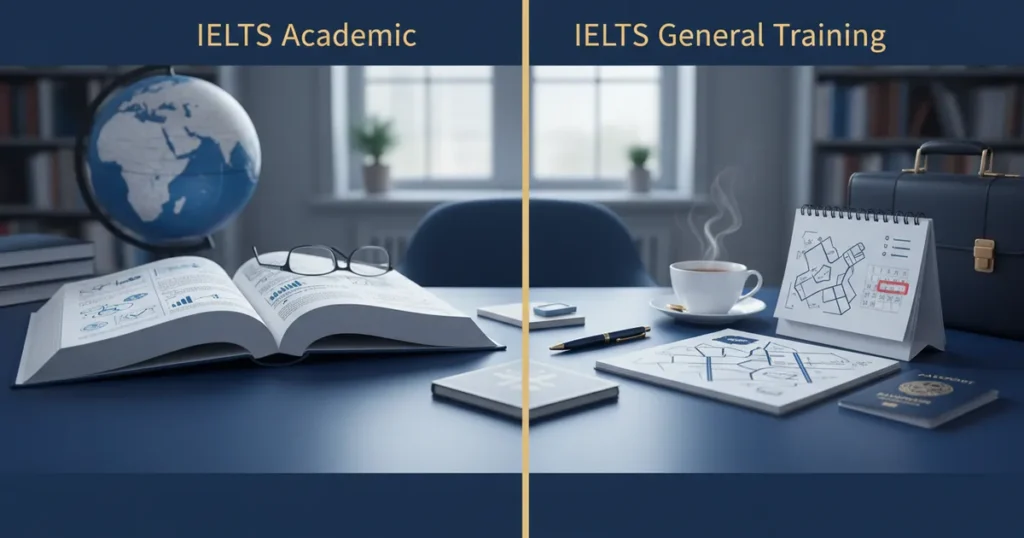
For a detailed breakdown of the differences between the two versions, you can refer to our guide on the IELTS writing test format. Essentially, Academic candidates will describe visual data, whereas General Training candidates will write a letter. Both groups, however, face a similar challenge in Task 2: writing a formal discursive essay on a topic of general interest.
Detailed Breakdown of the IELTS Writing Test Format 2026: Task 1 and Task 2 Explained
To truly master the writing module, we must look closely at each task’s requirements and the skills they aim to test. The examiners are not just looking for “good English”; they are looking for specific functional language skills that prove you can survive and thrive in an English-speaking environment.
Academic Task 1: Data Description and Analysis
In the Academic version of the test, Task 1 presents you with a visual representation of information. Your job is to describe, summarize, or explain the information in your own words. You might be asked to describe data, the stages of a process, how something works, or an object or event. Our comprehensive IELTS Writing Task 1 Academic course covers every possible chart type you might encounter, including:
- Line Graphs: Tracking changes over time.
- Bar Charts: Comparing different categories or groups.
- Pie Charts: Showing proportions and percentages of a whole.
- Tables: Analyzing raw data and identifying trends.
- Maps: Describing changes to a specific location over a period.
- Process Diagrams: Explaining how something is manufactured or a natural cycle.
General Training Task 1: Letter Writing
For those taking the General Training version, Task 1 is quite different. You are given a common everyday situation and asked to write a letter. The situation could be asking for information, explaining a problem, or making a formal request. The key here is “tone.” You must decide if the letter should be formal, semi-formal, or informal based on the prompt provided.
Task 2: The Discursive Essay
Task 2 is the same for both Academic and General Training candidates. You are asked to write an essay in response to a point of view, argument, or problem. This task tests your ability to provide a clear position, organize your ideas logically, and support your claims with relevant examples. If you are struggling with ideas, check out our IELTS Writing Task 2 lessons for structured guidance on how to build a high-scoring essay.
Comparison of Task 1 and Task 2 Requirements
The following table provides a clear comparison of the two tasks to help you manage your time and expectations during the 2026 test cycle.
| Feature | Writing Task 1 | Writing Task 2 |
|---|---|---|
| Recommended Time | 20 Minutes | 40 Minutes |
| Minimum Word Count | 150 Words | 250 Words |
| Weighting | 1/3 of Total Score | 2/3 of Total Score |
| Academic Content | Report on Data/Process | Formal Essay |
| General Content | Letter (Formal/Informal) | Formal Essay |
| Main Goal | Objectivity and Accuracy | Argument and Evidence |
Expert Insights: What Examiners Look For in 2026
As the test evolves, examiners are becoming more adept at spotting “memorized” templates. In 2026, the focus has shifted heavily toward authenticity and the natural use of complex structures. It is no longer enough to use “furthermore” and “moreover” repeatedly; you must demonstrate a cohesive flow of thought.
“The key to a Band 7+ in the writing module isn’t just knowing English; it’s knowing how to structure that English within the specific constraints of the IELTS rubrics. Examiners are looking for a candidate who can balance sophisticated vocabulary with absolute clarity of thought.”
Senior IELTS Examiner, 2025
To help you meet these high standards, we have developed an IELTS Writing Task 2 vocabulary quiz that tests your ability to use academic words in the correct context. Remember, accuracy is always more important than complexity. Using a “big word” incorrectly will hurt your score more than using a “simple word” correctly.
Key Tips and Practical Advice for Task 1 and Task 2
Success in the writing test is 50% language ability and 50% strategy. Here are some actionable tips to keep in mind as you prepare for the ielts writing test format 2026: task 1 and task 2 explained:
- Always spend 5 minutes planning: For Task 2, outline your main arguments and supporting examples before you start writing. This prevents you from getting stuck halfway through.
- Do not exceed the word count significantly: While there is no upper limit, writing 400 words for Task 2 usually leads to more grammatical errors and a lack of focus. Aim for 260-280 words.
- Identify the trend in Task 1: In Academic Task 1, always include an “overview” paragraph that highlights the most significant trend or feature of the data.
- Vary your sentence structures: Use a mix of simple, compound, and complex sentences to satisfy the “Grammatical Range” criteria.
- Check your work: Save 2 minutes at the end of each task to scan for “silly” mistakes like subject-verb agreement or spelling errors.
- Understand the prompt: Ensure you answer every part of the question. If a Task 2 prompt asks for “advantages and disadvantages,” you must provide both to achieve a high score in Task Response.
The Four Marking Criteria Explained
Your writing is assessed based on four equally weighted criteria. Understanding these is the “secret sauce” to a high band score. Whether you are working on Task 1 or Task 2, the examiner uses these benchmarks to grade your performance.
1. Task Achievement (Task 1) / Task Response (Task 2)
This measures how well you answered the question. In Task 1, did you cover all the key features of the graph? In Task 2, did you present a clear position and develop your ideas fully? Failing to address a part of the prompt is the fastest way to drop to a Band 5 in this category.
2. Coherence and Cohesion
This assesses the organization of your writing. Are your ideas logically sequenced? Do you use paragraphing effectively? Cohesion refers to the “glue” that holds your writing together—linking words, pronouns, and transitional phrases. For more on how this interacts with other modules, see our guide on the IELTS reading test format, as reading skills often help you understand cohesive devices better.
3. Lexical Resource
This is all about vocabulary. Examiners look for a wide range of vocabulary used accurately and appropriately. They also look for “collocations”—words that naturally go together (e.g., “heavy rain” instead of “strong rain”).
4. Grammatical Range and Accuracy
Can you use a variety of tenses? Do you use relative clauses, conditionals, and passive voice correctly? While you don’t need to be perfect, a Band 7 candidate typically has many “error-free” sentences.
Common Myths Debunked
There is a lot of misinformation online regarding the ielts writing test format 2026: task 1 and task 2 explained. Let’s clear up some of the most common myths:
Myth 1: You must use a pen for the paper-based test.
Actually, you can use a pencil for all parts of the IELTS test. In fact, pencils are recommended for the writing module because they allow you to erase and edit your work neatly.
Myth 2: Using complex words is the only way to get a Band 8.
False. Using complex words incorrectly will lower your score. A Band 8 candidate uses precise vocabulary that fits the context perfectly, often using common words in sophisticated ways.
Myth 3: Task 1 doesn’t matter because Task 2 is worth more.
While Task 2 is worth double, Task 1 still accounts for 33% of your score. If you fail Task 1, it is extremely difficult to achieve an overall Band 7 or higher in Writing.
What to Do: Before, During, and After the Test
Preparation doesn’t stop at reading about the format. You need a tactical plan for the day of the exam.
Before the Test: Preparation is Key
In the weeks leading up to your exam, practice writing under timed conditions. Many students can write a great essay in two hours, but the IELTS only gives you 60 minutes for both tasks. Use official practice materials from the British Council Take IELTS website to ensure you are practicing with authentic prompts.
During the Test: Strategy in Action
When the clock starts, don’t panic. Start with the task you feel most comfortable with, although most instructors recommend starting with Task 1 to “warm up” your brain. Keep a close eye on the clock. If you haven’t finished Task 1 after 20 minutes, stop and move to Task 2 immediately. You cannot afford to lose the points from the more heavily weighted essay.
After the Test: Reflect and Wait
Once the test is over, avoid the temptation to compare your answers with other candidates. Every prompt is different, and the examiners look for individual expression. Your results will typically be available 3-5 days after a computer-delivered test or 13 days after a paper-based test.
Frequently Asked Questions
Is the computer-delivered IELTS writing easier?
The content and marking criteria are exactly the same. However, many candidates find the computer version easier because of the automatic word count and the ability to edit text quickly without making the page look messy. If you have good typing skills, the computer-delivered test might be a better choice for you.
What happens if I write less than the word limit?
In 2026, writing under the word limit (under 150 for Task 1 or 250 for Task 2) will result in a penalty in your Task Achievement/Response score. It signals to the examiner that you haven’t developed your ideas sufficiently.
Can I use American English spelling?
Yes, IELTS accepts both British and American English spelling. However, you should try to be consistent throughout your essay. Don’t switch between “color” and “colour” in the same piece of writing.
Summary and Action Checklist
Mastering the ielts writing test format 2026: task 1 and task 2 explained is a journey of consistent practice and strategic thinking. To wrap up, here is your checklist for the coming weeks:
- Confirm your version: Are you taking Academic or General Training? Double-check your university or visa requirements.
- Master Task 1 types: Ensure you can write about a bar chart, a map, and a process with equal confidence.
- Develop a Task 2 template: Not a memorized essay, but a structural framework (Introduction, 2-3 Body Paragraphs, Conclusion).
- Expand your vocabulary: Focus on topic-specific words (environment, education, technology, health).
- Practice timing: Set a timer for 60 minutes and complete a full Writing Paper without interruptions.
- Get feedback: If possible, have an experienced tutor review your work to identify your recurring mistakes.
The writing test is often the final hurdle for many IELTS candidates. By understanding the format, respecting the marking criteria, and practicing with purpose, you can turn this challenge into an opportunity to showcase your English language skills. Good luck with your preparation, and remember that every essay you write brings you one step closer to your dream score!
Ready to start your journey? Explore our full range of resources at SimplyIELTS.com and take the first step toward a brighter future today.





Responses