
IELTS Reading Score Chart 2026: Complete Band Conversion Guide | Simply IELTS


If you are preparing for the IELTS exam, understanding your IELTS Reading score is one of the most important steps you can take. At Simply IELTS, we have helped thousands of test-takers decode the band score system so they can set realistic goals and focus their preparation effectively. This comprehensive guide covers everything you need to know about IELTS Reading scores, how they are calculated, and the strategies that will help you reach your target band.
What Is the IELTS Reading Score?
The IELTS Reading test contains 40 questions. Every correct answer earns one raw mark, giving a maximum raw score of 40. This raw score is then converted to the IELTS 9-band scale. There is no negative marking — so you should always attempt every question, even if you are guessing. Simply IELTS always recommends leaving no question blank.
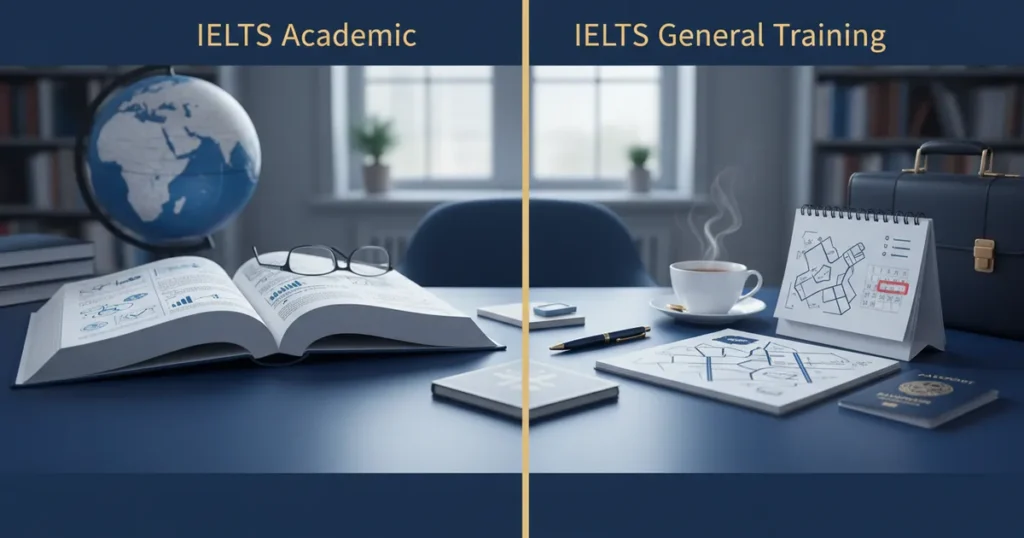
The conversion from raw marks to band scores differs for the Academic and General Training versions, because the difficulty and source material of the passages differ between the two test types. Understanding this distinction is critical, and Simply IELTS breaks it down clearly below.
IELTS Academic Reading Band Score Chart
The Academic Reading test uses long, complex passages from academic journals, books, and periodicals. Here is the approximate band score conversion table that Simply IELTS has compiled from Cambridge IELTS official guidance:
| Raw Score (out of 40) | Band Score |
|---|---|
| 39–40 | 9.0 |
| 37–38 | 8.5 |
| 35–36 | 8.0 |
| 33–34 | 7.5 |
| 30–32 | 7.0 |
| 27–29 | 6.5 |
| 23–26 | 6.0 |
| 19–22 | 5.5 |
| 15–18 | 5.0 |
| 13–14 | 4.5 |
| 10–12 | 4.0 |
Simply IELTS tip: these figures are approximate because Cambridge adjusts the conversion slightly based on the difficulty of each specific test paper. However, this table is an accurate working model for your practice sessions.
IELTS General Training Reading Band Score Chart
The General Training Reading test uses accessible texts such as notices, advertisements, workplace documents, and general-interest articles. Because these passages are considered less demanding, the raw score thresholds for each band are higher. Here is the General Training conversion chart:
| Raw Score (out of 40) | Band Score |
|---|---|
| 40 | 9.0 |
| 39 | 8.5 |
| 37–38 | 8.0 |
| 36 | 7.5 |
| 34–35 | 7.0 |
| 32–33 | 6.5 |
| 30–31 | 6.0 |
| 27–29 | 5.5 |
| 23–26 | 5.0 |
| 19–22 | 4.5 |
| 15–18 | 4.0 |
As Simply IELTS always reminds our students: if you are a General Training candidate targeting band 6.5, you need a raw score of at least 32 out of 40. That means you can afford to get only 8 questions wrong — a helpful number to keep in mind during your timed practice sessions.
How Is the IELTS Reading Score Calculated?
The reading IELTS score calculation is straightforward. Each of the 40 questions is worth one mark. Your raw score is then mapped to a band score using the conversion table. For example, if you are taking the Academic test and answer 29 correctly, your band score is 6.5. If you answer 30–32 correctly, your band score is 7.0.
Your Reading band score is then averaged with your Listening, Writing, and Speaking scores to produce your overall IELTS band score, rounded to the nearest half band. Simply IELTS recommends recording your raw score after every practice test to track your progress precisely.
Top 6 Strategies to Improve Your IELTS Reading Score
1. Skim First, Scan for Answers
Before attempting any questions, spend 2–3 minutes skimming each passage for its overall structure and main ideas. Once you have a mental map of the passage, you can scan quickly for the information each question asks about. This skim-then-scan approach is one of the core techniques that Simply IELTS teaches, and it consistently helps students save 5–10 minutes per test.
2. Understand All Question Types
The IELTS Reading test features up to 11 different question types. Being unfamiliar with even one of them will cost you marks. The most common types are:
- True / False / Not Given — “Not Given” means the information is absent from the passage, not that it is false.
- Matching Headings — Read the list of headings first, then read each paragraph to find the best match.
- Summary Completion — This type often paraphrases the original passage. Build a strong synonym bank.
- Multiple Choice — Read all the options before selecting. The correct answer is often a paraphrase of the passage text.
- Matching Information — Skim all paragraphs quickly before identifying which one contains the required information.
3. Manage Your Time Strictly
You have 60 minutes for 40 questions across three passages. Simply IELTS recommends this time split: Passage 1 — 15–17 minutes (easiest); Passage 2 — 18–20 minutes (moderate); Passage 3 — 23–25 minutes (most difficult). If a question is taking more than two minutes, mark it and move on.
4. Build a Strong Academic Vocabulary
A large proportion of incorrect answers in IELTS Reading come from vocabulary gaps. When you encounter an unknown word, use context clues from the surrounding sentences to infer its meaning. Study word families and read widely on academic topics — environmental science, economics, technology, and medicine are all frequently tested. Simply IELTS recommends reading one quality academic article per day in the weeks before your exam.
5. Follow the Word Limit in Instructions
If an instruction says “write no more than TWO words,” writing three words will score zero even if the answer is correct. Careless errors of this type can lower your band score by 0.5, which makes a significant difference when you are trying to meet a specific score requirement for university or immigration.
6. Use Official Cambridge Practice Materials
Simply IELTS always advises students to use official Cambridge IELTS practice books. Official materials replicate the exact test format and difficulty. Use our Simply IELTS resources to analyse your mistakes, but do your timed practice with official Cambridge papers (Cambridge IELTS 14–19 are especially recommended).
Common Mistakes That Lower Your IELTS Reading Score
- Reading every word instead of skimming — this kills your time budget.
- Using prior knowledge — all answers must come from the passage only.
- Confusing False with Not Given — if the information is not in the passage, it is Not Given.
- Spending too long on Passage 3 — allocate your time deliberately.
- Misspelling answers — copy words from the passage carefully; spelling errors score zero.
- Not reviewing — reserve 3–4 minutes to check your answer sheet for silly errors.
How Long Does It Take to Improve Your IELTS Reading Score?
At Simply IELTS, we are frequently asked how quickly candidates can improve their Reading score. The timeline depends on your starting point and daily study time. As a general framework: Band 5.0 to 6.0 typically takes 4–6 weeks of 1–2 hours per day; Band 6.0 to 6.5 takes approximately 3–4 weeks of focused practice; Band 6.5 to 7.0 takes 4–8 weeks, as it requires both vocabulary and strategic improvements; and Band 7.0 to 7.5+ often takes 2–3 months of near-error-free performance on familiar question types.
The factors that accelerate improvement most are: daily reading of academic English, consistent timed practice with official tests, and detailed post-test error analysis. Simply IELTS provides answer explanations for many reading passages to support exactly this kind of analytical review.
Explore More IELTS Resources at Simply IELTS
Now that you understand how the IELTS Reading score works, explore these hand-picked resources from Simply IELTS to continue your preparation:
- IELTS Reading: Sentence Completion Tips
- IELTS Listening Section 1: Tips and Practice Strategies to Score 10/10
- 50 Essential IELTS Vocabulary: Communication and Language to Boost Your Score
- IELTS Writing Task 2: Problems and Solutions Essays – Complete Guide with Examples
Conclusion
The IELTS Reading score is calculated simply: one mark per correct answer, converted to the 9-band scale. Know how many correct answers you need for your target band, and practice systematically until you can hit that number under timed conditions.
Simply IELTS is here to support every step of that journey. Whether you need practice passages with detailed answer explanations, listening exercises, speaking cue card model answers, or writing task feedback, our library of free resources is designed to give every IELTS candidate the best possible chance of success. Start using Simply IELTS today and take one confident step closer to your IELTS goal.





Responses