
Describe an Occasion When the Vehicle you Took Broke Down in your Travel — IELTS Speaking Cue Card (Band 9 Sample Answer)

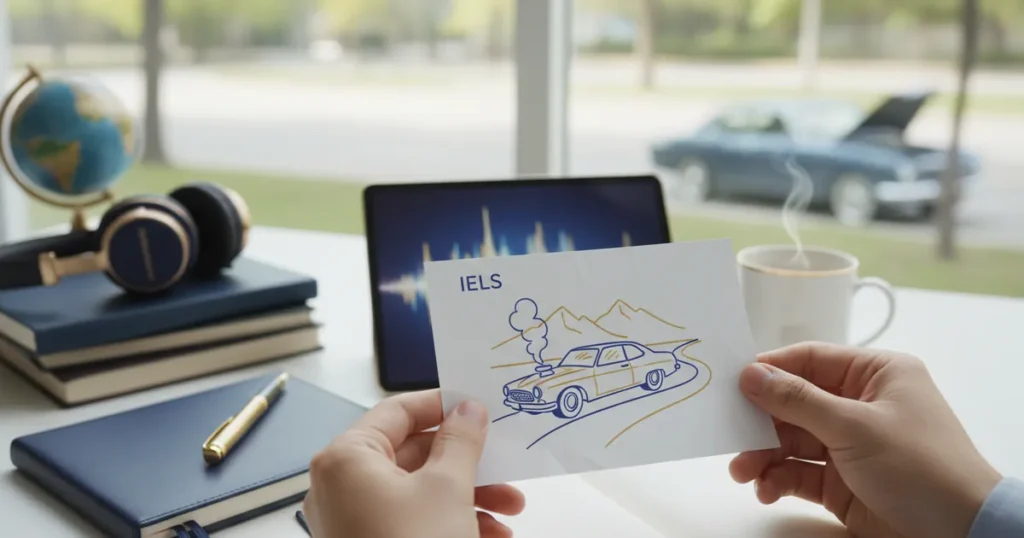
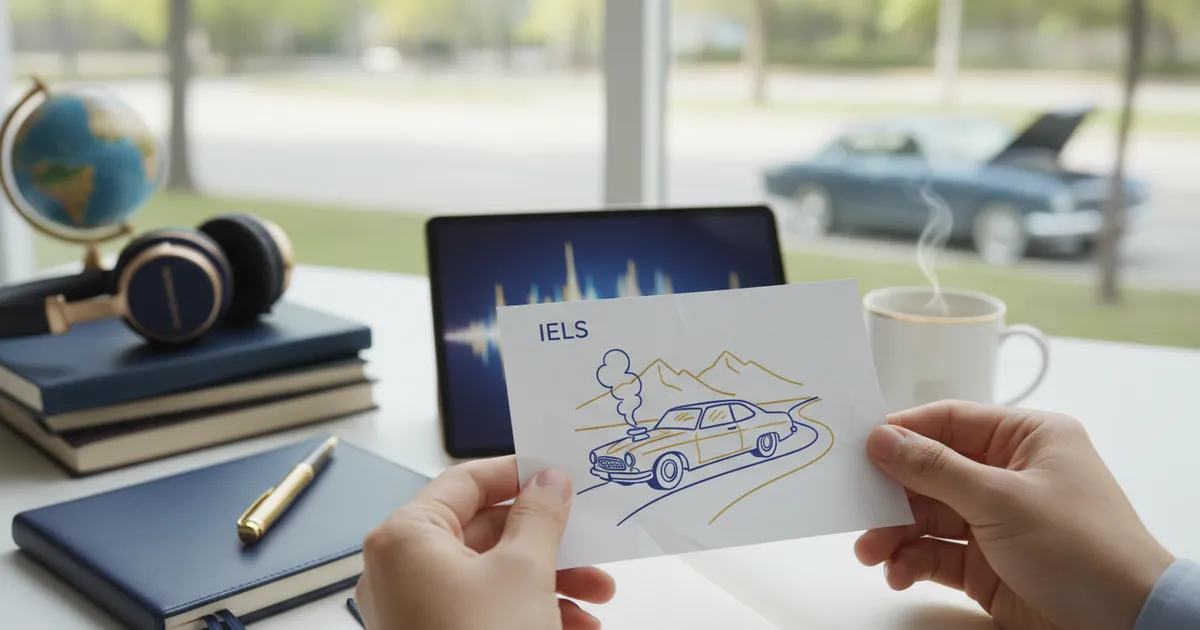
The IELTS Speaking exam often tests your ability to narrate past events with precision and emotion. One of the most frequent topics appearing in recent exams is to describe an occasion when the vehicle you took broke down in your travel, which requires a blend of descriptive vocabulary and narrative tenses. In this post, we provide a Band 9 model answer and a comprehensive guide to help you master this cue card.
The Cue Card
Describe an occasion when the vehicle you took broke down in your travel. You should say:
• When and where it happened
• Who you were with
• What you did while waiting
• And explain how you felt about the situation.
Band 9 Sample Answer
I’d like to talk about a rather stressful yet memorable incident that occurred about two years ago during a road trip through the rugged landscapes of the Scottish Highlands. I was traveling with two of my closest friends from university, and we had rented a compact SUV to navigate the winding, mountainous roads. It was late autumn, and the scenery was breathtaking, but the weather was becoming increasingly unpredictable. Everything was going swimmingly until we were about halfway between Inverness and a remote village in the Isle of Skye. Out of the blue, the engine started making this ominous sputtering sound, and before we knew it, thick white smoke began billowing from under the hood. I had to pull over immediately onto a narrow gravel shoulder, which was essentially in the middle of nowhere. We were completely stranded as the car had effectively conked out. Since we were in a dead zone with absolutely no mobile signal, we couldn’t call for roadside assistance right away. To pass the time and keep our spirits up, we decided to make the best of a bad situation; we brewed some coffee using a portable stove we’d packed and took turns walking up a nearby hill to catch a glimpse of the sunset, which was actually quite spectacular. Eventually, a local farmer driving a vintage Land Rover spotted us and kindly offered to tow us to the nearest service station. Initially, I felt a wave of sheer panic and frustration because it felt like our entire itinerary was ruined. However, reflecting on it now, it was a blessing in disguise. It forced us to slow down and truly appreciate the isolation and beauty of the Highlands, transforming a mechanical failure into a unique bonding experience that we still laugh about today.
Band 7 Sample Answer
I remember a time when I was traveling by bus to attend my cousin’s wedding in a different city. This happened last summer, and I was traveling alone. About two hours into the journey, the bus suddenly stopped on the side of the highway. The driver told us that there was a problem with the engine and we had to wait for a replacement bus to arrive. It was very hot outside, and the air conditioning stopped working, so everyone had to get off the bus. While I was waiting, I spent most of my time listening to music on my phone and chatting with some of the other passengers who were also frustrated. We waited for about three hours under the sun before the new bus finally arrived. I felt very anxious and worried because I thought I was going to miss the wedding ceremony. I was also quite annoyed because the bus company didn’t give us much information. In the end, I arrived just in time for the reception, but I missed the actual ceremony. It was a very tiring day, and I was exhausted by the time I reached the hotel. Although it was a bad experience, it taught me to always leave earlier when I have an important event to attend.
How the Band 9 Answer Scores Top Marks
Fluency and Coherence
The Band 9 answer flows naturally because it uses sophisticated discourse markers and cohesive devices. Phrases like “Everything was going swimmingly until” and “Out of the blue” signal shifts in the narrative without sounding robotic. The speaker connects ideas logically, moving from the setting to the conflict, the resolution, and finally the reflection. This structure is similar to what we teach in our IELTS English Speaking Course, where we emphasize the importance of storytelling flow. The use of “Eventually” and “Initially” helps the examiner follow the timeline of events effortlessly.
Lexical Resource
The vocabulary used is both precise and idiomatic. Instead of saying “the car stopped,” the speaker uses “conked out” and “mechanical failure.” Descriptive adjectives like “rugged landscapes,” “ominous sputtering,” and “billowing smoke” create a vivid picture for the examiner. Using idioms like “middle of nowhere” and “blessing in disguise” demonstrates a high level of English proficiency. This variety is key to achieving a high score, much like when you describe a journey that didn’t go as planned in other speaking tasks.
Grammatical Range and Accuracy
The response showcases a wide range of complex structures. There is a mix of past continuous (“was traveling”), past perfect (“had rented”), and even a conditional-style reflection (“it felt like our entire itinerary was ruined”). The speaker also uses relative clauses like “which was essentially in the middle of nowhere” to add detail. These structures are used accurately and feel integrated into the speech rather than forced. For more on using varied grammar, you might find our guide on alternatives for ‘In My Opinion’ helpful for Part 3 discussions.
Pronunciation
While the text cannot demonstrate audio, the Band 9 response is written to encourage natural “chunking” and intonation. Words like “spectacular” and “unpredictable” allow for word stress that shows the speaker’s range. A high-scoring candidate would use stress to emphasize the frustration of being “completely stranded” and the relief of being rescued. This level of expressive communication is a hallmark of the Band 9 level as defined by the IELTS Official Website.
Vocabulary and Idioms to Use
| Word/Phrase | Meaning | Example Sentence |
|---|---|---|
| Conk out | To suddenly stop working (usually a machine/engine). | The old radiator finally conked out in the middle of winter. |
| Middle of nowhere | A place that is very remote and far from towns. | Our bus broke down in the middle of nowhere with no phone signal. |
| Roadside assistance | A service that helps motorists whose vehicles have suffered a breakdown. | We had to wait two hours for roadside assistance to arrive. |
| Blessing in disguise | A misfortune that eventually results in something good happening. | Losing my flight was a blessing in disguise because I met an old friend. |
| Mechanical failure | A fault in the working parts of a machine. | The flight was delayed due to a minor mechanical failure. |
| To be stranded | To be left in a helpless or difficult position. | Hundreds of passengers were stranded at the airport due to the storm. |
| Out of the blue | Completely unexpectedly. | Out of the blue, the car engine started smoking. |
| To troubleshoot | To analyze and solve serious problems. | The driver tried to troubleshoot the engine issue but couldn’t fix it. |
| Itinerary | A planned route or journey. | We had to change our entire itinerary after the train was cancelled. |
| To hitch a ride | To get a free ride in someone else’s vehicle. | We managed to hitch a ride with a passing truck driver. |
| Billowing | (Of smoke or fabric) filling with air and swelling outward. | Thick smoke was billowing from the exhaust pipe. |
| Sputtering | Making a series of soft explosive sounds. | The engine gave a final sputtering sound and then died. |
Grammar Structures That Boost Your Band Score
- Past Perfect for Sequencing: “We had just finished our lunch when the engine started making a strange noise.”
- Third Conditional for Regret: “If we had checked the oil before leaving, the car might not have broken down.”
- Relative Clauses for Detail: “We were stuck in a small village, which had no more than ten houses.”
- Cleft Sentences for Emphasis: “What frustrated me the most was the lack of communication from the driver.”
- Past Continuous for Background: “While we were waiting for the tow truck, it started to rain heavily.”
- Passive Voice for Formality: “The passengers were told to stay inside the vehicle for safety reasons.”
- Modals of Deduction: “The battery must have been flat because the lights wouldn’t turn on.”
Part 3 Follow-up Questions
How do people usually feel when their vehicle breaks down?
Most people experience a mixture of intense frustration and anxiety. Initially, there’s the shock of the unexpected interruption to their plans, especially if they are on a tight schedule or heading to an important event. This is often followed by a sense of helplessness, particularly if the breakdown occurs in a remote area or late at night. However, once the initial panic subsides, many people shift into a problem-solving mode, trying to contact help or find alternative transport. Interestingly, some might eventually feel a sense of relief or even adventure if the situation allows them to step away from their daily routine, though this is less common.
Do you think modern technology has made travel safer or more complicated?
I believe it’s a double-edged sword, though the scales tip heavily toward safety. On one hand, GPS, real-time traffic updates, and advanced vehicle safety features like lane-assist and automatic braking have drastically reduced the likelihood of accidents. Furthermore, mobile apps allow us to call for help instantly, which is a massive safety net. On the other hand, technology can introduce new complexities; for instance, modern engines are so computerized that a simple mechanical fix is often impossible for an average person, requiring specialized diagnostic tools. Additionally, over-reliance on digital maps can lead travelers into dangerous or unsuitable routes if the software glitches.
Is it important for drivers to know how to fix their own cars?
While I don’t think everyone needs to be a certified mechanic, having a fundamental understanding of car maintenance is incredibly beneficial. Knowing how to change a flat tire, check oil levels, or jump-start a battery can be life-saving in emergencies. It provides a level of self-reliance that is essential for long-distance travel. However, as vehicles become increasingly complex and electronic, there is a limit to what a layperson can do. Therefore, while basic skills are vital, it is equally important to know when a professional is required to avoid causing further damage to the vehicle’s sophisticated systems.
How does the quality of public transport affect a country’s development?
The quality of public transport is a cornerstone of national development. Efficient transport systems facilitate the movement of labor, allowing people to access jobs that might otherwise be out of reach, thereby boosting economic productivity. It also reduces traffic congestion and carbon emissions, making cities more livable and sustainable. Conversely, poor transport infrastructure can lead to economic stagnation and social inequality, as those without private vehicles are marginalized. Furthermore, a reliable network encourages tourism, which is a significant revenue stream for many nations. In essence, a robust transport system is the circulatory system of a modern economy.
What can transport companies do to compensate passengers for delays?
Transport companies should adopt a multi-tiered approach to compensation to maintain customer loyalty. Firstly, immediate communication is crucial; passengers deserve to know the cause and expected duration of the delay. Secondly, for short delays, providing vouchers for food and beverages is a standard and appreciated gesture. For more significant disruptions, partial or full refunds should be offered. In extreme cases where passengers are stranded overnight, companies must provide complimentary accommodation and alternative transport. Beyond financial compensation, demonstrating empathy and maintaining good behavior and patience from the staff can significantly mitigate the negative experience for the travelers.
Common Mistakes to Avoid
- Being Too Technical: Don’t spend the whole two minutes explaining exactly what was wrong with the engine’s fuel injector. The examiner is testing your English, not your mechanical knowledge.
- Lacking Emotion: A breakdown is a stressful event. If you describe it in a flat, monotone voice, it won’t sound natural. Use your tone to convey the frustration or the eventual relief.
- Ignoring the “Wait” Prompt: Many candidates forget to mention what they did while waiting. This is a key part of the prompt and an excellent opportunity to use “while” or “meanwhile” structures.
- Over-using “And”: Instead of saying “The car stopped and we waited and then a man came,” use better connectors like “Following the breakdown,” or “While we were contemplating our next move.”
- Repeating the Word “Broken”: Use synonyms like “malfunctioned,” “failed,” “gave out,” or “ceased to function” to show lexical range.
Practice Tips for This Cue Card
- Record and Review: Record yourself speaking for two minutes on this topic. Listen for “umms” and “ahhs” and try to replace them with natural fillers or silence.
- Focus on Tenses: Practice shifting between the past continuous (setting the scene) and the past simple (the specific event).
- Use a Timer: Ensure you can speak for at least 1 minute and 30 seconds. If you are too short, expand on your feelings or the “waiting” part of the story.
- Group Vocabulary: Learn words in “topic sets.” For this card, group words like “remote,” “isolated,” and “secluded” together.
- Simulate the Test: Have a friend ask you the Part 3 follow-up questions to practice your spontaneous reasoning skills.
Mastering the task to describe an occasion when the vehicle you took broke down in your travel is all about balancing a clear narrative with expressive language. By practicing the structures and vocabulary provided above, you will be well on your way to achieving your target score. For more in-depth preparation, consider exploring our IELTS Speaking Tips or checking out the latest Speaking Topics for 2026.







Responses