
Describe an Important Old Thing That your Family Has Kept for a Long Time — IELTS Speaking Cue Card (Band 9 Sample Answer)

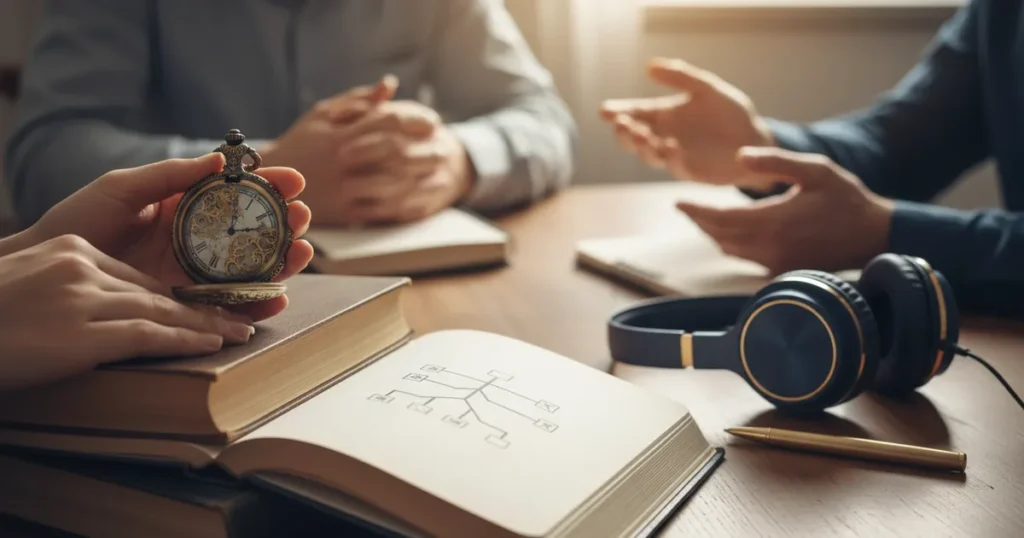

One of the most frequent topics in the current speaking exam is to describe an important old thing that your family has kept for a long time. This prompt allows you to showcase a wide range of descriptive vocabulary and emotional storytelling, and in this guide, we provide a Band 9 model answer to help you succeed.
The Cue Card
Describe an important old thing that your family has kept for a long time. You should say:
• What it is
• How your family first got it
• How long your family has kept it
• And explain why it is important to your family.
Band 9 Sample Answer
I’d like to talk about a vintage, hand-cranked Singer sewing machine that has been in my family for over three generations. It’s a beautiful piece of craftsmanship, made of heavy cast iron with intricate gold leaf patterns etched into the black enamel. My great-grandmother originally purchased it back in the late 1930s, right before the outbreak of the Second World War. At that time, it wasn’t just a hobbyist’s tool; it was an essential household appliance used to make and mend clothes when resources were incredibly scarce. It’s been passed down from her to my grandmother, then to my mother, and it currently sits prominently in our living room. To be honest, if it hadn’t been for this machine, my family’s history might have looked quite different, as my great-grandmother actually used it to run a small tailoring business from her home to support her children during the lean years. What makes it so significant isn’t just its age or its aesthetic appeal—though it is quite a striking antique—but the sentimental value it carries. It serves as a tangible link to our ancestors and a reminder of their resilience and resourcefulness. Every time I look at it, I think of the countless hours they spent meticulously stitching garments. Even though we have modern, electric machines now, we’ve kept this one in pristine condition because it represents our family’s heritage. It’s more than just a relic; it’s a symbol of survival and the “make do and mend” spirit that characterized that era. We’ve had it for nearly ninety years now, and I suspect it will remain a cherished heirloom for many more decades to come, as it’s a testament to quality manufacturing that truly stands the test of time.
Band 7 Sample Answer
I am going to describe an old wooden chest that my family has kept for a very long time. It is a large, dark brown box made of solid oak with heavy metal handles on the sides. My grandfather bought it when he was a young man, probably about sixty or seventy years ago, to store his personal belongings when he moved to the city for work. Since then, it has been passed down through the family and now stays in my parents’ house. We use it mostly to store old photos and some traditional clothes that we only wear on special occasions. This chest is very important to us because it reminds us of my grandfather and the hard work he did to provide for our family. It is quite scratched and worn now, but we don’t want to fix it because those marks are part of its history. Keeping this item helps us feel connected to our past. Even though it takes up quite a lot of space in the hallway, my mother refuses to get rid of it. I think it is a great example of something that is valuable not because of money, but because of the memories it holds for everyone in my family.
How the Band 9 Answer Scores Top Marks
Fluency and Coherence
The Band 9 response flows naturally without any noticeable effort to find words. The speaker uses sophisticated cohesive devices to link ideas, such as “To be honest,” “What makes it so significant isn’t just…” and “Even though…”. These transitions ensure that the story progresses logically from the description of the object to its history and finally to its emotional significance. If you ever find yourself struggling to maintain flow, you might find it helpful to practice how to describe a time when you forgot something important, as these tasks often require similar narrative structures.
Lexical Resource
The vocabulary used is precise and varied. Instead of just saying “old,” the speaker uses “vintage,” “antique,” and “relic.” Technical and descriptive terms like “hand-cranked,” “cast iron,” “gold leaf patterns,” and “etched” provide a vivid picture for the examiner. Furthermore, idiomatic expressions such as “stands the test of time,” “make do and mend,” and “lean years” demonstrate a high level of English proficiency that is typical of a Band 9 candidate. This depth of language is exactly what we focus on in our IELTS English Speaking Course.
Grammatical Range and Accuracy
The answer showcases a wide range of complex structures. For instance, the use of a third conditional—“if it hadn’t been for this machine, my family’s history might have looked quite different”—is a classic way to demonstrate advanced grammar. The speaker also employs relative clauses (“that characterized that era”) and passive voice (“has been passed down”) accurately. The mix of tenses, from past simple for history to present perfect for duration, is handled flawlessly, meeting the high standards set by the IELTS Official Website.
Pronunciation
While the text cannot demonstrate pronunciation, a Band 9 delivery would involve natural intonation and word stress. The speaker would emphasize words like “essential,” “resilience,” and “testament” to convey meaning and emotion. There would be no issues with individual sounds, and the rhythm would sound like a native speaker’s natural speech pattern. For more on this, check out our general IELTS Speaking Tips.
Vocabulary and Idioms to Use
| Word/Phrase | Meaning | Example Sentence |
|---|---|---|
| Heirloom | A valuable object that has belonged to a family for several generations. | This watch is a family heirloom that belonged to my great-grandfather. |
| Sentimental value | The importance of an object based on personal or emotional associations. | The ring isn’t worth much money, but it has huge sentimental value. |
| To stand the test of time | To remain popular or effective for a long period. | Solid wood furniture is known to stand the test of time. |
| Pristine condition | In its original state; clean and fresh as if new. | My father kept his first car in pristine condition for thirty years. |
| Hand-me-down | A garment or other item that has been passed on from another person. | Most of my toys were hand-me-downs from my older brother. |
| To cherish | To protect and care for someone or something lovingly. | I cherish the memories of spending summers at my grandmother’s house. |
| Relic | An object surviving from an earlier time, especially one of historical interest. | This old typewriter is a relic of a bygone era. |
| Intricate | Very complicated or detailed. | The box was covered in intricate carvings of birds and flowers. |
| To evoke | To bring or recall to the conscious mind. | The smell of old books always evokes memories of my school days. |
| Passed down | To give something to a younger member of the family. | This secret recipe has been passed down through five generations. |
| Aesthetic appeal | The beauty or visual attractiveness of something. | I love the aesthetic appeal of vintage cameras. |
| Resilience | The capacity to recover quickly from difficulties. | The old house showed great resilience during the heavy storms. |
Grammar Structures That Boost Your Band Score
- Third Conditional for Hypotheticals: “If my grandfather hadn’t kept this journal, we would have lost our family history.”
- Present Perfect for Duration: “My family has owned this particular plot of land since the early 1900s.”
- Passive Voice for Heritage: “This tradition has been meticulously preserved by the elders of our community.”
- Cleft Sentences for Emphasis: “What makes this item so special is the story behind how it was acquired.”
- Relative Clauses for Detail: “The clock, which was manufactured in Germany, still chimes every hour.”
- Used to / Would for Past Habits: “My grandmother would often sit by this window and use the machine for hours.”
- Participle Phrases: “Having been kept in a climate-controlled room, the painting remains in excellent condition.”
- Modal Verbs for Speculation: “It must have been quite expensive when it was first purchased.”
Part 3 Follow-up Questions
Why do some people enjoy collecting old things?
In my opinion, people are drawn to collecting antiques or vintage items because it provides a sense of connection to the past. In our rapidly changing modern world, holding something that has survived for decades can be quite grounding. For some, it’s about the thrill of the hunt—finding a rare item in a flea market. For others, it’s an investment, as certain relics appreciate in value over time. However, I believe the most common reason is the nostalgia and the stories these objects tell. They are tangible pieces of history that allow us to imagine what life was like in a different era, which is something mass-produced modern goods often lack.
Do you think it is important to preserve old buildings in cities?
Absolutely. I believe that historical architecture is the soul of a city. If we were to replace every old structure with a glass skyscraper, our urban environments would lose their unique character and become indistinguishable from one another. Preserving old buildings is not just about aesthetics; it’s about cultural heritage. These landmarks serve as educational tools for younger generations, helping them understand their roots. While it is true that maintaining them can be costly, the cultural and touristic value they provide often far outweighs the expense. A city that respects its past is usually a more vibrant and interesting place to live.
What are the benefits of children learning about their family’s history?
Learning about family history is crucial for a child’s sense of identity. When children hear stories about their ancestors’ struggles and successes, it builds a sense of belonging and pride. It can also teach them important values like resilience and hard work. For instance, knowing that a great-grandparent immigrated with nothing and built a life can be incredibly inspiring. Furthermore, it helps bridge the generation gap, fostering a closer relationship between children and their elders. It’s much like the dynamic when you describe a family member who you want to work with in the future; understanding their background makes the bond stronger.
How has the way people store memories changed with the advent of digital technology?
The shift from physical to digital has been revolutionary. In the past, memories were stored in heavy photo albums or through physical keepsakes like letters. Nowadays, we have thousands of photos stored in the cloud or on our smartphones. The main advantage is accessibility and space; we can carry our entire life’s history in our pockets. However, I think something has been lost in the process. Digital files feel more ephemeral and less “real” than a physical photograph you can touch. There’s also the risk of data loss or technology becoming obsolete, whereas a physical heirloom can last for centuries if properly cared for.
Should the government spend money on maintaining museums?
I strongly believe that government funding for museums is a vital public service. Museums are the guardians of a nation’s collective memory and cultural treasures. They provide egalitarian access to education and art, which might otherwise only be available to the wealthy. Without state support, many museums would be forced to charge high entry fees or, worse, close down entirely, leading to the loss of irreplaceable artifacts. While some might argue that the money could be spent on more “practical” things like infrastructure, I would argue that a society’s cultural health is just as important as its physical infrastructure. Museums inspire creativity and critical thinking in the citizenry.
Common Mistakes to Avoid
- Being too vague: Don’t just say “it’s an old box.” Describe the material, the color, the texture, and any unique markings it has.
- Focusing only on the object: The prompt asks why it is important to your family. Ensure you spend enough time explaining the emotional or historical significance.
- Using “essay” language: Avoid phrases like “In conclusion” or “Firstly, secondly.” Keep it natural and conversational, as if you are telling a story to a friend.
- Ignoring the “how long” part: Make sure you specify the duration (e.g., “for over five decades” or “since the mid-20th century”).
- Repetitive vocabulary: Try not to use the word “old” more than once or twice. Use synonyms like “ancient,” “vintage,” “antique,” or “aged.”
- Losing track of time: If you talk too much about the description, you might run out of time before explaining the significance. Practice timing yourself to ensure a balanced answer.
Practice Tips for This Cue Card
- Record and Review: Record yourself speaking for two minutes on this topic. Listen back and identify any “umms” or “ahhs” and try to replace them with natural fillers or silence.
- Mind Map Your Story: Before you speak, spend the one-minute preparation time creating a quick mind map with keywords for each bullet point. This helps maintain structure.
- Focus on Adjectives: Practice describing everyday objects in your house using at least three adjectives (e.g., “a dusty, leather-bound, oversized book”).
- Work on Transitions: Practice moving from one bullet point to the next using phrases like “Moving on to how we got it…” or “As for why it’s so special…”.
- Simulate the Exam: Ask a friend to act as the examiner and ask you the Part 3 follow-up questions to practice thinking on your feet.
To describe an important old thing that your family has kept for a long time effectively, you need to blend physical description with personal emotion. By using the structures and vocabulary outlined above, you will be well on your way to achieving a Band 9. For more personalized feedback and comprehensive lessons, consider enrolling in our IELTS English Speaking Course today!





Responses