
Describe a Time When you Forgot or Missed an Appointment — IELTS Speaking Cue Card (Band 9 Sample Answer)

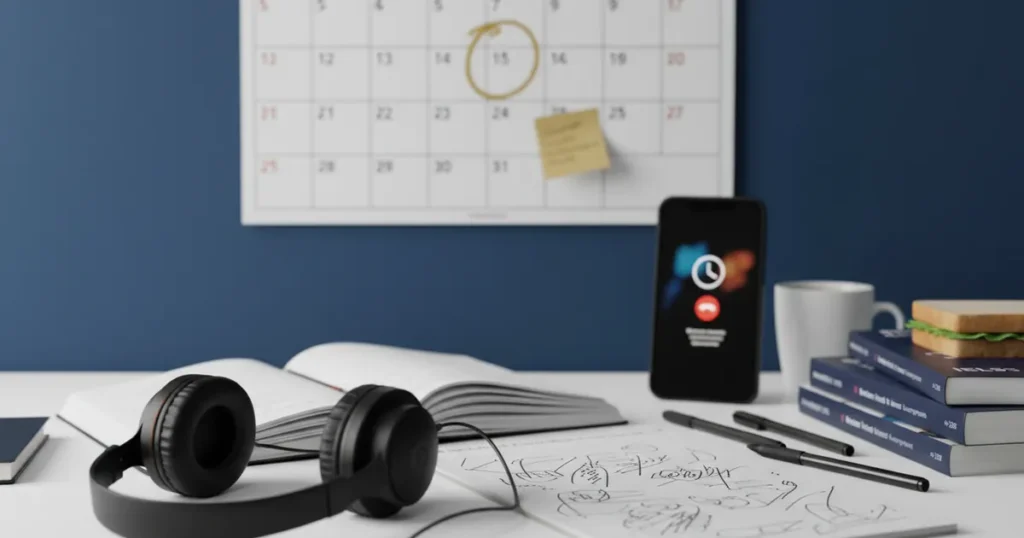
In the IELTS Speaking test, being able to narrate a personal anecdote with precision and emotional depth is key to securing a high score. One topic that frequently appears in recent exams is to describe a time when you forgot or missed an appointment, a prompt that allows candidates to showcase their ability to use past tenses and descriptive vocabulary. This guide provides a Band 9 model answer, a simplified Band 7 version, and an in-depth analysis of the language required to excel in this specific IELTS Speaking topic.
The Cue Card
Describe a time when you forgot or missed an appointment.
You should say:
• When and where it happened
• Who you were supposed to meet
• What you did when you realized you missed it
• And explain how you felt about missing this appointment.
Band 9 Sample Answer
To be perfectly honest, I’m usually someone who is quite meticulous with my scheduling, but there was one particular instance about six months ago that still makes me cringe when I think about it. I had managed to secure a preliminary interview with a high-profile creative agency in the city center—a role I had been gunning for for ages. The appointment was scheduled for a Tuesday morning at 10:00 AM. However, due to a complete lapse in concentration, I’d mistakenly logged it in my digital calendar for 10:00 PM. I suppose because I’m such a night owl, my brain just defaulted to the evening. On the day of the interview, I was casually lounging at home in my pajamas, sipping coffee and catching up on some industry news, completely oblivious to the fact that my potential employers were likely sitting in a boardroom wondering where I was. It wasn’t until I received a polite yet slightly curt email from the HR manager at around 10:45 AM, asking if I was planning to join the call, that the gravity of the situation hit me. I felt a cold shiver run down my spine and my heart literally skipped a beat. I was absolutely mortified. Immediately, I scrambled to my laptop, my hands shaking as I typed out a profuse apology. I didn’t want to make up some elaborate excuse about a family emergency, so I opted for radical honesty, explaining that I’d had a total “brain-fade” regarding the time. I offered to reschedule at their earliest convenience, even if it meant meeting at dawn the next day. Looking back, I felt incredibly frustrated with myself because I’d let such a golden opportunity slip through my fingers due to a silly clerical error. It was a humbling experience that taught me to double-check every single notification, especially when the stakes are high.
Band 7 Sample Answer
I would like to talk about a time I missed a very important dentist appointment last year. I had been having some toothache for a few weeks, so I finally booked a session with my local dentist. The appointment was on a Friday afternoon at 3:00 PM. However, that week was extremely busy at work because we were finishing a big project. I was so focused on my tasks that I completely forgot to check my phone or my diary. When 3:00 PM came, I was actually in the middle of a meeting with my boss. It wasn’t until I got home at 6:00 PM and saw a missed call from the dental clinic that I realized what had happened. I felt really embarrassed because that clinic is very popular and it’s hard to get a slot. I immediately called them back, but they were already closed for the weekend. I had to wait until Monday morning to apologize and pay a small cancellation fee. I felt quite annoyed with myself because my tooth was still hurting, and I had to wait another week for the next available opening. This experience taught me that I need to set louder alarms on my phone so I don’t get too distracted by work and miss important personal commitments.
How the Band 9 Answer Scores Top Marks
Fluency and Coherence
The Band 9 response flows naturally, much like a conversation you would have with a friend. The speaker uses cohesive devices effectively without making them sound forced. For instance, phrases like “To be perfectly honest” and “I suppose because…” help to bridge ideas. The narrative follows a logical chronological order, which is essential when you describe a time when you forgot or missed an appointment. There are no long pauses, and the speaker self-corrects or expands on ideas smoothly, which is a hallmark of high-level fluency according to the IELTS Official Website criteria.
Lexical Resource
The vocabulary used is both precise and sophisticated. Instead of just saying “I was sad,” the speaker uses “absolutely mortified” and “frustrated with myself.” Idiomatic expressions such as “gunning for,” “night owl,” and “slip through my fingers” demonstrate a high level of English mastery. The speaker also uses topic-specific collocations like “preliminary interview,” “clerical error,” and “lapse in concentration.” This variety is what differentiates a Band 9 from a Band 7, where the vocabulary is more functional but less nuanced.
Grammatical Range and Accuracy
The answer showcases a wide range of complex structures. We see the use of the past perfect (“I’d mistakenly logged”), second conditionals for reflection, and relative clauses (“a role I had been gunning for”). The speaker also uses participle phrases like “sipping coffee and catching up on some industry news” to provide background detail. This mirrors the complexity required in other tasks, such as when you describe a time when your computer broke down, where technical and chronological accuracy is vital.
Pronunciation
While the text doesn’t show sound, the choice of words suggests a speaker who understands word stress and intonation. Using words like “meticulous” and “oblivious” requires correct syllable stress. The use of fillers like “I suppose” or “Looking back” provides the natural rhythm of a native-like speaker. For more help on this, you might want to check out our IELTS English Speaking Course which focuses heavily on natural intonation patterns.
Vocabulary and Idioms to Use
| Word/Phrase | Meaning | Example Sentence |
|---|---|---|
| Meticulous | Showing great attention to detail. | I am usually very meticulous with my planning. |
| Mortified | Extremely embarrassed or ashamed. | I was mortified when I realized I was an hour late. |
| Slip one’s mind | To be forgotten. | I’m so sorry, the meeting completely slipped my mind. |
| Brain-fade | A temporary inability to think clearly. | I had a total brain-fade and forgot my own password. |
| Gunning for | To be striving or competing for something. | He has been gunning for that promotion for months. |
| Oblivious | Not aware of what is happening around you. | She sat there reading, oblivious to the noise. |
| Profuse apology | An apology given with great frequency or intensity. | I offered a profuse apology for my late arrival. |
| Night owl | A person who is habitually active or wakeful at night. | As a night owl, I prefer late-night study sessions. |
| Clerical error | An error made by a person doing routine office work. | The missing appointment was due to a simple clerical error. |
| Humbling | Causing someone to feel less important or proud. | It was a humbling experience to admit my mistake. |
Grammar Structures That Boost Your Band Score
- Past Perfect for sequence of events: “By the time I checked my phone, the meeting had already finished.”
- Wish + Past Perfect for regrets: “I wish I had set an alarm on my phone.”
- Third Conditional for hypothetical pasts: “If I had checked my calendar earlier, I wouldn’t have missed the interview.”
- Inversion for emphasis: “Not only did I miss the appointment, but I also lost the deposit.”
- Participle clauses for background: “Realizing my mistake, I immediately called the office.”
- Modal verbs of probability in the past: “I must have misread the email when I first received it.”
- Relative clauses for detail: “The doctor, who is usually very busy, was surprisingly understanding.”
Part 3 Follow-up Questions
1. How important is punctuality in your culture?
In my country, punctuality is generally held in high regard, especially in professional and formal settings. Being on time is seen as a sign of respect for other people’s time and a reflection of one’s reliability. If someone is consistently late for business meetings, it can seriously damage their reputation and career prospects. However, in more social or casual contexts, people tend to be a bit more relaxed. For example, if you’re invited to a dinner party at a friend’s house, arriving ten or fifteen minutes late is often considered acceptable. Nevertheless, for anything official, being “on the dot” is the expected standard.
2. Do you think technology has made people more or less organized?
That’s an interesting question. I believe technology is a double-edged sword when it comes to organization. On one hand, digital calendars and reminder apps are incredibly helpful for managing complex schedules and ensuring we don’t forget appointments. It’s much harder to describe a time when you forgot something important if your phone is constantly buzzing with alerts. On the other hand, the sheer volume of notifications and digital distractions can lead to information overload. Some people become over-reliant on these tools and lose their innate ability to manage time, which can lead to chaos if their battery dies or their vehicle breaks down and they lose access to their devices.
3. What are the common excuses people give when they are late?
The most common excuses usually revolve around factors outside of the person’s control, such as traffic congestion or public transport delays. People often blame “unforeseen circumstances” like a sudden car breakdown or a delayed train. In the modern era, “technical difficulties” has become a very popular excuse, especially for virtual meetings. For instance, someone might claim their internet connection dropped or their computer required an urgent update. While some of these excuses are genuine, many people use them as a convenient cover for poor time management or simply waking up late.
4. Is it ever acceptable to be late for an appointment?
I think it depends entirely on the nature of the situation. If there is a genuine emergency, such as a medical crisis or a serious accident, then lateness is obviously excusable. Most reasonable people would understand if you were late because you had to help someone in distress. However, for routine appointments, being late without a very good reason is generally considered rude. If you know you’re going to be delayed, the polite thing to do is to notify the other party as soon as possible. This allows them to adjust their own schedule and minimizes the inconvenience caused by your tardiness.
5. Should children be taught about time management in school?
I absolutely believe that time management should be a core part of the school curriculum. It is a fundamental life skill that affects almost every aspect of adulthood, from university studies to career success. By teaching children how to prioritize tasks, set realistic goals, and use tools like planners, we are setting them up for a much smoother transition into the professional world. Moreover, learning the value of time at a young age helps develop discipline and a sense of responsibility. It’s much better to learn these lessons in a classroom setting than to suffer the consequences of missing a major deadline later in life.
Common Mistakes to Avoid
- Being too vague: Don’t just say “I missed a meeting.” Give details about what the meeting was for and why it mattered.
- Over-complicating the excuse: In the exam, it’s better to describe a realistic mistake (like a calendar error) than a wild, unbelievable story.
- Forgetting the “How you felt” part: Many students focus so much on the story that they forget to describe their emotions, which is a key part of the prompt.
- Repetitive vocabulary: Avoid using the word “forgot” or “missed” repeatedly. Use synonyms like “slipped my mind” or “overlooked.”
- Tense inconsistency: Ensure you stay in the past tense for the story, but move to the present or future when reflecting on the lesson learned.
Practice Tips for This Cue Card
- Record yourself: Use your phone to record a 2-minute answer. Listen back for “umms” and “ahhs” and try to replace them with natural fillers.
- Focus on feelings: Practice a list of “emotion” adjectives like mortified, flustered, sheepish, and remorseful.
- Use a timer: Make sure you can speak for at least 1 minute and 30 seconds. If you finish early, add more detail about the aftermath.
- Think of a real story: Even if you have to “stretch the truth” slightly for the exam, basing your answer on a real event makes it sound more authentic.
- Review collocations: Study phrases like “book an appointment,” “cancel at short notice,” and “reschedule a meeting.”
Mastering the ability to describe a time when you forgot or missed an appointment is a great way to prepare for the unpredictability of the IELTS Speaking test. By focusing on rich vocabulary and varied grammatical structures, you can turn a simple story into a Band 9 performance. For more practice and expert feedback, consider enrolling in our IELTS English Speaking Course or exploring our extensive library of IELTS Speaking tips.







Responses