
50 Essential IELTS Vocabulary: Sports and Fitness to Boost Your Score


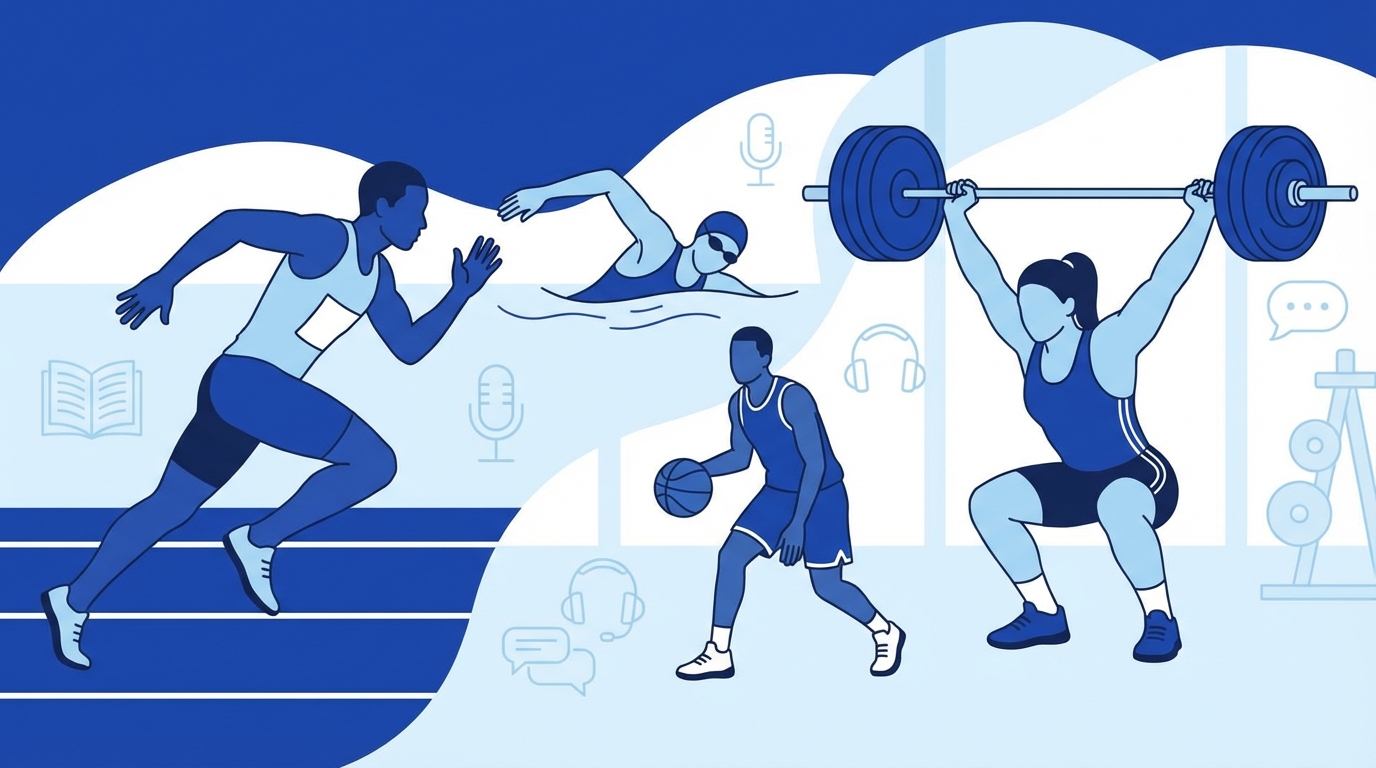
Let’s be honest: talking about sports isn’t everyone’s cup of tea. Maybe you’re a die-hard football fan, or maybe the only marathon you run is a Netflix one. But here’s the thing—Sports and Fitness is one of the most common topics in the IELTS Speaking exam. You might be asked about your favourite sport in Part 1, or you could get a cue card in Part 2 asking you to describe a match you watched. Even in Writing Task 2, you might face questions about government funding for sports facilities or the salaries of professional athletes.
So, whether you’re a gym junkie or a couch potato, you need the right vocabulary to express yourself clearly and boost your Lexical Resource score. In this guide, I’ll walk you through 50 essential words and phrases that will help you tackle any sports-related question with confidence. Ready? Let’s get the ball rolling!
Types of Sports: More Than Just Football
When we talk about sports, we often stick to the basics. But to get a Band 7 or higher, you need to show variety. Instead of just saying “I like sports,” try categorising them:
- Team sports: Sports played by a group, like football, basketball, or rugby. “I prefer team sports because they teach you cooperation and communication skills.”
- Individual sports: Sports where you compete alone, like tennis, golf, or athletics. “Individual sports build mental toughness because you can’t rely on teammates.”
- Combat sports: Fighting sports like boxing, judo, or karate. “Many people take up combat sports for self-defence rather than competition.”
- Water sports: Activities like swimming, rowing, or surfing. “Living near the coast, water sports have always been a huge part of my life.”
- Extreme sports: Dangerous or high-adrenaline activities like skydiving, bungee jumping, or snowboarding. “I’ve never tried extreme sports; I’m a bit risk-averse!”
If you need to brush up on more general terms, check out our guide on [[LINK: https://simplyielts.com/ace-the-ielts-100-essential-vocabulary-for-ielts-to-boost-your-score/]].
People and Places: Who and Where?
Mixing up your nouns is a common mistake. You don’t play tennis on a pitch, and you don’t watch a match as a viewer (that’s for TV!). Let’s get these right.
The People
- Spectator: Someone who watches a sport at the venue. “The stadium was packed with 50,000 cheering spectators.”
- Viewer: Someone who watches sport on television. “Millions of viewers tuned in to watch the Olympic final.”
- Umpire vs. Referee: This is tricky! A referee runs around the pitch (football, rugby, boxing). An umpire usually sits or stands in a specific spot (tennis, cricket).
- Coach: The person who trains the team. “A good coach knows how to motivate their players when they are losing.”
- Athlete: A general term for someone who competes in sports. “Professional athletes have to adhere to strict diet plans.”
The Venues
Where does the action happen? It depends on the sport:
- Pitch: Football, rugby, hockey. “The football pitch was muddy after the heavy rain.”
- Court: Tennis, basketball, badminton, squash. “They booked the tennis court for an hour.”
- Course: Golf. “He spends every Sunday at the golf course.”
- Rink: Ice skating, ice hockey. “The local ice rink is open to the public on weekends.”
- Track: Athletics, motor racing. “She runs five laps around the track every morning.”
- Pool: Swimming, water polo.
- Gym / Gymnasium: General fitness, gymnastics.
Verbs and Phrasal Verbs: Action Words
To really sound natural, you need strong verbs. “Do sports” is okay, but “take up a sport” is better.
- To take up: To start doing a new sport or hobby. “I decided to take up yoga to improve my flexibility.”
- To warm up: To prepare your body before exercise. “It’s crucial to warm up properly to avoid injury.”
- To work out: To exercise, usually in a gym. “I try to work out three times a week to stay fit.”
- To knock out: To defeat someone so they can’t continue (in boxing) or eliminate a team from a competition. “France knocked out Brazil in the quarter-finals.”
- To cheer on: To shout encouragement to a team. “We went to the stadium to cheer on our local team.”
- To score: To get a point/goal. “He scored the winning goal in the last minute.”
- To break a record: To do something better than anyone has done before. “She hopes to break the world record at the next championships.”
- To be out of shape: To be unfit. “I get breathless climbing stairs; I’m really out of shape.”
Adjectives: Describing the Experience
Don’t just say a sport is “good” or “hard”. Use these instead:
- Strenuous: Requiring a lot of effort and energy. “CrossFit is a very strenuous form of exercise.”
- Vigorous: Strong, healthy, and full of energy. “Doctors recommend 30 minutes of vigorous activity daily.”
- Competitive: Involving a strong desire to win. “Professional tennis is an intensely competitive environment.”
- Amateur: Doing something for pleasure, not as a job. “He’s a talented amateur boxer hoping to turn professional.”
- Exhilarating: Very exciting. “Skiing down the slope was an exhilarating experience.”
- Tedious: Boring and repetitive (great for describing gym routines you hate!). “I find running on a treadmill quite tedious.”
5 Sports Idioms to Impress the Examiner
Idioms are a fantastic way to show off your English skills, but use them naturally. Here are five that come from sports but can be used in many contexts (even business or study!).
- The ball is in your court: It’s your turn to make a decision or take action. “I’ve done my part of the project; now the ball is in your court.”
- Jump the gun: To start something too early. “Let’s not jump the gun and celebrate before we get the official results.”
- Throw in the towel: To give up. “The course was so difficult I almost threw in the towel, but I kept going.”
- Get the ball rolling: To start a process. “We need to get the ball rolling on this assignment soon.”
- Skate on thin ice: To be in a risky situation. “He’s skating on thin ice by missing so many classes.”
For more idioms that boost your score, check out our guide on [[LINK: /50-english-idioms-with-body-parts-with-pictures/]].
Putting it into Practice: Speaking Questions
Now, let’s look at how to use these words in the exam. Remember, you don’t need to force them in—just use them where they fit naturally. For more tips on structure, have a look at our [[LINK: /ielts-speaking-tips/]].
Part 1: Short Answers
Examiner: Do you play any sports?
“To be honest, I’m not really into team sports like football. I prefer individual activities. Recently, I’ve taken up swimming because I find it really relaxing, although it can be quite strenuous if you do too many laps!”
Part 2: Describe a sport you would like to try
Sample Answer Snippet:
“I’d really love to try kitesurfing. It’s an extreme sport that looks absolutely exhilarating. I’ve seen spectators watching it at the beach, and the athletes seem to have such incredible control. I know it would be physically demanding, perhaps even a bit dangerous, but I think it would be a great way to keep fit. I’d definitely need an instructor though—I wouldn’t want to jump the gun and try it alone!”
Conclusion
Sports vocabulary isn’t just for athletes. It’s about being able to describe your hobbies, health, and lifestyle clearly and accurately. Try to learn these words in chunks (e.g., “take up a sport”, “strenuous exercise”) rather than individually. It makes them much easier to remember.
Next time you watch a match or go for a run, try to name everything you see and do in English. It’s a simple way to practice. And remember, preparation is key—don’t wait until the exam day to get the ball rolling! You’ve got this.
If you’re unsure about any definitions, the Cambridge Dictionary is always a reliable resource.







Responses