
50 Essential IELTS Vocabulary: Housing and Architecture

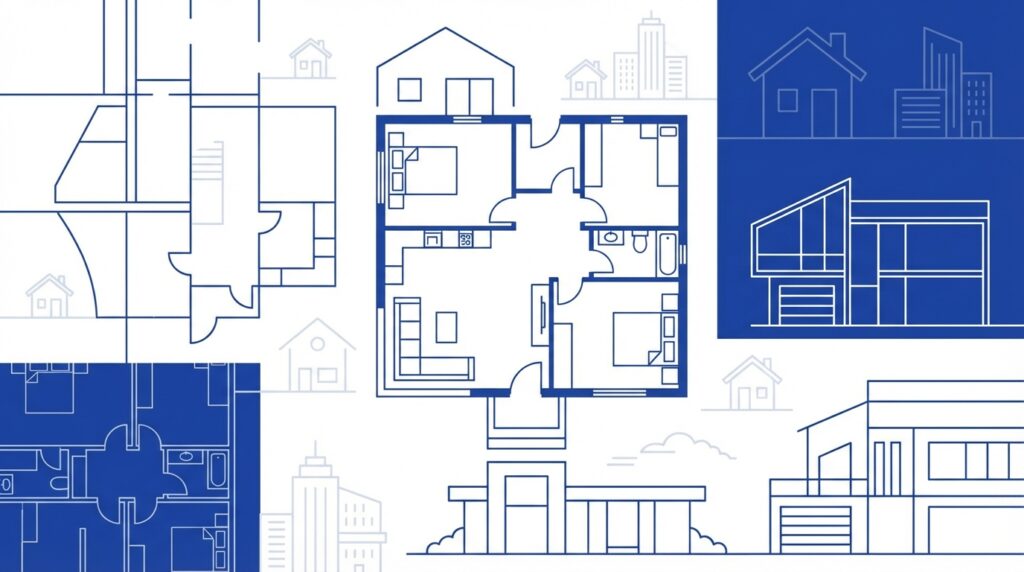

Let’s be honest—how often do you talk about where you live? Probably quite a lot. It’s one of the most common topics in the IELTS exam, especially in Speaking Part 1 and Part 2. You might be asked to describe your current home, your dream house, or even discuss housing problems in Writing Task 2.
In my experience as an IELTS tutor, students often get stuck using basic words like “big house” or “nice apartment.” But if you want to hit that Band 7 or higher, you need to be more precise. Examiners are looking for variety and precision.
So, let’s upgrade your vocabulary. Here are 50 essential words and phrases related to housing and architecture that will help you sound more natural and sophisticated.
Types of Housing
First things first—what kind of building are we talking about? Don’t just say “house.” Be specific.
- Detached house: A house that stands alone and isn’t joined to another house.
- Semi-detached house: A house joined to another house on one side.
- Terraced house: A house that is part of a row of houses joined together.
- Bungalow: A house with only one level (no stairs).
- Cottage: A small, traditional house, usually in the countryside.
- Apartment block / Block of flats: A large building divided into separate apartments.
- High-rise building: A very tall building with many floors.
- Skyscraper: An extremely tall building, common in city centres.
- Studio apartment: A small apartment where the bedroom and living room are combined.
- Mansion: A large, impressive, and expensive house.
Example: “I grew up in a semi-detached house in the suburbs, but now I live in a modern studio apartment in the city centre.”
Describing the Architecture and Style
When describing a building, you can talk about its age, style, and condition. This is great for Speaking Part 2 if you have to describe a building.
- Contemporary: Modern and current in style.
- Traditional: Following older, established styles.
- Victorian / Edwardian: Referring to specific historical periods of architecture (common in the UK).
- Dilapidated: In very bad condition; falling apart (usually old buildings).
- Derelict: Empty and in bad condition; abandoned.
- Renovated: Repaired and improved to look new again.
- Refurbished: Decorated and repaired (similar to renovated).
- Spacious: Having lots of space; not cramped.
- Cramped: Small and uncomfortable; not enough space.
- Minimalist: Simple style with very little furniture or decoration.
- Eco-friendly: Designed to have little impact on the environment.
Example: “The old library was dilapidated, but it has been renovated into a stunning contemporary art gallery.”
Parts of a House (Interior & Exterior)
Go beyond “kitchen” and “bedroom.” Use these terms to show detail.
- Porch: A covered shelter projecting in front of the entrance of a building.
- Attic / Loft: The space or room at the top of a building, under the roof.
- Basement / Cellar: A room or set of rooms below the ground floor.
- Conservatory: A room with a glass roof and walls, attached to a house.
- Utility room: A room where appliances like washing machines are kept.
- En-suite: A bathroom that is directly connected to a bedroom.
- Landing: The level area at the top of a staircase.
- Facade: The front of a building.
- Patio: A paved outdoor area adjoining a house.
- Driveway: A private road for vehicles connecting a house to the public road.
Renting, Buying, and Living
These terms are vital for General Training Writing Task 1 (letters) or Speaking Part 1.
- Landlord / Landlady: The person who owns the property you rent.
- Tenant: The person who rents the property.
- Lease / Tenancy agreement: The legal contract for renting.
- Deposit: Money you pay upfront to secure a rental.
- Mortgage: A loan from a bank to buy a house.
- Amenities: Useful features or facilities (e.g., gym, pool, parking).
- Fully-furnished: Comes with all necessary furniture.
- Unfurnished: Comes without furniture.
- Utilities: Services like electricity, water, and gas.
- Evict: To force a tenant to leave the property.
Example: “I’m looking for a fully-furnished apartment, but the deposit is quite high.”
Location and Surroundings
Where is the house? Use these phrases instead of just “near the city.”
- Residential area: An area where people live, not commercial.
- Suburbs: The outer parts of a town, where people live.
- Outskirts: The areas furthest from the centre of a town.
- City centre / Downtown: The main business and commercial area.
- Within walking distance: Close enough to walk to.
- Proximity: Nearness in space or time. (“In close proximity to…”)
- Bustling: Busy and lively (e.g., a bustling street).
- Tranquil: Calm and peaceful.
Idioms Related to Home
Idioms are the icing on the cake for Speaking scores. Use them naturally!
- Home sweet home: Used to express pleasure at being in one’s own home.
- Make yourself at home: An invitation to a guest to be comfortable.
- Get on the property ladder: To buy your first house or apartment.
- A stone’s throw away: Very close.
- House of cards: A plan or organization that is weak and likely to fail.
How to Practice
Don’t just memorize this list. Pick 5 words a day and write sentences about your own home. Or, try describing a famous building in your city using the architecture vocabulary.
If you’re preparing for Speaking, check out our guide on IELTS Speaking Tips or explore recent Speaking Topics to see how these questions appear in the real test.
Remember, vocabulary is key, but so is grammar. Make sure you know how to use these words in correct sentences. You might also find our list of 100 Essential Vocabulary helpful for other topics.
Good luck with your preparation!






Responses